

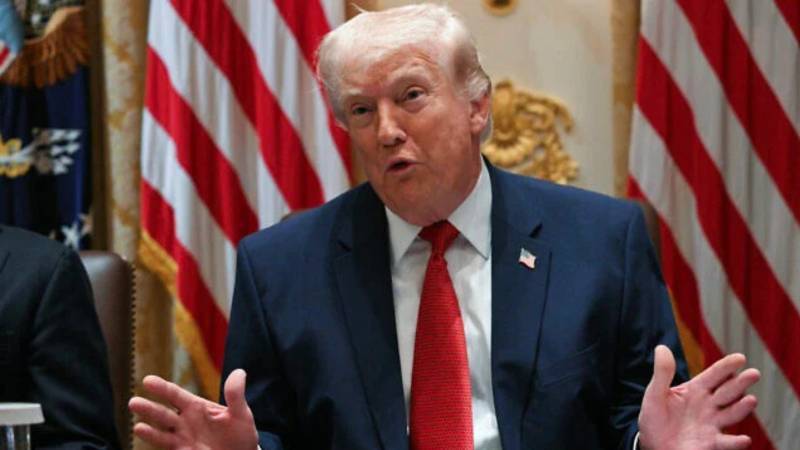
At first glance, former President Donald Trump’s reported 15-point proposal to end the war with Iran seems to signify a major shift towards diplomacy. After weeks of escalating tensions involving the United States and Israel, introducing a structured framework for peace might be seen as an effort to de-escalate.
However, a closer examination reveals a more complex reality. Rather than a neutral or balanced peace initiative, the proposal appears to serve both as a negotiating tool and as a strategic mechanism to justify further escalation if it is rejected.
The key demands of the proposal are crucial to understanding this ambiguity. Its core requirements include the complete dismantling of Iran’s nuclear programme, the surrender of enriched uranium, and a permanent halt to enrichment activities. Additionally, Iran is expected to significantly reduce its ballistic missile capabilities and sever ties with regional proxy groups like Hezbollah and the Houthis.
The plan also ventures into broader geopolitical territory by requiring guarantees related to the uninterrupted flow of oil through the Strait of Hormuz and acceptance of limits on Iran's regional influence. In return, the United States offers sanctions relief and support for civilian nuclear development.
While this package may seem comprehensive, its underlying logic is decidedly one-sided. In practical terms, it amounts to a demand for near-total strategic capitulation. Accepting such terms would involve not only policy adjustments for Iran but also a fundamental reconfiguration of its security doctrine, regional posture, and domestic political legitimacy.
Unsurprisingly, Iranian officials have characterised the proposal as highly unreasonable. Such responses are not merely rhetorical; in international diplomacy, proposals that require one side to concede its core strategic assets are rarely intended for immediate acceptance.
This raises an important question: if the terms are structured to make rejection highly likely, what purpose does the proposal actually serve?
The answer lies in the broader pattern of U.S. signalling during the conflict. Trump’s public statements have fluctuated between calls for Iran’s “unconditional surrender” and indications that Washington is “not ready” for a deal. Simultaneously, military deployments have continued, and the possibility of further strikes remains open. This apparent contradiction is not accidental; it reflects a classic strategy in international relations known as coercive diplomacy.
Coercive diplomacy operates by combining negotiation with pressure. It presents the adversary with a stark choice: comply with the proposed terms or face escalating costs. The credibility of the offer is enhanced by the parallel threat of force. In this context, the 15-point plan functions less as a conventional peace proposal and more as an instrument of compellence designed to compel Iran into accepting terms it would otherwise reject; this is, at least, Trump’s calculation.
Coercive diplomacy serves another important function: political signalling. By presenting a formal proposal, the United States can show both domestic and international audiences that it has sought a peaceful resolution. If Iran rejects the terms, an outcome that current dynamics suggest is likely, the narrative becomes clear and politically beneficial: Washington offered peace, while Tehran chose confrontation.
This framing places the responsibility for continued conflict on Iran and justifies further escalation through intensified sanctions, expanded military operations, or broader regional engagement.
The combination of maximalist demands, inconsistent messaging, and ongoing military pressure indicates that the proposal is less about achieving a mutually acceptable settlement and more about reshaping the narrative of the conflict
In this sense, the proposal plays a dual role in Trump’s strategy. It acts both as a negotiating tool and as a legitimising device. It signals openness to diplomacy while simultaneously shaping the conditions that make escalation politically acceptable. Rather than focusing primarily on compromise, it redefines the conflict's narrative landscape.
This interpretation is supported by the broader strategic goals of the United States. Beyond the immediate aim of halting Iran’s nuclear programme, U.S. policy has sought to limit Iran’s regional influence and weaken its network of alliances. Some elements within the American policy establishment have even considered regime change as a long-term objective. If these ambitions are genuine, then a negotiated settlement that allows Iran to maintain its core capabilities would be inadequate. Conversely, a maximalist proposal aligns more closely with a strategy aimed at fundamentally reshaping Iran’s position in the region.
For Iran, the stakes are equally high. Accepting the proposal could undermine its deterrence capabilities and project weakness both domestically and regionally. However, rejecting it opens the door to further military confrontation. This presents a dilemma: the proposal offers peace, but only under terms that are politically and strategically untenable for Iran.
It would be misleading to label the proposal as entirely insincere. The United States may be willing to end the conflict provided its core security demands are fully met. This reflects an approach in which overwhelming pressure is used to extract concessions. Yet, even with this interpretation, the chances of success remain limited. Durable peace agreements are typically built on compromise rather than capitulation. By setting the bar so high, the proposal narrows the space for negotiation and increases the likelihood of rejection.
The consequences of this situation are significant. If the proposal is rejected, which seems likely, it could lead to further escalation. This escalation risks evolving into a prolonged war of attrition. Iran may respond by using its missile capabilities and disrupting energy routes, particularly around the Strait of Hormuz. Such actions could impose economic costs on its adversaries and the global economy.
For the United States, sustained involvement in the conflict may strain military resources and domestic political consensus, especially as it competes with other global priorities. Israel, despite its military superiority, could face ongoing retaliatory attacks and increased regional isolation. This reflects the divergence between Israel’s objectives and those of Washington. For Iran, the stakes are existential: while continued pressure could further degrade the regime, it may also consolidate nationalist resistance and help the regime survive under siege conditions.
These external dynamics are closely linked to domestic political considerations in the United States. For Trump, the trajectory of the conflict could have direct implications for the upcoming midterm elections. If escalation leads to rising casualties or economic pressures, particularly through higher fuel prices, or if the conflict is perceived as an open-ended war, public support may erode. This could allow political opponents to frame the conflict as a strategic miscalculation.
Simultaneously, Trump may attempt to portray the situation in more favourable terms, emphasising that the United States offered a pathway to peace that Iran refused. Such a narrative could resonate with his political base and reinforce his image as a decisive leader. Ultimately, the domestic political impact will depend on whether voters view the conflict as a necessary assertion of strength or an avoidable and costly entanglement.
What emerges from this analysis is not a simple binary of peace versus war, but a more complex picture of strategic ambiguity. The 15-point plan represents both an offer for peace and a calculated move within a broader geopolitical strategy. It signals a willingness to negotiate while simultaneously preparing for escalation. This approach appeals to constituencies that favour diplomacy while preserving options for those advocating a tougher stance.
For policymakers and observers, the key lesson is clear: peace proposals must be evaluated not only by their existence but also by their substance, context, and strategic function. In this case, the combination of maximalist demands, inconsistent messaging, and ongoing military pressure indicates that the proposal is less about achieving a mutually acceptable settlement and more about reshaping the narrative of the conflict.
For now, Trump’s 15-point plan serves as a revealing example of contemporary wartime diplomacy—an offer of peace that may, in practice, lead to further conflict.