

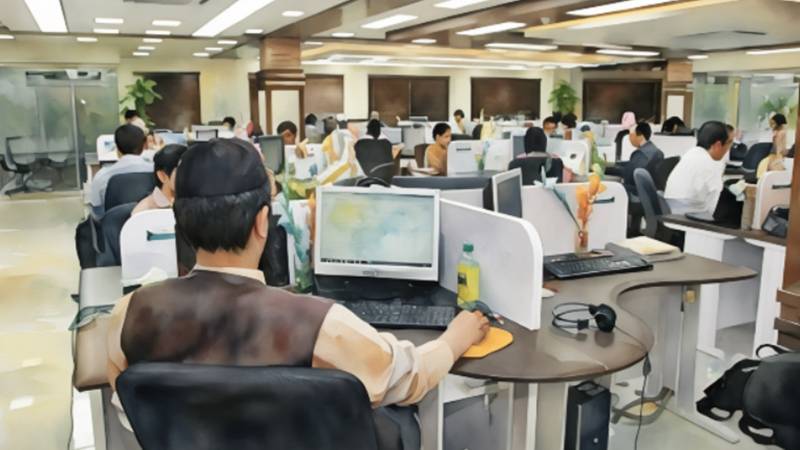
As Pakistan navigates the complexities of a rapidly evolving global landscape, the Punjab government finds itself at a crossroads. Despite a burgeoning youth population teeming with fresh talent and innovative ideas, the administration continues to appoint retired officers to key government positions. This archaic approach not only stifles the creative potential of the younger generation but also hinders the province's progress.
The retirement age of 60 is a well-established benchmark, and for good reason. It acknowledges the value of experience and wisdom that comes with age, while also recognising the physical and mental demands of certain roles. Many tasks, particularly those requiring physical vigour, necessitate a level of stamina and adaptability that can be challenging for older individuals to maintain. In such cases, the elderly may have little to offer, and it becomes essential to pass the baton to younger, more energetic professionals.
The issue arises when retired officers are re-employed in technical and senior roles. While their experience is undoubtedly valuable, it can become a double-edged sword. Although they bring a wealth of institutional knowledge, they often lack familiarity with the latest research, technologies, and trends essential for driving innovation and reform. Their continued presence in pivotal roles not only precludes the rise of dynamic young professionals but also entrenches a status quo that renders institutions stagnant—verging on what may aptly be described as “white elephants.”
Retirees can and should be accommodated in advisory capacities, where their experience can be meaningfully leveraged without obstructing the advancement of younger talent
Appointing such individuals to lead science and research-based institutes is particularly ill-advised. These institutions require leadership that is agile, up to date with global developments, and motivated by a passion for innovation and discovery. Administration and technical expertise are distinct domains; technically driven institutions do not benefit from leadership by administrators lacking the requisite technical acumen.
It is imperative that the Punjab government adopts a more forward-looking and inclusive approach—one that empowers young professionals to take the reins and lead the province into a progressive future. Retirees can and should be accommodated in advisory capacities, where their experience can be meaningfully leveraged without obstructing the advancement of younger talent. Such a shift would foster an environment conducive to creativity, innovation, and out-of-the-box thinking.
The current system, in which retirees continue to occupy influential positions, is outdated and runs counter to the needs of a modernising state. The government must urgently reconsider its policies and create structured opportunities for emerging professionals. A law should be enacted to restrict the re-employment of retirees in executive government positions, thereby institutionalising the transition of power to a new generation of leaders.
Only by embracing this paradigm shift can Punjab unlock its true potential—harnessing the energy, skill, and imagination of its youth to drive economic growth, social development, and good governance. The clock is ticking. The time to act is now. Let us seize this opportunity to shape a more prosperous, innovative, and inclusive tomorrow.