

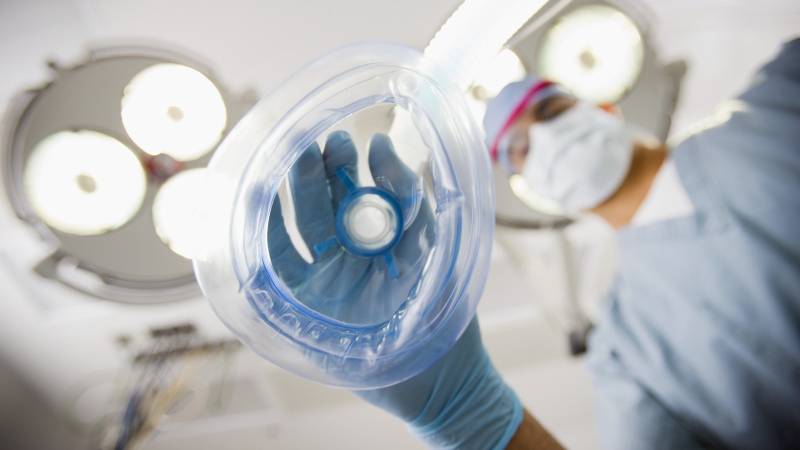
The incredible experience of general anaesthesia appears to be a state somewhere between ordinary sleep and the permanent sleep most understand as death.
As we pass through our normal sleep and wake cycle, the Qur’an specifies that souls are indeed taken away and then returned to those destined to live.
To understand death, one need only look to sleep. During sleep, we may be totally oblivious to the world and its events, yet a loud noise or physical stimulus can instantly bring us back from that state of heedlessness.
Now compare this to anaesthesia. Here, we voluntarily surrender ourselves into an unfamiliar territory—a state of controlled deep unconsciousness where no amount of noise or physical touch can revive us, except by the reversal of sedative and paralytic agents, carefully administered by the anaesthesiologist.
A person under general anaesthesia can be artificially ventilated, their blood pressure managed, blood volume replenished, and even undergo deep surgical incisions with organs repaired or removed. Yet, there is no conscious response from the patient until they are brought back in recovery—an experience remarkably similar to the resuscitation of the dead.
For those who believe in the Hereafter, we live to part and die another day—and then, God willing, we shall meet and live again
Why then should it be difficult to understand what happens at death? Of course, no one has written about it after their own demise! But perhaps it is enough to consider that a state of permanent, anaesthesia-like existence is followed by resurrection—on a predestined timeline, individually or collectively. Death becomes utterly meaningful if we are to be held accountable for our deeds, and entirely meaningless if we are brought back without any reckoning.
Some may doubt that resurrection is possible. Yet, we routinely wake up after sleep and are able to recount the previous day. Likewise, those who undergo anaesthesia can recall events up until the precise moment they were sedated—and resume life the instant the anaesthetic wears off. Such parallels between these recurring or rare events and the inevitability of death offer profound reflection.
Optimists may look forward to death based on the hope of reward and divine forgiveness. Pessimists, meanwhile, may avoid the thought entirely—fearing it as the final end, or dreading its possible punitive consequences.
My own two experiences with general anaesthesia over the past six years have only reinforced my optimism. I had barely recited the shahada when I slipped away for several hours—only to awaken, the very next moment, back in the presence of my family, with no recollection of the pain or the procedure, only the reality of what had been cut or removed from my body.
For those who believe in the Hereafter, we live to part and die another day—and then, God willing, we shall meet and live again.
How beautiful is that!