

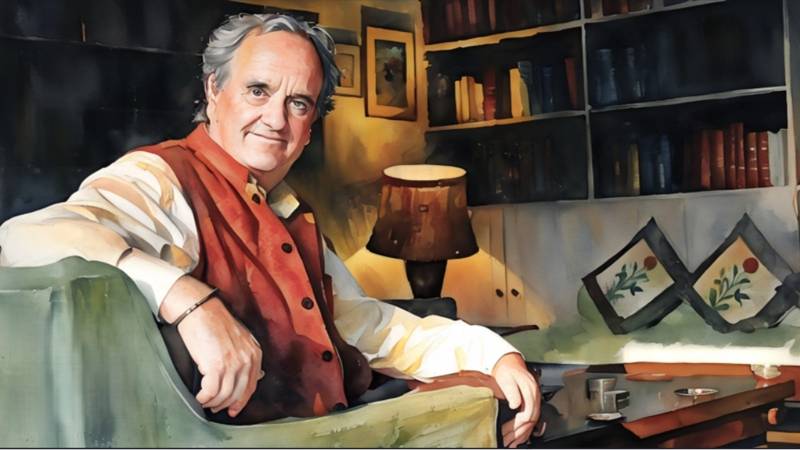
The year 2026 is still young—less than a month old—but it has already brought the sad news of Mark Tully’s death. Hearing that he passed away on 25 January 2026, feels like losing a close relative. The news transported me back to 1979, when Zulfikar Ali Bhutto was executed. In those days, Mark Tully was an “invisible member” of our BBC Kachetery (a BBC-listening group to be more precise) at Imam Bux Manzil, my maternal-grandfather Karim Bux Junejo’s autaq at the village of Boriri, Dadu district, Sindh.
Every evening, a dedicated group—Karim Bux Junejo, Mahkumddin Soomro, Shamasddin Soomro, Wali Muhammad Junejo, and I—would gather to listen to BBC London. Even Rajab, who tended the buffaloes of my maternal grandfather and looked after the autaq, was considered an equal in our BBC listening circle. One of Rajab’s special tasks was preparing tea, served in Chinese porcelain bowls. Because he never had enough bowls, the tea came in two rounds. Being a young member, I was always in the second round, constantly worried that if a random visitor dropped by, I wouldn’t get a cup at all.
I remember the tension of those sessions. If there was no detailed news about Bhutto, Mahkumddin Soomro would say impatiently, "deso’n ta Sairbeen chhato chawee" (Let us see what Sairbeen says). Sairbeen was the lead Urdu current affairs program, hosted by legends like Suraiya Shahab, Waqar Ahmed and Shafi Naqi Jamie. If the news didn’t meet our expectations, someone would remark, “aj kakh rakhi wayus” (“Today, he has saved him”), suggesting the program had gone soft on General Zia-ul-Haq.
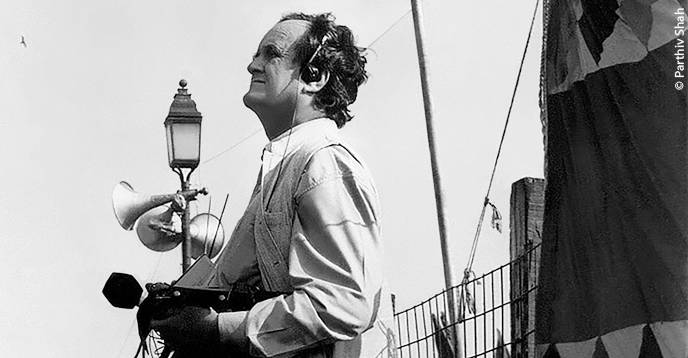
Shamusddin Soomro would often grumble in a monologue: "Mark Tully allae khathi aa, khaji wayo alae wikji wayo"—(“Where is Mark Tully, wonder if he had been kidnapped or bribed” – because his voice was missing that day).
To us, Tully was the gold standard of truth. He was a household name in our village. If someone missed an evening session of the BBC, we would tell him the next day, ‘You missed it; there was a report from Mark Tully.’
Mark Tully was the bridge between the silent villages of Sindh and the corridors of global power
The devotion to listening to the BBC was equally strong at Saeen Mahmood Ali Mangi’s shop. Dr Haji Khan Mangi remembers that upon his return from Chandka Medical College, he would join the elders gathered around the radio to listen to the BBC. In those days, there was a constant, collective expectation—perhaps even a deep-seated desire—for Mark Tully to deliver a powerful report. Dr Mangi recalls Taib Junejo, a regular listener, who would often predict with confidence, "ajj Mark Tully dabebdus" (“Today, Mark Tully will not hold back”). He further recalls that on 14 May 1979, during chaleho ( a religious memorial for the deceased, after 40 days) for Bhutto at Naudero, Larkana, the people literally carried Tully on their shoulders, shouting slogans of "Mark Tully Zindabad!" One political worker shook hands with Tully and told him, "juwan jo putt a’n, kani dajal khe na chhadja’n” (“You are the son of a brave father; do not spare the one-eyed man, the dajjal”)—referring to the popular nickname for General Zia.
Common people used their wit to fight the dictatorship through satire and jokes. One popular story claimed that Zia once asked his wife if he was as handsome as the actress Sridevi. She laughed and told him his eyes didn’t even match each other, let alone a movie star. Another, more bitter joke described how Zia’s face/photos like other towering persons of Pakistan were printed on postage stamps, but stamps were not stuck to the envelopes. When the intelligence chief investigated the matter, he reportedly told the General that the stamps weren’t sticking because people were spitting on the front of his photo rather than licking the back of the post stamps and then affix on enveloped and postcards.
Later, while I was living with Abdul Rashid Junejo at the University of Sindh’s residence colony, a BBC listening group began to take shape; however, its primary focus was on the Soviet invasion of Afghanistan. This new group included Akbar Burfat, Rashid Memon, Habib Burfat, Abdul Rashid Junejo, Joshilo Sindhi, and myself. I remember how Mark Tully and Satish Jacob ingeniously set up an informal ‘bureau’ at the New Delhi airport. They interviewed every passenger flying in from Kabul to piece together the ground reality. Through these accounts, Tully broke the significant news that Murtaza Bhutto was seeking support in India against the military government. I recall one night when Asghar Burfat argued that the best reporter in South Asia was John Simpson—famous for traveling with Ayatollah Khomeini to Iran—while Joshilo Sindhi insisted that Mark Tully was the greatest of all time. The argument continued late into the night, though it was never truly decided who was best.
In the middle of 1984, my interests shifted toward books of Mark Tully. I remember seeing a copy of Amritsar: Mrs. Gandhi's Last Battle by Mark Tully and Satish Jacob on Professor Zafar Hasan Syed’s table. I borrowed it immediately to make a photocopy. The book remains a masterpiece, capturing the tragedy of Operation Blue Star and the rise of Jarnail Singh Bhindranwale. Tully didn’t just report from a distance; he met the figures involved. He captured the indecision of Indira Gandhi and the pain of the Sikh community with haunting detail. Mark Tully was the bridge between the silent villages of Sindh and the corridors of global power.
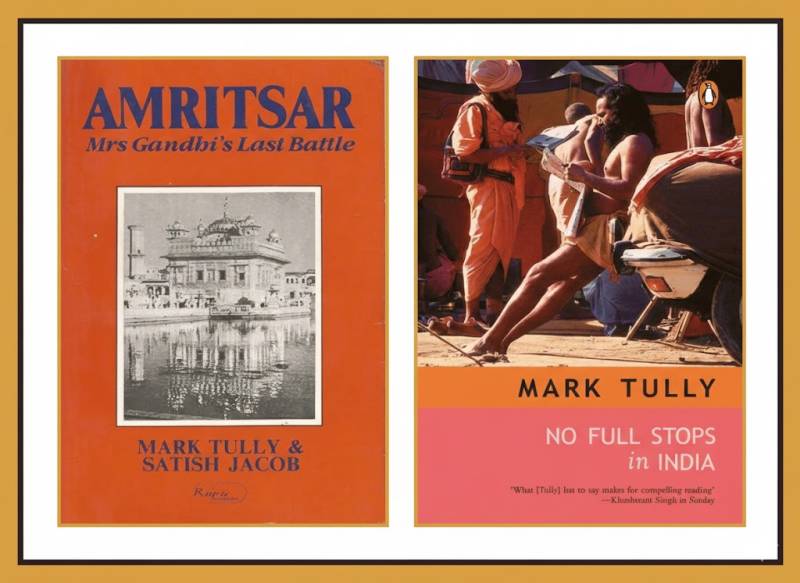
For a period, my memory of Mark Tully goes blank. However, I eventually found my way back to the world of radio listening during the era of the Babri Mosque crisis. I recall that in those days, Ali Nawaz Nizamani and I bought National Radios; with two bands, medium wave and short wave. I vividly remember that we purchased these radios from Rawalpindi’s Raja Bazar, and Professor Aijaz Qureshi accompanied us. At that time, I was working for the National Rural Support Programme, so visits to Islamabad were quite frequent. During those trips, purchasing books from old bookshops was my passion. I remember one day I purchased Mark Tully’s No Full Stops in India. It was published in 1992. The book contains some essays recounting the experiences of Mark Tully in India. The book’s text is evidence of his affection for India. The book in a way is response of so many reasons or justifications of Indian political in India. The book narrates the attitude of the Indian upper class post-Independence, and everyone is impressed by the by foreign thinking. The book also arguments about ‘caste.’ The author believes that caste was dismissed to be obnoxious to the egalitarian West and so it was obnoxious to the Indian elite too. The caste system has never been totally static, that it is adapting itself to today’s changing circumstances and that it has positive as well as negative aspects.
Another important discussion in the book centres around ‘English’ as the link language. He states that, the upper echelons of Indian society regarded English as one of the greatest gifts of the British. The elite were not concerned that English might lead to impoverishment of Indian languages and stand in the way of the growth of an indigenous national language. The book offers a perspective in understanding India.
I have gathered these thoughts and recorded what I could recall. Now, I feel I should end this essay with some personal information about Mark Tully. Here it goes: He was born in Kolkata in 1935 into the privileged world of the British Raj. His father was a successful businessman, and young Mark spent his early years in a sheltered household. Despite being born in India, he was sent to England at the age of nine for his education, attending schools like Marlborough College and later the University of Cambridge. At Cambridge, he studied theology and history, and for a time, he seriously considered becoming a priest. However, he eventually left the seminary, later joking that he was a bit too rebellious and fond of beer to handle the strict religious discipline.
In 1965, his life came full circle when he returned to India to work for the BBC. Although he started in an administrative role, he quickly moved into reporting, eventually becoming the Bureau Chief in New Delhi. Over the next thirty years, his calm and authoritative voice became the primary source of news for millions of people across South Asia. He reported on some of the most significant events in modern history, including the 1971 war that created Bangladesh and the tragic 1984 siege of the Golden Temple, known as Operation Blue Star. He was often right in the middle of the action, witnessing mortars and gunfire firsthand, which provided the basis for his first major book, co-authored with Satish Jacob.
Tully’s reporting was so respected that he received high honours from both Britain and India, including a knighthood and the Padma Bhushan. However, his long career at the BBC ended in a famous disagreement in 1993. He publicly criticised the organisation’s management for becoming too secretive and out of touch with its staff. This led to his resignation, but he refused to leave the country he loved. He stayed in Delhi as a freelance journalist and host of the radio show Something Understood, continuing to write books that explored the soul of India, such as No Full Stops in India and India in Slow Motion.
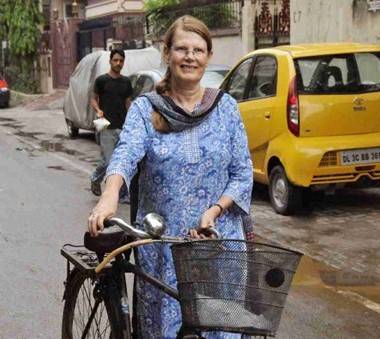
In his personal life, Tully’s heart was divided between two homes. He married Margaret Butler in 1960 and had four children, spending time with them during his visits to London. In Delhi, he shared his life with his long-term partner and fellow writer, Gillian Wright. He famously described this unique arrangement as “complicated.” Until his passing in January 2026 at the age of 90, he remained a beloved figure in India—a man who arrived as a child of the British Empire but stayed to become the country’s most trusted chronicler.