

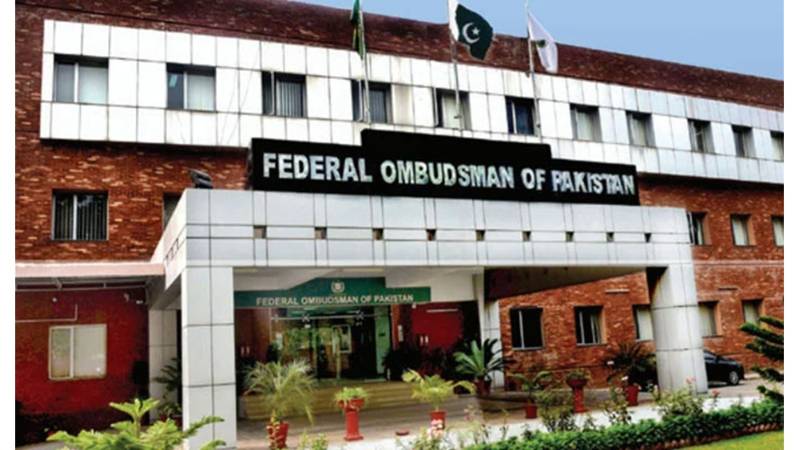
Working since 1983, the Federal Ombudsman is perhaps one of Pakistan’s least-known offices, and few people know that it holds some of the most far-reaching powers and has brought relief to hundreds of thousands of complainants; entirely free of cost. In a country where justice through the courts is often slow, cumbersome and expensive, this institution sounds almost too good to be true and yet it is real, and its record is remarkable.
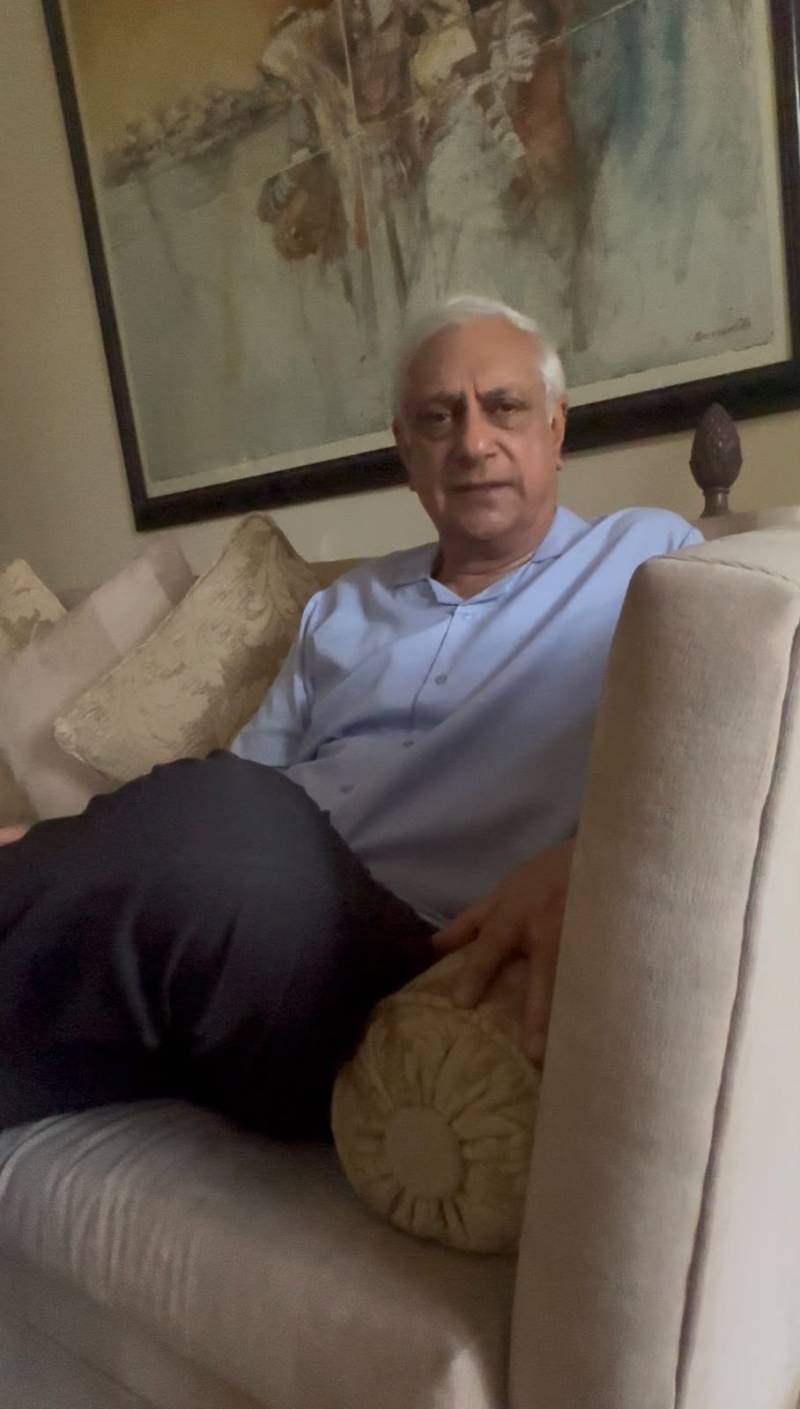
TFT had a chance to Interview Former Attorney General Justice Irfan Qadir, presently the Legal Counsel to the President of Pakistan.
***
TFT: Tell us more about the work your office is doing in providing justice to the citizens of Pakistan.
Justice Irfan Qadir: My current office is actually the highest grievance redressing mechanism provided by the statutes in Pakistan. People file writs against the federal government in various high courts which drag on for years but actually all such matters can be dealt with by the five federal ombudsmen based at federal level in Islamabad. My office is their final appellate authority.
The Wafaqi Mohtasib or the Federal Ombudsman deals with grievances against all ministries, departments, autonomous and statuary bodies, connected with the federal government. His legal status is equivalent to the Chief Justice of the Supreme Court of Pakistan and he has enormous powers.
The Federal Ombudsman alone handles around 300,000 cases against the government of Pakistan and its allied agencies every year. The cases are decided within 60 days and the implementation rate is more than 85%.
For the cases which are not implemented, complainants file appeals before the President of Pakistan. The President of Pakistan has the mandate to delegate his authority to anybody who is qualified to be a supreme court judge or who was ever appointed as federal ombudsman to make the final decision on the appeals.
Appointed by the President, at present, I decide all the appeals technically referred to as representations against the decisions of any of the ombudsmen or if there are compliance issues.
We also have the federal tax ombudsman who is a senior judge from the supreme court and which in the tax hierarchy is the highest forum and final authority in the country. We also have a federal banking ombudsman, a federal insurance ombudsman, and a federal ombudsman for harassment against women. All these offices are hearing thousands of cases and the case decision and disposal is fast and free.
TFT: How many representations do you get within a year in case any compliance order is not carried out or is delayed?
Justice Irfan Qadir: Since I took office I have decided more than 6,000 representations in the last 2 years. I especially want to mention that we have provided 100% relief to victims of bank fraud, including app scam cases and instances where users shared an OTP, despite bank disclaimers.
We have now made the law that even if somebody shares the OTP and is defrauded, the bank has to compensate and return the money to the victims immediately. The bank can deal with the fraud case afterwards and recover the stolen money through the special Asset Management Group which functions in every bank.
We have made sure that the banks must provide this assurance and comfort to their customers that their money is safe and as a matter of good banking practice.
"Very few people know that the President of Pakistan can pass any order in the interest of justice; whereas the jurisdiction exercised by courts is limited to what the constitution allows"
TFT: This is a huge achievement indeed. Is this also the case with other ombudsman offices also?
Justice Irfan Qadir: Absolutely. This principle goes for all offices. For example, electricity companies were regularly over charging consumers due to defective electricity meters and were being penalized for no fault of their own and we were getting many complaints. I have declared overcharging because of faulty meters to be illegal unless anyone is involved in tampering with the meter and the electricity company can provide direct evidence of it.
But if there is no direct evidence, any sort of overcharge to the consumer is now totally illegal; in fact we made sure that the companies returned any extra amount charged to the consumer in all the cases. The same goes for Sui Northern and Southern Gas and, in fact, all other utility companies
TFT: How long has this system been working?
Justice Irfan Qadir: The Wafaqi Mohtasib was established in the 1980s and it has been very successful. Then some twenty years ago, the Federal Tax Ombudsman, the Banking Ombudsman, and Insurance Ombudsman were established, and in 2010 the Federal Ombudsman to protect women against harassment was established.
For cases submitted before the Ombudsmen and subsequently presented to the President of Pakistan, no judicial body, including the Supreme Court, retains further jurisdiction. So, this is the ultimate forum. Also, the President's office is a constitutional entity and the Ombudsman's authority originates from an entry in the Federal Legislative List of the Constitution; therefore, the directives issued to any government department represent the final legal authority, and compliance is mandatory.
Very few people know that the President of Pakistan can pass any order in the interest of justice; whereas the jurisdiction exercised by courts is limited to what the constitution allows.
TFT: The system is actually providing a social security net to the public but do you think that it is a parallel judicial system?
Justice Irfan Qadir: No, there is no friction between this system and that of the regular courts because the whole idea is to provide relief and speedy justice to the downtrodden, to the innocent and to all those who have been wronged. It is in accordance with the spirit of the constitution.
I will give you an example. Recently, a highly qualified officer from Zarai Taraqiati Bank, holding a PhD in agricultural sciences, appealed to the President. Despite 28 years of service, he had been victimized through a transfer to an insignificant branch and summarily dismissed without pensionary benefits, on frivolous charges.
Both the High Court and the Supreme Court ruled against him. The case was presented before me but during the proceedings, the officer passed away. Nonetheless, I determined the bank's actions constituted mal-administration rather than simple service matters, thereby overcoming jurisdictional bars.
I ruled in his favour, declared the dismissal unlawful, and directed the bank to pay his full benefits, resulting in over 2 crore rupees being disbursed to his family. There are hundreds of cases like this where the courts have delayed the disposition of justice.
TFT: Why is the effectiveness of this institution not more widely recognized as a grievance redressal mechanism for the general public?
Justice Irfan Qadir: It is actually true that our work and its positive results do not receive the publicity which it deserves. We mostly work quietly to redress the grievances of people that come to the Federal Ombudsmen offices. But I agree that there is definitely a need to make more people aware of the importance of this institution so that more people can benefit, especially the women.
I particularly want to stress our success for the women's property rights claim cases. Today, if a woman is being denied her legal share of her father’s inheritance by anyone, anywhere in Pakistan, she can file a complaint with the Federal Ombudsman. We have an ombudsman in all four provinces and we also have a women ombudsman in Peshawar, Lahore, and Karachi.
For the inheritance claim cases, the complainant can come to the provincial ombudsman and get her complaint registered very easily. All of these cases are decided within 2 to 3 weeks, whereas it used to take up to 40 years of litigation and for their whole lives women could not possess their rightful property.
TFT: What is the procedure after the case is decided to ensure compliance and the transfer of property to the women?
Justice Irfan Qadir: Within 24 hours of the decision, the Deputy Commissioner in the particular district is given orders to ensure that her share of the property and the property deed are transferred to her name in the land records and she is also handed over the possession of her property. The DC is empowered by the law to restore possession and he is authorised to use all government machinery and the coercive arm of the law for speedy compliance.
Compliance in all cases has been one hundred percent.
TFT: That is truly a monumental achievement and a major leap forward for women’s empowerment—something every woman in Pakistan should be aware of. Do you publish an official repository of case records or an online compilation of case studies that the public can review for reference?
Justice Irfan Qadir: We have annual reports from the ombudsmen offices which are presented to the President of Pakistan, but they are not all available online. We are trying to make them available online in the next one or two months.
There are indeed remarkable accounts of individuals with no avenues left for redressal who ultimately got justice. There are so many cases where we have penalized Electric Supply Corporations for negligence in cases involving electrocution caused by faulty wiring, ordering that the victims receive medical treatment abroad fully funded by the responsible utility companies.
And let me tell you that we have taken the law to such an extent now that harassment matters that we deal with are largely predisposed heavily in favour of women. In sexual harassment cases, we maintain an unrelenting zero-tolerance policy; the same is true for cases of gender-based harassment and workplace harassment. The scope of the law has been expanded so that aggressive behavior, harsh language, or rebukes from senior officials are now recognized as workplace harassment. While superiors maintain the right to disagree with subordinates, insulting them or subjecting them to undue pressure is strictly prohibited. The public does not know how strict the law has become in these matters.
TFT: It was indeed a pleasure to meet you and learn about the amazing work your office is doing. Thank you very much.