

The continuous expansion of urban areas in Pakistan is a striking feature of contemporary transformations in the country. According to the Population Census 2023, around 40 per cent of the population lives in urban areas. Compared to other South Asian countries, Pakistan has the highest rate of urbanisation. The drivers and consequences of unregulated urban expansion processes are evaluated together with the associated encroachment upon ecologically sensitive areas.
The expansion of unplanned urban migration leads to urbanisation, and this, in turn, leads to the expansion of housing societies. For instance, in Punjab, out of 7,905 societies, 5,118 are illegal; in Khyber Pakhtunkhwa, more than 90 per cent of the housing societies are not legally approved; the Sindh government has declared 480 housing schemes illegal; in Balochistan, only Quetta has more than 125 illegal housing schemes; and lastly, within a radius of 22 km, Islamabad has declared 99 societies illegal.
Unregulated human activities have severely disrupted the natural flow and ecological balance of rivers and streams across Pakistan. The encroachment of residential and commercial settlements along waterways, combined with improper solid waste disposal practices and weak enforcement of existing environmental regulations, has intensified flooding risks, degraded water quality, and diminished the capacity of natural drainage systems. The encroachment and construction in riverine areas have not only disrupted the ecological balance but also put human lives at risk.
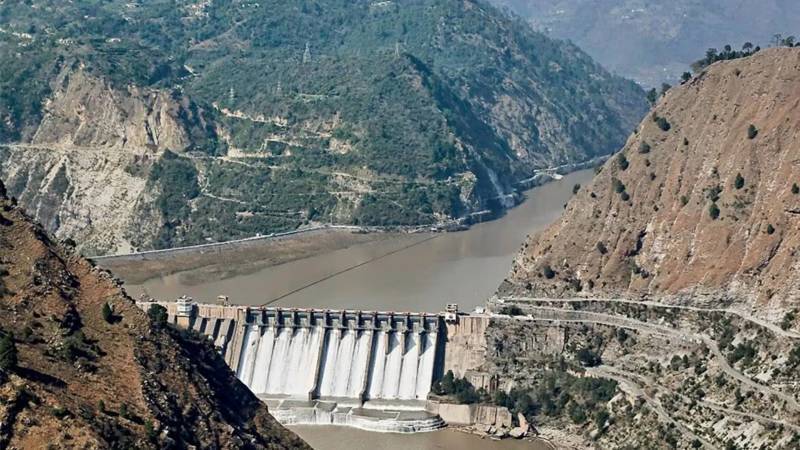
Pakistan faces either water shortages or floods every year during the monsoon season. Human life has always been linked to water, which is why settlements have traditionally been established near rivers, springs, and other water sources. Tarbela Dam was built in 1976, and since then, no colossal dam has been constructed.
Pakistan can store only 7 per cent of its water resources, which is equivalent to only 30 days of storage capacity, while India can store water for 190 days. Pakistan wastes 10 trillion gallons of water annually due to the deficiency of water reservoirs. The lack of substantial progress in water storage development has prevented the utilisation of approximately 22 million acres of barren land for agricultural purposes.
Weak enforcement mechanisms, fragmented institutional coordination, and the absence of integrated land-use planning have allowed these encroachments to persist
According to UN-Habitat 2023, Pakistan ranks fifth among 195 countries in terms of environmental pollution, highlighting a serious environmental governance challenge. The country incurred an estimated PKR 3.3 trillion in economic losses and the displacement of approximately 8 million people during the catastrophic floods in 2022. After the devastating floods, the government announced several safety measures, including a ban on construction along river banks, to prevent future flooding, but these announcements remained confined to paper.
Presently, the same situation persists in all the provinces, where illegal constructions are rampant along river crossings. According to NDMA and UNICEF, the 2025 floods have resulted in nearly 1,000 fatalities and caused extensive damage across multiple sectors. Approximately 2.5 million acres of agricultural land have been affected, and more than 100,000 livestock have perished.
The disaster has impacted over 6.9 million people, including 4.7 million in Punjab, 1.6 million in Khyber Pakhtunkhwa, 356,000 in Gilgit-Baltistan, and 171,000 in Sindh. Infrastructural losses are severe, with 12,569 houses and 239 bridges damaged. Preliminary estimates suggest economic losses ranging between USD 6 and 10 billion, underscoring the scale of the humanitarian and developmental crisis. These figures emphasise the urgent need for comprehensive policy interventions focused on climate resilience, sustainable urban planning, and disaster risk reduction.
Encroachments on rivers and streams manifest in three primary forms, each posing distinct challenges to environmental governance and disaster management. First, residential encroachments involve illegal settlements on natural waterways and river channels, the construction of cheap housing units, and the spread of slums. Second, commercial and industrial encroachments include the establishment of factories on riverbanks, the direct discharge of industrial waste into rivers, and the construction of illegal commercial centres. Third, agricultural encroachments involve farming on river channels and the illegal occupation of canals and waterways. Each year, at the onset of the monsoon, the issue draws significant attention; however, once the rainy season subsides, these commitments and initiatives are invariably deferred or abandoned.
Pakistan is witnessing the effects and consequences of these encroachments due to unplanned migration and the lack of law enforcement. Weak enforcement mechanisms, fragmented institutional coordination, and the absence of integrated land-use planning have allowed these encroachments to persist. Addressing them requires strict regulatory action, spatial zoning reforms, and community-based relocation strategies aligned with sustainable development and disaster resilience goals.
Encroachments on rivers and streams pose a critical threat to Pakistan’s environmental integrity, water security, and disaster resilience. These challenges are further compounded by rapid urbanisation, inadequate urban planning, and institutional fragmentation. As a result, riverine systems are increasingly posing threats to public safety, infrastructure, and environmental sustainability. To ensure the survival and integrity of the natural environment, all forms of encroachment along highways, rivers, and streams must be abolished. Sustainable solutions depend on the cooperation of government institutions, civil society, and the public.
Policymakers should prioritise sustainable urban development, allowing only those planning initiatives that minimise ecological disruption. Addressing these challenges requires a shift from reactive to proactive governance anchored in strong political will, interagency collaboration, community participation, and sustainable planning. By implementing strict law enforcement, advanced monitoring systems, inclusive awareness programmes, and sustainable urban planning, the government can protect vital riverine ecosystems, mitigate flood risks, and secure long-term ecological stability. A coordinated national approach will not only preserve natural resources but also ensure a safe, resilient, and healthy environment for future generations.