

Blatantly, the economic outlook of any state impacts its human resources. In this regard, true democratic states produce an effective human resource because the governments of such states are true representatives of their people. Such states' governments, the by-products of a transparent electoral process, work for the welfare of the populace, ensuring social security for them.
To ensure popular security, they promote education, enhancing the literacy rate of the state. Further, they invest in an innovation-driven economy by focusing on the technical and vocational training of the people. Also, they give job opportunities to the public so that they can fulfil their basic needs, which include food, clothes, and shelter. Moreover, they connect academia to industries to polish the knowledge of intellectuals and manage their youth by making them productive minds. With that, these governments not only take measures to alleviate poverty but also maintain a proper balance in the state, avoiding economic disparities within a state. Hence, all the aforementioned steps of strong democratic governments contribute to the well-being of their public, which is why the Human Development Index (HDI) of such states is high.
Denmark is a classic example of one of the advanced states whose HDI falls in the top ten states in the world, depicting its stable economy and balanced social outlook. People, therefore, of such states are well-informed, civilised, and actively participate in nation-building and state affairs, as per the instructions of the idealist philosopher Plato, who considered the state an end and the public a means.
The presence of undemocratic elements in the state's engine does not focus on healthcare facilities, the promotion of an intellectual capital economy, or the solution to the digital divide, jeopardising the lives of the poor and pushing them towards begging
These civic-minded people exert performance-based deterrence on their leaders to make them serve the general will; otherwise, they would revoke their power, as instructed by John Locke, a contractual philosopher. This compels officials to make people-centric policies and provide them with social security, bolstering trust between people and the institutions of the state. These kinds of robust democratic nations possess a high literacy rate due to greater investments in the education sector. Furthermore, there exists social equity, morality, and justice among their communities. These educated people are more responsible and associate honour with the responsibility of nation-building. Additionally, their tax culture is strong, reflecting the civic, political, and social culture of the nation.
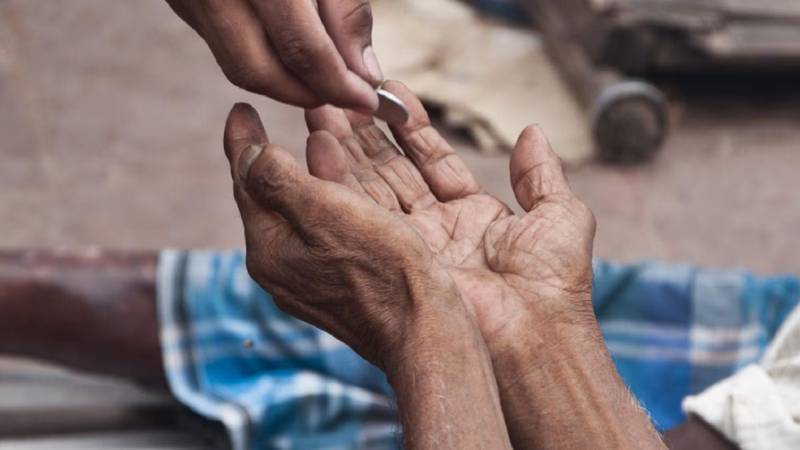
Regarding the curse of beggary, it is the aftermath of weak economies, which leave no alternative path for their vulnerable factions except to beg. In this line, Pakistan, a hybrid democracy, is a model illustration where there exist 15.5 percent of beggars in the total population, according to The Economic Times report. There are multifarious reasons behind the tumour of beggary that force people to suppress their dignity and beg. First, the lack of job opportunities makes people so vulnerable that they cannot fulfil their basic needs of life and choose the path of begging for their survival. Also, weak governance does not allow the promotion of education for all as per Article 25(A) of the Constitution. It also barricades the propagation of welfare projects that soothe the public, exposing people to beggary. That is why Pakistan’s HDI ranks 164 out of 193 states, depicting the saturation of unproductive masses in the state due to the prevalence of elite capture.
Furthermore, owing to the evil of the economic divide in the state, people from poor classes are left with the option of begging to meet their very basic needs. The apolitical-natured governments of Pakistan, including the opposition, added fuel to the fire by considering only their vested interests. One can take the example of recent episodes of political instability that ingrained political polarisation in Pakistan. As a result, the public will and well-being, as claimed by Jean-Jacques Rousseau, are compromised, leading to the mismanagement of Pakistan’s youth bulge and uncontrollable inflation, pushing people into the abyss of begging.
In the same vein, the dilemma of rapid urbanisation in Pakistan is straining the available resources. People migrate towards urban centres for better standards of living and facilities. However, the lack of opportunities for them, coupled with abortive government policies, motivates people to beg. The stark reality of climate change also exacerbates poverty by multiplying damages, including food insecurity and inflation, weakening the social fabric of the nation and impelling people to beg. The ruination caused by the floods in 2022, coupled with the poor mitigation plan of the government in response, substantiates the aforesaid argument. Similarly, the presence of undemocratic elements in the state's engine does not focus on healthcare facilities, the promotion of an intellectual capital economy, or the solution to the digital divide, jeopardising the lives of the poor and pushing them towards begging. Last but not least, the prevalence of the beggar mafia that earns money through the heinous act of abducting children and forcing them to beg. According to BBC reports, this network underpins beggary culture and criminal activities in Pakistan. Hence, the widespread nature of beggary in Pakistan is inflicting harm on the state in many ways and needs to be impeded as a pressing concern.
By acting upon the aforementioned models of successful states along with public awareness campaigns, Pakistan can combat the scourge of beggary
The implications of beggary are very serious. Beggary gives birth to uncivil people with no sense of integrity and responsibility. Besides, it makes people parasitic, preventing them from taking part in national affairs or development. These beggars do not add to the economy of the state, leaving the nation in an economic crisis. Likewise, these financially dependent people engender a parochial-cultured society that shakes the roots of democracy. Unaddressed beggary facilitates horrendous mafias that spread beggary via the kidnapping of children, increasing the crime rate in the state. Also, begging erodes trust between people and state institutions, harming nationalism among the people.
Currently, the government is modifying legislation to criminalise begging by amending the Prevention of Trafficking in Persons Act, 2018, to include "organised beggary" as a crime. Further, the Federal Investigation Agency (FIA) has been conducting operations to curb the beggary network attempting to travel abroad. Similarly, the Punjab Safe Cities Authority (PSCA) has penalised the act of begging to curb its tentacles. However, these are short-term solutions. For the proper eradication of beggary, the government needs to opt for a long-term approach.
There exist international models that Pakistan can adopt to free itself from the clutches of beggary. First, the Bihar social model operative in India, based on the concept of empowering poor citizens, focuses on the rehabilitation of beggars with incentives that fulfil their basic needs along with skill development mechanisms to make them self-sufficient. Likewise, the Scandinavian model, with the penalisation of beggary, emphasises a social policy approach under which it provides targeted healthcare facilities, emergency care, and food distribution programmes. With that, Germany's Ausbildung model offers vocational and technical training to its youth, minimising their vulnerabilities by making them productive people. That is why its HDI is 7 out of 193 states.
In the same context, the Japanese model of e-governance ensures people-centric policies and welfare programmes, fostering democracy and political stability. Moreover, Tanzania’s urbanisation control model advances its rural regions by creating agro-based opportunities for people and developing infrastructure. Furthermore, India's cheap canteen model provides raw food to people at cheap rates so that they can initiate small-sized businesses. This not only addresses unemployment issues but also caters to food insecurity, backed by climate change, eradicating economic disparities. Lastly, there is a digital divide mitigation model followed by many African states in which digital literacy programmes and low-cost electronic devices are provided to marginalised people to bridge socio-economic barriers.
To conclude, Pakistan has been grappling with many issues, including the dilemma of beggary. The weak economy of Pakistan is carving out pathways for beggary. Moreover, the lack of necessities of life among people compels them to opt for begging to fulfil their core needs. However, by acting upon the aforementioned models of successful states along with public awareness campaigns, Pakistan can combat the scourge of beggary and strengthen its economy by investing in a knowledge-based economy. This issue is surmountable if addressed on time; otherwise, the future of upcoming generations will be in jeopardy.