

“People shouldn’t be afraid of their government. Governments should be afraid of their people.” — Alan Moore
According to political science studies: “Democracy is a system of government where political power resides with the people. This can manifest directly, or indirectly through elected representatives who make decisions on laws, policies, and leadership. Ultimately, the core principle is ‘rule by the people’.”
Its translation in the context of Pakistan and some of her sister countries might be: “Democracy is a system of government where political power resides with the elite. This can manifest directly, or indirectly through selected representatives (through sham elections) who make decisions on laws, policies, and leadership. Ultimately, the core principle is ‘rule by the elite’—the civil-judicial-military complex.”
The Constitution, over which so much pride is taken and is supposedly guarded by a ‘watchful’ judiciary, is nothing more than a piece of paper for the elites who do not care two hoots about its sanctity. Not just one, the country has seen the desecration of all three of its constitutions, with the result that today, 240 million people are clueless as to what arm-twist may be waiting for them around the corner. Whether in the international arena or domestic matters, the reins of leadership are being held by those who claim to be elected representatives—yet voters are unable to recognise their faces.
That said, the idea of democracy is that people should be able to elect a few who they consider capable of representing them at different tiers of government, which include central, provincial and local levels. Such a system ensures public support for policies, maintenance of law and order, regulations, justice, and overall development of the socio-economic structure of society.
Expanding the city to such an enormous extent and turning its green serenity into a concrete jungle could only have been the brainchild of those interested in commissions and kickbacks
Countries claiming a true democratic spirit may have one political party in the centre, another in a province, and yet another at the local level. This is quite normal as it reflects the people’s aspirations at various administrative stages. Together, these political adversaries are expected to work in unison for public benefit, and where this kind of setup exists, one can easily discern autonomy of purpose and function. An example from the United Kingdom may help illustrate this concept.
The government in London operates on two tiers: an upper tier, the Greater London Authority (GLA), and a lower tier. The Mayor of London and 25 London Assembly Members form the upper tier, serving as checks and balances on the Mayor. The Authority has three functional bodies responsible for delivering services related to London’s transport, policing, and firefighting. Although the Conservative Party is currently in power in the UK, the GLA has belonged to the Labour Party since 2016.
Our country is unique in many ways. It is a federation with a National Assembly and four provinces, each with its own parliament. However, what is missing is that neither the federal government nor the provincial ones have functioning local governments as envisaged under Article 140A of the Constitution. Karachi does have a mayor these days, but the principal cities in Punjab, Khyber Pakhtunkhwa, and Balochistan have been denied this basic democratic structure. Under Article 258 of the Constitution, the Islamabad Capital Territory (ICT) is managed by the President, who may, by order, make provisions for peace and good governance in any part of Pakistan not forming part of a province—until the Parliament provides otherwise by law. To date, no such legislation has been passed.
This implies that while provinces may be enjoying representative governments, people living in the Islamabad Capital Territory cannot lay claim to a representative governmental structure. Rather, its affairs are managed by bureaucracy comprising several key bodies, including the ICT Administration, headed by the Chief Commissioner who handles civil administration and law and order; the Islamabad Metropolitan Corporation, similar to a district government; and the Capital Development Authority, responsible for planning, development, and construction. In short, whatever happens in ICT reflects not the will of the residents but the whims of bureaucrats.
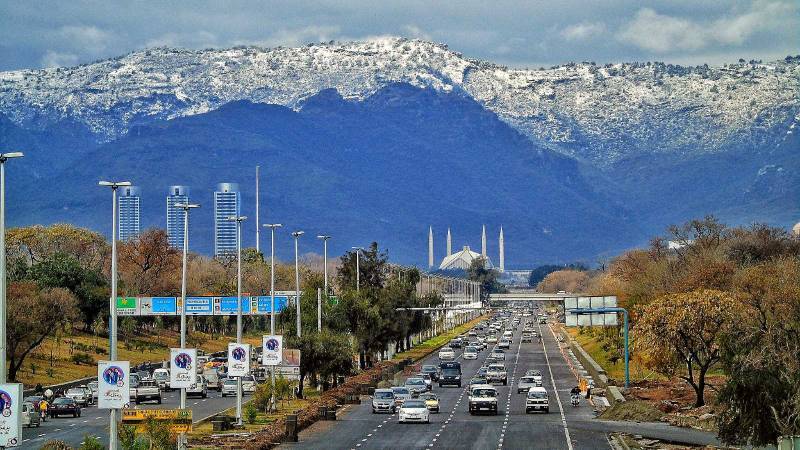
In civilised democratic countries, major changes are proposed to the people, who may or may not approve of certain plans. But in ICT, residents are condemned to endure whatever is thrust upon them in the name of administration and development—whether they like it or not. So when the city’s largest urban green belt was wiped out, much to the dismay of environmentalists, to create space for the Seventh Avenue, nothing could be done. Expanding the city to such an enormous extent and turning its green serenity into a concrete jungle could only have been the brainchild of those interested in commissions and kickbacks—certainly not the locals, who openly express their disgust at how Islamabad’s character has been destroyed beyond recognition.
According to a press report, and after decades of shifting the capital to Islamabad, plans are now being considered for a new governance model inspired by Delhi’s system under the Government of National Capital Territory of Delhi, which provides various services to its citizens. The plan envisages a legislative body with a total of 31 members, of which 15 are to be directly elected, 4 women and reserved seats, while 12 would be nominees of the federal government from the fields of education, health, town planning, commerce and industry, environment, civil society, law, and minorities. This clearly implies that, so far, Islamabadis have had no say in the city’s affairs and were wholly dependent on government-appointed officials.
There is no denying that local governments are significant for both governance and development at the grassroots level. Easily accessible to the people, officials become a bridge between citizens and upper tiers of government by conveying local needs and expectations. Moreover, people can conveniently hold these public officeholders accountable when they falter in their duties. These are essential elements for creating strong, resilient, and democratic societies.