

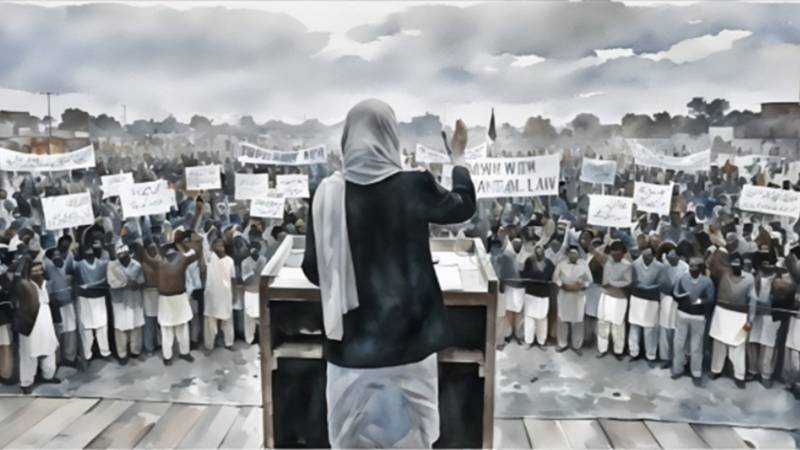
“Salam Benazir kesi shaandaar zindagi
Shikast aapko aduu koi na de saka kabhi”
("Salam Benazir, for a life stately
You remained undefeated by every enemy")
Salam Benazir, by Fahmida Riaz)
Benazir Bhutto (BB) – assassinated in Rawalpindi eighteen years ago today – is an iconic personality from South Asia, not only the scion of one of the most significant political families nay dynasties of the region but the first female Prime Minister in the Muslim world. In addition, her name is synonymous with the struggle for democracy against two military dictators, as well as martyrdom in this cause.
Surprisingly, not much has been written on Benazir, certainly not as much as her father, Zulfikar Ali Bhutto (ZAB), the founder of the Pakistan People’s Party (PPP) and former prime minister of Pakistan. Most of the standard references on her thrown up by a cursory push of a button confirm this. So when an eminent scholar like Professor Fateh Mohammad Malik comes up with a new book on the BB, and that too in the month of her assassination, readers and admirers of BB are bound to take notice.
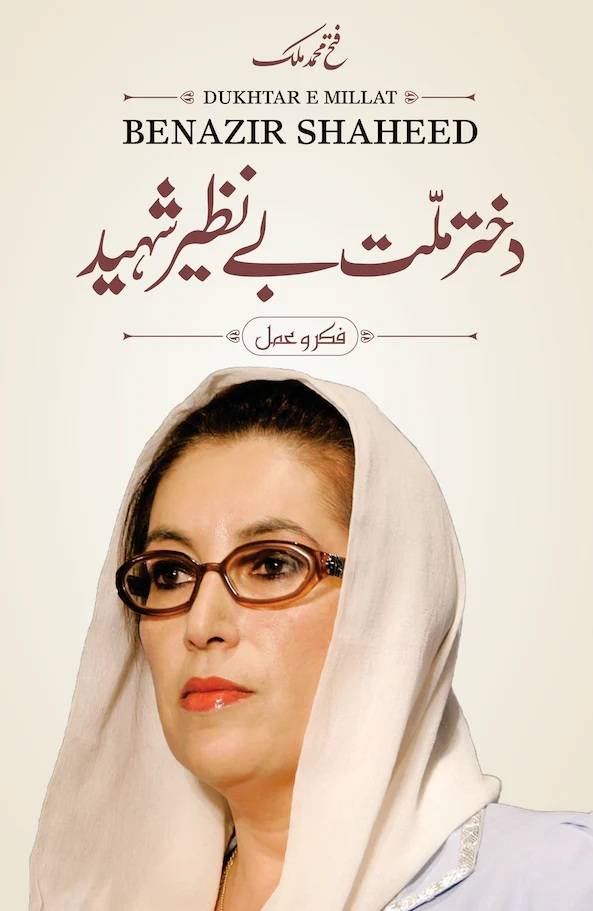
Title: Dukhtar-e-Millat Benazir Shaheed: Fikr-o-Amal
Author: Fateh Muhammad Malik
Publisher: Sang-e-Meel Publications, Lahore, 2025
Pages: 127
Professor Malik is one of our most erudite and prolific critics, linguists and scholars for over half a century. He has written on diverse topics and has spent time under the tutelage of some of our biggest cultural and literary icons. He has also taught, served and held prestigious chairs both nationally and internationally. Most interestingly, what ideally prepared him to write his book on BB, titled Dukhtar-e-Millat Benazir Shaheed is that he got close to ZAB, who personally requested him to edit the daily Mussawaat around the 1970 general election, both sharing the common ideology of Islamic socialism, while later Malik would become a press secretary to Hanif Ramay, also a PPP politician and the Chief Minister of Punjab for 1974-1975.
Malik’s foreword is dated 21 June, the date of Benazir’s birthday. The brief book has been divided into two sections: one on her self and qualities, and the other on matters of faith and the world.
The first chapter looks at how the Russian scholar Anna Suvorova views BB in her biography on the latter. One agrees with Malik that “President included, whoever created hatred in Benazir’s life became busy in proving themselves to be her true ideological lovers after her death.” (p 20)
Professor Malik is one of our most erudite and prolific critics, linguists and scholars for over half a century
The second chapter discusses the late Wajid Shamsul Hasan’s memoirs of his association with the Bhutto family. It brings out the bravado of Benazir at the rejection of death threats and friendly advice not to return to Pakistan to contest elections during the military rule of Pervez Musharraf. An interesting anecdote from Hasan recounts how the resistance of a few military officers to senior military officers’ plan for the military to keep being part of politics by keeping both ZAB and Sheikh Mujibur Rahman in Mianwali Jail enabled the eventual but conditional transfer of power to ZAB in 1971.
Farkhanda Bokhari, who paid the price for being a brave political worker of the PPP during the Ziaul Haq dictatorship by being imprisoned, tortured and then exiled from Pakistan in handcuffs is also discussed in the context of her two books, one of which is a daring autobiography that should be better known to our feminist comrades as well.
Syeda Abida Hussain’s own ‘Benazir story’ is the subject of another chapter. We learn here through a discussion of Hussain’s own biography of Benazir Special Star that the former had advised her not to accept the premiership of Pakistan after the latter’s success in the 1988 elections.
What is perhaps lost on the learned writer is that Hussain’s biography was the subject of controversy following its publication in 2017 by the Oxford University Press (OUP) when Benazir’s daughter Bakhtawar labelled its contents as slanderous. The book had to be pulled from the market and its launch in Karachi had to be cancelled. Even now, the book is not listed in the OUP catalogue. However the question Malik poses at the end of the chapter is worth pondering over and over again: “Our leaders whom the people grant such sacredness, why do they rankle in the eyes of our establishment?”
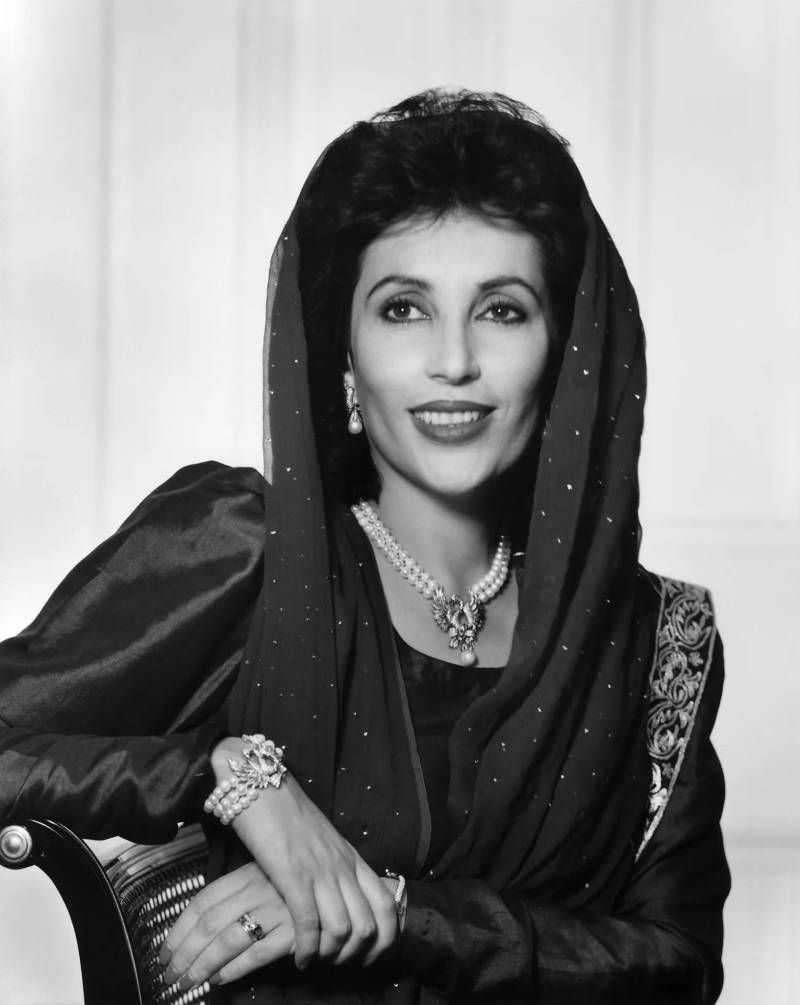
Even the views of the ‘man for all seasons’ Javed Jabbar on his erstwhile boss make it to this book, which had been reviewed in Pakistan’s newspaper of record as “an exercise in vanity.”
Benazir’s untimely early death not only deprived Pakistan of perhaps the only charismatic statesman who could have filled the void left by the execution of her father – and which fundamentalists and capitalists of every hue have since desperately tried to fill – but also a sophisticated thinker who was perhaps a woman in a hurry.
In the chapter on “Benazir Shaheed’s Loving Political Role,” Malik refers to the various monickers attributed to Bhutto here as “Daughter of the East,” then as “Daughter of Destiny;” but he does not take into account more critical views about her, such as the long article “Daughter of the West” by prominent British-Pakistani writer Tariq Ali in the London Review of Books following her assassination. This chapter also throws valuable light on Benazir’s reading tastes – like her reference to dissident Soviet poet Anna Akhmatova in a conversation with her cousin Tariq Islam.
What Malik sees as a seamless transition from socialism to Musavaat-e-Muhammadi (Mohamaddan equality) following Benazir’s re-election as prime minister, many critics saw as a surrender to social democracy and the mullahs, something her father had also been accused of doing, and which tragically proved to be both father and daughter’s undoing in the final analysis.
Elsewhere in the book, at times, it seems that Malik is straying from his intended topic advertised on the book’s cover i.e. the thought and action of BB. At other times, some of his material seems outright irrelevant. For example, in the chapter on “Benazir’s Struggle for Democracy,” the role of her husband and current Pakistani president Asif Zardari and the quotations supporting him seem out of place.
The chapter on ‘The Evolving Role of Women in Muslim Society’ is easily the longest chapter in the otherwise short book but Malik’s insinuation that Benazir reminds him of ‘an ideal Muslim woman’ like Deputy Nazeer Ahmad’s Asghari from Mira’at-ul-Uroos seems a bit far-fetched and unconvincing.
The chapter is very interesting but quite out of place in a book of essays ostensibly about the subject, Benazir Bhutto. The name ‘Benazir’ only occurs twice in the whole chapter, once on the very first page and the other towards the end; one is not sure what connection this chapter has with Benazir. The chapter also appears to be written a few decades ago, evidenced by the fact that it references the great Urdu writers Ahmad Nadeem Qasmi, Parveen Shakir and Fahmida Riaz as still living, despite all of them having passed on now.
In conclusion, though Malik’s effort in timing the publication of this book with the death anniversary of Benazir Bhutto is commendable, it would be better to call this a compendium of miscellany related to Benazir; a collection of writings pertaining to mostly a positive and approving image of the subject. Its value thus lies not being a proper biography of the late leader, but rather what others have written about her over the last decade or so. The volume adds little to our knowledge of BB, since just as much can be gleaned from the books by the authors mentioned therein by Malik. Also, the book leaves out discussions and views of other important books and writers on BB from the 1980s, like the books penned by journalists Emma Duncan, Christina Lamb and more recently on the PPP by Owen Bennett-Jones; and by critical members of the Bhutto family itself, chiefly Fatima Bhutto. Also, Malik himself approvingly quotes the views of others but does not give us his own views other than viewing BB from the lens of progressive Islam; despite his closeness to Bhutto senior and the PPP, a more personal account of his interactions with the Bhutto daughter is missing here.
Also despite Malik’s devoted son Dr Tahir Naeem Malik’s diligent proofreading, one hopes that the second edition of the book will be more tightly proofread. The book is dedicated to the “people deprived of bread, clothing, shelter and education” but looking at the hefty price tag of the book, one could probably add ‘book’ to that list of deprivations as well, since chances are that none of the ‘people’ are likely to be able to afford the book.
For the definitive version of BB’s thought and life, though we will have to wait for Farhatullah Babar’s insider account of the Benazir years She Walked Into The Fire.
Note: All the translations from the Urdu are by the reviewer.