

Art has always been more than decoration. It is diplomacy without dialogue, power without armies, and persuasion without coercion. In a world where influence often outweighs force, art has become one of the most enduring forms of soft power, a tool through which nations project identity, prestige, and ideological authority.
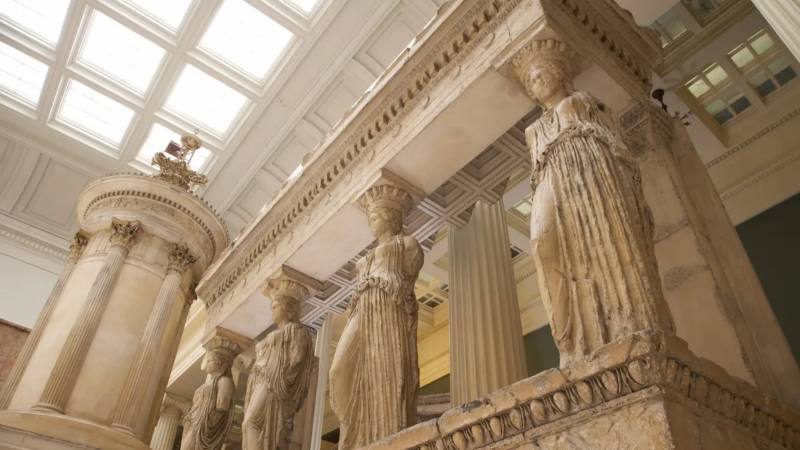
The Louvre’s marble halls, the Guggenheim’s flowing glass, the British Museum’s monumental rooms: these are not neutral spaces. Every exhibit, acquisition, and architectural choice communicates something about who a country is and how it wants to be seen. Beauty, carefully curated, becomes strategy.
Political scientist Joseph Nye coined the term soft power to describe a nation’s ability to influence others through attraction rather than coercion (through culture, values, and ideals instead of armies or sanctions). Museums, galleries, and cultural institutions are central to this power. They present a nation as sophisticated, civilised, and morally authoritative.
France’s Louvre, Britain’s Tate, and the United States’ Metropolitan Museum of Art function as embassies of culture. When a country loans a masterpiece, funds an international exhibition, or restores an artefact, it is practising diplomacy through admiration, projecting influence subtly, elegantly, and persuasively.
Yet this soft power is never neutral. Museums frame art in ways that reflect and reproduce hierarchies. European masterpieces occupy central spaces; artefacts from Africa, Asia, and the Americas are often relegated to peripheral rooms. The museum, intentionally or not, becomes a map of global power, narrating whose stories matter most.
Here, Antonio Gramsci’s theory of cultural hegemony is illuminating. Gramsci argued that ruling classes maintain dominance not just through force, but by shaping culture, by determining what is considered “normal”, “beautiful”, or “true.” Museums embody this principle: they present selected histories and aesthetics as universal, persuading visitors that certain values and ideas are natural while obscuring competing narratives.
Museums have the opportunity to present art not as trophies or consumable objects, but as living dialogues
Art also serves another, more conciliatory function. Objects removed from their homelands through trade, colonisation, or conflict are often displayed in “third places” far from their origins. In these spaces, artefacts from multiple nations, religions, and ethnicities coexist. A Greek sculpture may sit beside an Egyptian stele; a West African mask alongside a European painting.
These juxtapositions become visual memory spaces, reminding viewers that these cultures once interacted, shared ideas, and coexisted. Museums, in this sense, can act as mediators of reconciliation, presenting displaced identities and histories together, inviting reflection on shared human experience even across geopolitical divides.
Yet there is a paradox. Art in museums and galleries is not only curated; it is commodified. Ideas, expressions, and voices from other times and places are packaged, labelled, and consumed by global audiences. The aestheticisation of culture often detaches objects from the lived experiences and communities that created them.
A sculpture, painting, or ritual artefact may become a symbol of prestige or soft power, stripped of its social and political context, and marketed as a luxury of knowledge or taste. Cultural production, the stories, philosophies, and voices of the original creators, is often converted into capital, enhancing national or institutional prestige rather than honouring the communities themselves.
This commodification is itself political. By controlling which narratives are displayed and which are sold as heritage, states and museums shape consent, in Gramsci’s sense, convincing audiences that the curated, consumable version of culture is both authentic and universal. The act of consumption becomes participation in a hegemonic framework, where power is reinforced through admiration rather than coercion.
Cultural diplomacy has long relied on this soft power. From Cold War exhibitions of American abstract expressionism, designed to showcase capitalist freedom, to China’s Confucius Institutes and Gulf mega-museums, art functions as a geopolitical tool. Each exhibition, loan, or acquisition negotiates prestige, projecting an image of openness, sophistication, and shared humanity.
Yet the same objects also propagate ideological narratives, reinforcing status and shaping perceptions of history and civilisation. Power here is quiet, persuasive, and often invisible: beauty becomes authority, and authority becomes beauty.
Acknowledging art’s political, economic, and ideological dimensions does not diminish its value; it deepens it. Museums have the opportunity to present art not as trophies or consumable objects, but as living dialogues, spaces where histories, ideas, and voices intersect, including those displaced or marginalised.
Art still serves power, but it also builds bridges: between nations, cultures, and pasts. It reminds us that people and ideas once coexisted, exchanged, and thrived together, even if modern politics suggest separation. Beauty can persuade, yes, but it can also illuminate, reconcile, and honour the complexity of human experience.
In a world where soft power, diplomacy, and ideology are inseparable from culture, art remains one of the most elegant and profound mediators: simultaneously a tool, a message, and a memory. And in museums around the world, its wings are still spread, inviting us to look, reflect, and understand.