

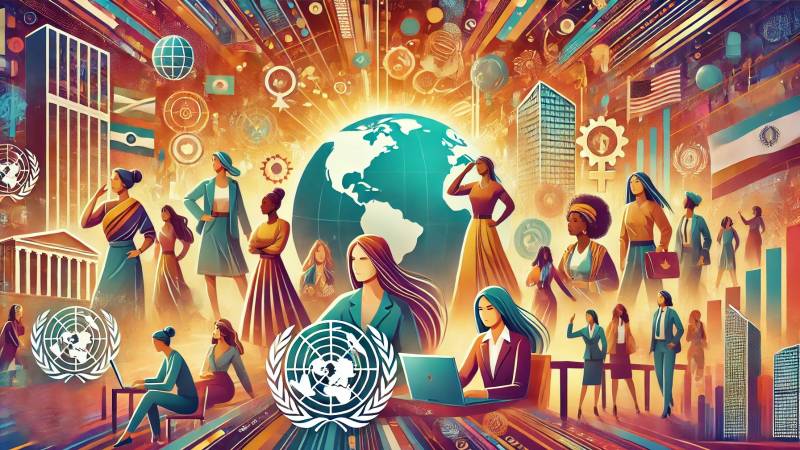
In the last few days, New York City became a powerful stage for advocates of women’s empowerment as the annual gathering of the UN Commission on the Status of Women (CSW) 2025 convened. This year’s session, held during the 30th Anniversary of the Beijing Declaration and Platform for Action, offered a critical opportunity to reflect on progress made under Sustainable Development Goal 5 and to renew commitments to achieving gender equality.
The Beijing Declaration of 1995 remains one of the most ambitious frameworks ever established for advancing women’s rights. It called for a world where women and girls could fully exercise their freedoms, participate in decision-making processes, and access economic opportunities without prejudice or limitation. Thirty years later, the global community gathered once again to assess what had been achieved and what urgent work still lay ahead.
As I participated in these discussions and shared my insights during the Virginia Tech and Blue Ridge Impact panel on “Addressing Global Challenges to Gender Equality and Women’s Empowerment,” the message was clear: while progress has been made, substantial barriers remain. Alongside distinguished experts like Dr. Tauhidur Rahman from the University of Arizona and Dr. Bernice Owusu-Brown from Virginia Tech, we highlighted how investing in women beyond policies and laws remains critical to breaking down systemic barriers and achieving genuine parity.
Over the last three decades, initiatives inspired by the Beijing Declaration have improved access to education and vocational training for women worldwide. More women are entering the workforce, leading organisations, and contributing their skills to drive economic growth. Targeted programs and inclusive policies have boosted women’s participation in the labor market, especially in urban areas where resources are more accessible.
Yet, persistent challenges continue to hinder progress. Cultural norms, structural inequalities, and enduring gender biases remain pervasive, especially in rural and underserved communities where women face limited access to quality training, career advancement opportunities, and supportive work environments. The digital divide has emerged as another major obstacle, preventing many young women from acquiring the tools and resources necessary to thrive in an increasingly technology-driven economy.
During the CSW discussions, participants emphasised that true progress cannot be measured by statistics alone but by the depth of systemic change achieved. The Beijing Declaration’s vision demands accountability, monitoring, and adaptation to ensure a lasting impact. Without robust mechanisms to track advancements in education, skills development, and workforce participation, efforts toward gender equality risk becoming mere rhetoric.
Women’s empowerment is not just a goal—it is the cornerstone of sustainable, inclusive, and resilient growth
Bridging the Gap
Efforts to close the development gap in the Global South increasingly focus on workforce development as a key to economic empowerment. In countries like Pakistan, Nigeria, and Bangladesh, various initiatives are helping women acquire essential skills and achieve financial independence.
In Pakistan, vocational training and financial literacy programs are providing rural women with new opportunities. These programs, supported by local NGOs and international organisations, focus on women in marginalised communities who have limited access to education and employment. For instance, the Women on Wheels (WOW) program in Lahore has trained approximately 6,600 women to ride motorcycles, promoting female autonomy and challenging traditional cultural norms.
In Nigeria, rural women face similar challenges in education and employment. To address these issues, civil society groups and multinational companies have introduced training programs in agricultural and financial literacy. These programs equip women with modern farming techniques, access to microcredit, and cooperative networks. Allowing them to improve productivity and market access. Given that agriculture is a key part of Nigeria’s economy, such programs are transformative.
In Bangladesh, where the garment industry employs many women, poor working conditions and limited career growth remain significant barriers. Local NGOs and international organisations are sleeping in with training programs that go beyond basic garment work, offering lessons in financial management, digital literacy, and entrepreneurship. However, women’s participation in Technical and Vocational Education and Training (TVET) remains low, ranging from 9% to 13% in public institutions and 33% in private institutions. These initiatives aim to help women transition into better-paying opportunities, such as digital marketing and business ownership, thereby expanding their economic prospects.
These insights demonstrate that investing in skills and education empowers women with sustainable economic opportunities, fostering financial independence and enhancing their constitution to their communities.
Investing in Change
Investment in workforce development is a critical priority and must emerge as one in economic agendas globally. As I noted during the panel, public-private partnerships are essential for bridging the gap between academic knowledge and industry needs, enhancing job readiness, and fostering economic empowerment. Governments, institutions, and businesses that invest in vocational training, mentorship programs, and continuous professional development unleash a wealth of talent capable of driving innovation and transformation.
Yet, women’s contributions to our economies extend beyond corporate boardrooms. In urban centers and rural communities alike, women are the backbone of local economies, community leaders, and innovators. They play pivotal roles in agriculture, manufacturing, services, and entrepreneurship. However, their potential is continually constrained by systemic barriers ranging from underrepresentation in leadership to persistent pay inequities. These disparities not only limit individual potential but also stifle overall economic growth.
To accelerate progress toward gender equality, four key priorities must be addressed.
First, enhancing and modernising educational and vocational training is essential. Investing in high-quality training centers, digital learning platforms, and community-based programs will equip women with the skills needed to succeed in today’s evolving economy. Governments and international organisations must collaborate to ensure these opportunities reach all segments of society, leaving no woman behind.
Second, strengthening workforce development and career growth is crucial. Businesses must implement inclusive hiring practices, mentorship initiatives, and leadership training programs that create clear pathways for advancement. Public policies should support family-friendly workplaces and incentivise continuous skill development, enabling women not just to participate in the economy but to lead and innovate.
Third, dismantling systemic barriers and entrenched power structures is necessary for meaningful change. Addressing deeply rooted biases and inequalities requires policymakers and industry leaders to allocate resources and create inclusive platforms that empower women to participate in decision-making at every level—from local communities to global corporate leadership.
Finally, aligning efforts with global standards and best practices will help scale successful initiatives. Integrating gender equality strategies with international frameworks such as the UN Sustainable Development Goals, the Asian Development Bank’s policies, and guidelines from the IMF and World Bank strengthens global partnerships and fosters sustainable economic growth and innovation. By addressing these priorities, societies can move toward a more equitable future where women have the opportunities and support needed to thrive.
As we commemorate the 30th anniversary of the Beijing Declaration, the call to action is clear: the journey toward full gender equality and empowerment is far from over. Women’s empowerment is not just a goal—it is the cornerstone of sustainable, inclusive, and resilient growth.
Now, more than ever, the international community must rise to the challenge, accelerate progress, and ensure that every woman has the opportunity to shape our shared future. The world is watching. It’s time to act.