

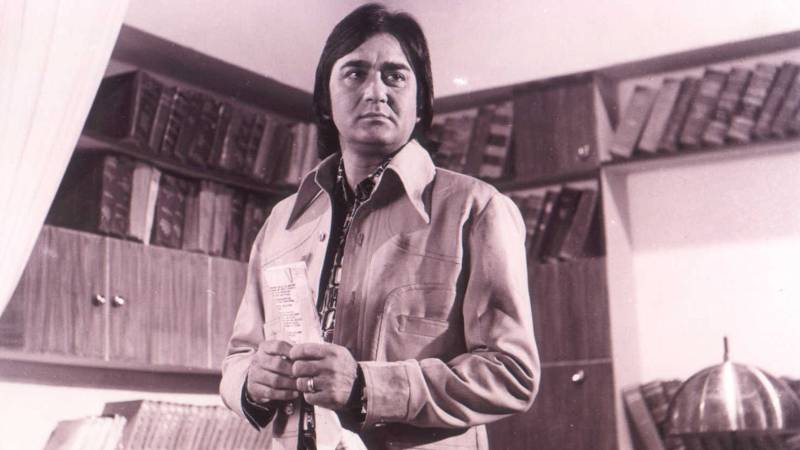
It is said that in the twilight of life, the rainbow hues of the past beckon us effortlessly, and the heart begins to yearn for the embrace of childhood. Sitting in a comfortable armchair in his luxurious home in Bombay, Balraj felt the same today. Leaning back in the chair, he closed his eyes, and through the veils of those closed eyes, the colours of his childhood began to call to him. Amid those colours was his village, Khurd, a small village in Pakistan, near the River Jhelum. Like every village of Pothohar, his village had a central pond, called a ban in the Pothohari language. Above every ban stood an old banyan tree, on whose ancient branches children would sit and watch for the lorry arriving from afar.
Balraj began to recall the trees of his village: tahli, dhrek, mulberry, kikar, beri, and peepal. There was a kiln in the village where people would go to roast grain. He remembered the school where he had begun his education. The name of his village was Khurd. In Persian, khurd means small, and it was indeed a small village in District Jhelum. Balraj recalled that Muslims were in the majority in his village, while Hindu and Sikh households were fewer, yet everyone lived together with love and affection, participating in one another’s festivals. He remembered the village fairs, where horse races and kabaddi competitions were held.
Balraj was only five years old when his father passed away. After that, his mother raised him, becoming both mother and father to him. Balraj had a passion for learning, and his mother enrolled him in school. Passing through different stages of education, he reached high school and eventually passed his matriculation examination, an achievement in those days. Around that time, Balraj learned that the Partition of India was taking place. News of Hindu–Muslim riots began to arrive with increasing frequency. The flames of violence spread from big cities and towns to small villages. Then one day it became clear that Hindus would have to cross the border—but would they reach safely? Shadows of fear began to hover over Balraj’s home.
One night, his village uncle, Yaqub, came to their house and said that the situation was not good and that he had come to take them away. Taking a great risk, Uncle Yaqub escorted Balraj and his family to the camp set up in Jhelum. A long time has passed since then, yet the kind and compassionate figure of Uncle Yaqub still glows in Balraj’s eyes. At that time, Balraj was eighteen years old and had passed his matriculation. Upon reaching India, life had to be rebuilt anew.
In the twilight of life, the rainbow hues of the past beckon us effortlessly, and the heart begins to yearn for the embrace of childhood
Balraj had grown up in the lap of Pothohar—tall, well-built, and possessing immense charm. His matriculation education had opened new windows in his mind, and his Urdu accent was particularly pleasing. This very quality earned him a job at Radio Ceylon, where he became the host of the famous Hindi programme Lipton ki Mehfil. During this period, he met Ramesh Saigal, who saw in Balraj’s face and voice the glimmer of an actor. Thus began the journey from the world of radio to the glittering paths of cinema. It was decided that Balraj Dutt’s film name would be Sunil Dutt. Soon, this film's name became so famous that people forgot his real name.
In 1955, Sunil Dutt had the opportunity to work on his first film, Railway Station. Two years later, his fame soared when he was cast in Mother India, in which Nargis was also acting. Nargis was already on the path to great fame in Bollywood. It is said that one day, a fire broke out on the film set and actress Nargis was trapped in the flames. Sunil Dutt risked his life to rescue her. Sunil’s worth rose in Nargis’s eyes, and when he proposed marriage to her the following year, she did not refuse. It was a beautiful pairing in the film world.
One success after another began to kiss Sunil’s feet. During this time, he worked in many successful films, including Sadhna, Insaan Jaag Utha, Sujata, Mujhe Jeene Do, Khandan, Mera Saaya, and Padosan. Along with acting, he also became a producer and director. For his outstanding performances, he received numerous awards, including India’s prestigious Padma Shri. Another great honour came when he was appointed Mayor of the city of Bombay.
He had a successful marriage with Nargis, a relationship he always treated with respect. From this marriage, Sunil and Nargis had two daughters, Priya and Namrata, and a son, Sanjay Dutt. As he grew older, Sanjay inherited his father’s looks and became a shining star of the film world. Sunil now had a loving wife, affectionate children, fame, wealth, and all the comforts of life. Yet now his life began its downward slope. A severe blow came when his beloved wife, the renowned actress of her time, Nargis, passed away after a prolonged illness. He was suddenly left alone.
Often, in the evenings, he would sit in his rocking chair and reminisce about bygone days. This evening, too, the same thing had happened. Sitting in the chair, in his mind’s eye, he crossed the border to the place where his village was. As he remembered the past, Sunil Dutt became Balraj Dutt, his real name. Today, Balraj was missing his village intensely—its sky, its birds, its trees, its people. Tears welled up in his eyes.
Suddenly, there was a knock at the door, and he returned to the present world. He looked at the wall clock; it was two in the morning. The door opened, and his actor son, Sanjay Dutt, entered. Seeing his father awake at two in the morning with tears in his eyes, Sanjay asked the reason. Balraj sobbed and said to him in Punjabi, “Putar, mainu ghar yaad aa reha ae” (Son, I am missing home). Sanjay said in surprise, “But you are sitting in your own home.” Shaking his head, Balraj replied, “No, son, this is not my home. My home is in Pakistan.” Seeing the astonishment in Sanjay’s eyes, Balraj looked out of the window and said, “But you will not understand, son.”
It is said that in the twilight of life, the rainbow hues of the past beckon us effortlessly, and the heart begins to yearn for the embrace of childhood. Sitting in his comfortable armchair in his luxurious home in Bombay, the same feeling had once again overtaken Balraj Dutt.