

“The government is so out of control. It is so bloated and infested with fraud and deceit and corruption and abuse of power.” — Ted Nugent
Setting aside moral values, a fact remains that where the gulf between the governed and the governing expands, chances are that either a rebellion could be simmering, or, where the people are laid-back, they would be clenched with even greater ferocity, with claws deepening into their skin until they are completely at the mercy of a dictator or a group of like-minded vile members for whom their own interest is sacrosanct and above that of all others.
As governments start losing trust and the public grow wary of incompatible policies, the noose around people is further tightened to exert more and more control. Take the example of North Korea, where, shockingly, the entire nation is in the complete grasp of just one pharaoh whose disgustingly luxurious life is an offence to the hunger-stricken and suffering masses. Similar situations existing elsewhere in the world are equally appalling and a slur on humanity.
There is nothing wrong with enjoying an opulent life, but it is immoral if it comes at the expense of an anguished humanity. This is the general nature of the majority of countries, particularly those where democracy is only in name or where puppet governments are installed whose strings are pulled from somewhere else.
For any country, taxes act as the backbone of its economy, having great significance for the government in power. Under the social contract between the state and its citizens, people are obliged to remain faithful to the country and conform to rules and regulations for the purpose of paying taxes. They are duty-bound to observe these laws in return for basic amenities and a protective environment where they are free to profess their faith, engage in the pursuit of livelihood, and lead a normal human life.
Not only is the state supposed to take care of its people, it must also facilitate them in socio-economic matters without intruding into their personal choices pertaining to the available options of applying their tax-paid incomes for whatever purpose, without involving the government.
The politics of excessive control can never have the requisite outcomes. It is akin to holding a fistful of sand that starts escaping as one tightens the grip
Over the last many years, through different Finance Acts, the government has been introducing various types of legal provisions in almost all the principal tax statutes at both federal and provincial levels, in its desperate attempts to force people into paying taxes and filing returns. Novel terms such as ‘filer’ and ‘non-filer’ were especially introduced by the Finance Act, 2019 to extract heavier taxes from unregistered persons who, by the way, could be paying their taxes, but without being acknowledged.
Double rates of withholding taxes meant to penalise the unregistered failed to meet the objective of ‘broadening’ the tax net, because people were more than willing to pay them if it implied staying away from the corrupt tax machinery.
Experts have been very critical of these measures, opining that they can never succeed in coercing the public into obeying laws that are: one, written in an alien language; two, extremely complicated; three, designed without taking into consideration the local cultural and peculiar socio-economic conditions; four, meant for compliance through e-services which are not only incomprehensible to a predominantly illiterate nation but are also either unavailable or erratic in many parts of the country; and five, discretionary in nature, allowing officials to deal however they like, whether justly or unjustly. Together with rampant corrupt practices in all spheres of government departments, it is quite difficult to seek official intervention in personal matters.
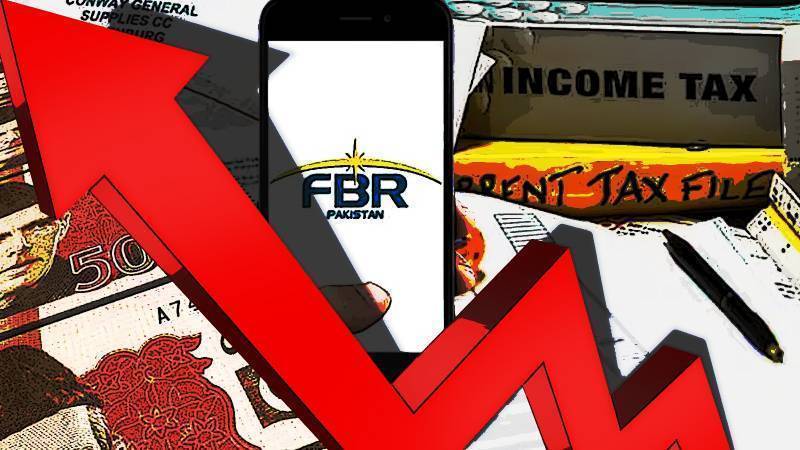
The latest Finance Act 2025, passed by Pakistan’s National Assembly, has introduced Section 114C in the Income Tax Ordinance, 2001, read with the newly-inserted Fifteenth Schedule, whereby an eligible (read ‘filer’) and an ineligible (read ‘non-filer’) person would have to obtain a clearance certificate from FBR before purchasing a vehicle or immovable property.
The law, of course, elaborates the conditions applicable to both ‘eligible’ and ‘ineligible’ persons and also the extent of value of the assets intended to be acquired, which means that obtaining clearance would only be required for buyers interested in properties exceeding the minimum threshold prescribed. This provision indicates complete failure on the part of tax authorities to not only significantly broaden the tax net but also their inability to genuinely collect taxes from where it is due.
By forcing sellers of vehicles, those responsible for registering/transferring immovable property, and banks to deter from entertaining ineligible potential customers, the fact that tax authorities have become totally ineffective stands established. Their illogical approach of hindering economic activities rather than proceeding against delinquent taxpayers through their expenditure speaks volumes about the extent of degradation that has seeped into these services. Shifting onto others their own responsibility of scrutinising taxpayers shows the level of incompetence in their own ranks and files.
The introduction of this new section brings to mind another aspect of our society that requires attention. It is well known that salaries of public servants are quite meagre and insufficient for a fairly comfortable living—what to talk of affording expensive education for their children—yet it is observed that several government servants have sent their kids to foreign universities.
Suppose the public is expected to seek permission before it can engage in economic activities. In that case, justice demands that it should be told how officials getting salaries from their taxes can afford lifestyles that defy their limited incomes. One is amazed at the audacity of the legislature and executive that want to hold people accountable when their own credentials raise serious questions of integrity.
The politics of excessive control can never have the requisite outcomes. It is akin to holding a fistful of sand that starts escaping as one tightens the grip. Time has proved that attempts to make laws more complicated for the people have merely resulted in chaos and an eroded tax base. The compliant are becoming more unhappy and dejected, while those beyond apprehension are prospering without remorse, thanks to the illogical policies of governments in power.