

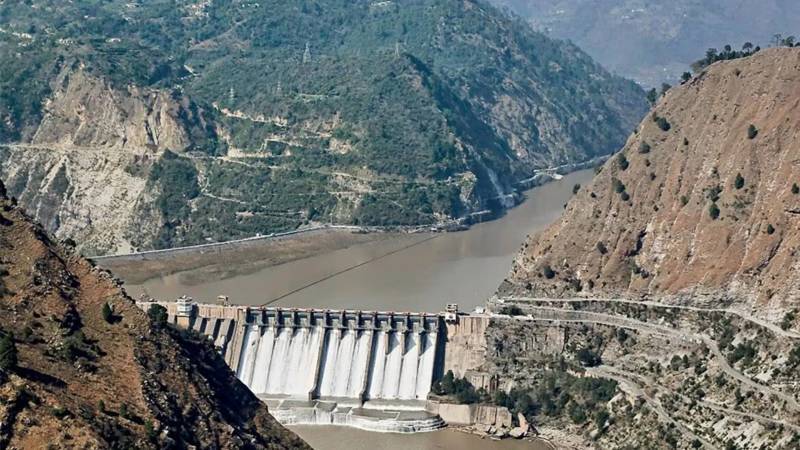
As monsoon rains swell the Indus once again, the river doesn’t merely flood—it laughs. It laughs at the concrete embankments, the colonial blueprints, the delusions of control. It mocks the post-colonial state’s stubborn commitment to barrages and canals, as if imperial hydro-engineering could tame a living, breathing, self-regulating ecosystem. With every inundated canal colony and breached embankment, the Indus is not flooding—it is reclaiming its dignity and reminding us of ours.
Pakistan’s continued reliance on colonial water architecture, especially in the Indus Basin, is not just misguided—it’s dangerous. The obsession with damming rivers, digging canals, and expanding commercial agriculture has failed not only ecologically, but economically and socially. It has pushed millions to the edge of hunger, of disease, of displacement. Yet the ruling dynasts hold on to a legacy that should have been dismantled decades ago.
Drawing on a Colonial Script
The Indus Basin Irrigation System (IBIS) is often praised as a marvel. But few care to remember that it was designed to serve an empire, not a nation. When the British conquered the region, they didn’t just set up a revenue system—they drew on a worldview that saw rivers as entities to be controlled and people as subjects to be reordered. The British brought in Brahmin advisers who had long dreamed of gaining influence in the Indus Valley, especially after their declining sway under the Mughals. Together, they phased out traditional agriculture based on floods and handed over vast tracts of land to loyal tribes in newly created canal colonies.
The design was clear: subdue the river, and you subdue the people. These artificial colonies were propped up as a buffer against rebellious elements and glossed over with a language of development and order.
Falling Back on Old Fantasies
The tragedy is not that we inherited this system, but that we clung to it. Post-colonial governments, instead of reimagining the Indus in its civilisational spirit, fell back on colonial hydrology. The Indus Waters Treaty (IWT), hailed as a diplomatic success, broke up the ecological unity of the basin. It carved out rivers for India and Pakistan like real estate plots, with no regard for groundwater flows, deltaic survival, or cultural continuity.
Restoring the dignity of rivers is not an act of nostalgia—it is a political necessity
Today’s leaders, many of them dynasts propped up by colonial-era systems of privilege, read out the same old script: “We will defend every drop of our share.” That ‘share’ itself is an alien idea—imposed by imperial cartographers and endorsed by the World Bank in the name of water peace. But peace cannot be built on ecological amnesia.
What’s worse is that these elites are not even listening to the inclusive growth models now promoted by the World Bank itself. While international experts now advocate ecological restoration, social resilience, and inclusive planning, Pakistan’s policymakers shut out these voices and double down on old hydro-fixes.
A System Cracking at the Seams
The 2025 monsoon once again spilled over Pakistan’s fantasy of control. Canal colonies, built on fragile floodplains, were washed away in many areas as intense rains broke through embankments. The National Disaster Management Authority (NDMA) put out alerts warning of systemic vulnerability, yet there’s little sign that the state intends to step away from business as usual.
The truth is simple: you cannot lock up rivers. You can’t talk down to them or bribe them with concrete. When rivers are cut off from their wetlands, floodplains, and recharge zones, they strike back. And it is the poor farmers, fisherfolk, informal settlers—who bear the brunt of this hydrological vengeance.
Provincialism: Another Colonial Legacy
The crisis of the Indus is not just technical—it’s philosophical. The colonial state played up provincial identities to break down civilisational unity. Today, Punjab, Sindh, Balochistan, and KP fight over water allocations rather than come together to preserve a shared heritage.
Even ethnic identities like Saraiki, while rooted in cultural realities, are increasingly used to reinforce artificial boundaries. What has been left out is the memory of a civilisational Indus—stretching from the Himalayas to the delta, once looked up to as a cradle of interconnectedness, spiritual depth, and ecological balance.
Rivers as Agents of Decolonisation
In many indigenous traditions, rivers are not resources—they are relatives. The Indus too was once seen as sacred, not just useful. But colonial power degraded rivers as part of its logic of control, and in doing so, pulled in segments of society who bought into this design in a fit of ignorance or opportunism.
It’s time to bring back in the river as a living being, a partner in survival, a symbol of freedom. Restoring the dignity of rivers is not an act of nostalgia—it is a political necessity. Because a river that is respected nourishes, a river that is chained revolts.
Decolonise or Perish
Let us be clear: this is not about resisting modernity—it’s about resisting bad modernity. Pakistan cannot afford to run into disaster every monsoon and call it fate. It must pull away from colonial hydrology and step into a vision rooted in ecological reality and social justice.
Decolonisation is no longer a slogan. It is a survival imperative. Either we break away from the inherited logic that treats rivers as pipelines for power and profit—or we perish beneath the very floods that remind us of what we lost.
The Indus is not flooding. It is laughing. And we would do well to listen—before it’s too late.