

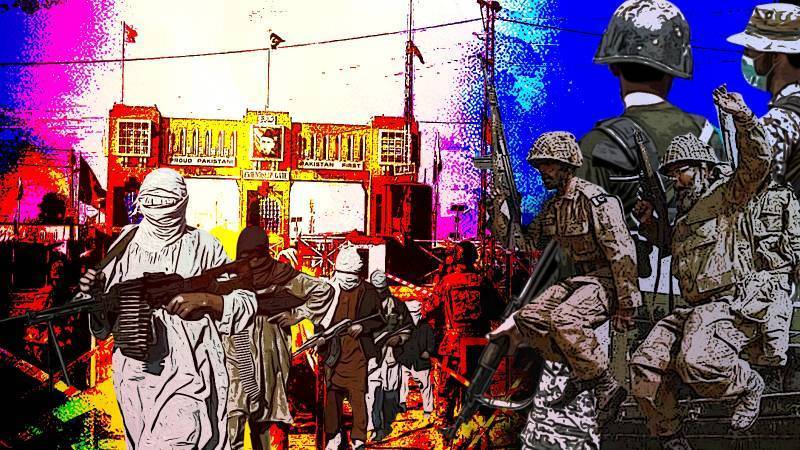
Two recent terrorist attacks—in North Waziristan and Khuzdar—have reignited long-standing concerns over civilian safety, conflicting narratives, and the moral compass guiding public discourse in Pakistan. In both tragedies, children were among the victims. Yet the reactions they provoked—official, political, and societal—reveal not only the brutality of terrorism but also the troubling selectivity of national outrage.
On May 19, 2025, an explosion in Hormuz village, North Waziristan, reportedly killed four children and injured five others, including a woman. Locals described what appeared to be a drone strike, though no official confirmation has emerged. The Khyber Pakhtunkhwa Relief Minister, Haji Nek Muhammad Dawar, condemned the incident as "unacceptable," insisting that military operations must never endanger civilians. His demand for justice was echoed by political leaders Maulana Fazlur Rehman and Mohsin Dawar, who warned that incidents like this—unacknowledged by federal authorities—erode public trust and risk inflaming unrest. Protests in the region have continued, with locals demanding a transparent and impartial investigation.
Just two days later, on May 21, another deadly explosion occurred near Zero Point in Khuzdar, Balochistan. According to statements from Inter-Services Public Relations (ISPR) and local authorities, a suicide bomber targeted a school bus, resulting in the deaths and injuries of several children. However, unverified reports—including one from The Balochistan Post—offered a conflicting narrative: that military personnel may have been the intended targets, and that attempts were being made to portray the casualties as primarily civilian. As with the Waziristan incident, no group has claimed responsibility for the Khuzdar attack, and independent verification remains elusive, fueling public skepticism. Meanwhile, a statement issued by the Prime Minister’s Office attributed the attacks in both Balochistan and Khyber Pakhtunkhwa to “state-sponsored proxies of India (Fitna al-Hindustan),” condemning them as “dastardly terrorist incidents.”
The government’s selective willingness to negotiate with groups like the TTP, while refusing to extend a similar approach to Baloch separatists, demands a serious re-evaluation
These ambiguities reflect the lingering fallout from the Jaffar Express hijacking in March 2025—an incident that has since become a textbook case of militant propaganda and disinformation. The Balochistan Liberation Army (BLA) initially issued inflated and contradictory statements, first claiming to have taken 182 hostages. Later, it declared the operation complete, citing 354 soldiers killed, over 100 wounded, and 214 captured.
Despite the glaring implausibility of these figures, the BLA’s narrative gained traction in sympathetic media circles, with some describing the train hijacking as a “historic” act. In its latest video release on May 20, the group quietly revised its claimed toll to 214, omitting any acknowledgment of its earlier exaggerations. The video, featuring staged combat footage and farewell messages from suicide bombers, attempts to recast the attack as a noble sacrifice. But no amount of ideological varnish can obscure what such figures—if even remotely accurate—would indicate: a massacre, not resistance. Even the most legitimate struggle for rights is discredited when it descends into methods that violate the very principles it seeks to uphold.
When BLA chief Bashir Zeb Baloch declares that “no path remains but war,” he offers no reflection on whether war itself has rules. The result is a form of nihilism masquerading as liberation—where numbers matter more than human lives, and the deliberate execution of possibly off-duty or surrendering captives is rebranded as victory.
What makes this episode even more disturbing is the silence of Baloch nationalist organizations who vocally condemn state violence but remain mute on insurgent brutality. The Baloch Yakjehti Committee (BYC), for instance, recently issued a strong statement condemning the Waziristan drone strike, labeling the death of children an act of Pashtun genocide. Their empathy was clear, their outrage justified. Yet when the BLA claimed to have executed 214 people—without clarity on whether they were combatants or civilians—there was no condemnation, no sorrow, no solidarity.
This selective silence becomes more jarring when contrasted with the fury over Gaza, where tenuous corporate links to the Israeli state led to mob attacks on local fast-food outlets in the country. While such vigilantism is rightly condemned, the selective application of empathy it reveals is morally corrosive. The BYC’s condemnation of Pashtun civilian deaths was appropriate—but its failure to respond to the Khuzdar attack, where state authorities claimed schoolchildren were killed, underscores a disturbing hierarchy of victimhood.
This moral inconsistency is not new. In 2024 alone, at least 86 working-class Pakistanis—including coal miners, barbers, construction workers, and clerks—were murdered in targeted attacks, many of them claimed by Baloch separatists. Yet these killings elicited little outrage. Some local Baloch media even celebrated the Jaffar Express attack, framing it as a heroic act—proof of how deeply militant narratives have penetrated the regional information landscape.
This is the heart of the problem: a war not just of bullets, but of stories. Militants exaggerate their “victories” to build psychological momentum; the state, in turn, often under-communicates or obfuscates details, eroding its own credibility. In the case of the Jaffar Express, Pakistan Railways confirmed the train carried around 450 passengers, including just over 200 security personnel. The BLA’s claim of killing 568 soldiers is not just a lie—it’s mathematical fiction. Even if one entertains the possibility, the logistics of capturing and executing hundreds of hostages—under military surveillance in the unforgiving terrain of Bolan—are absurd. Where are the mass graves? The forensic evidence? The eyewitnesses?
Yet in the absence of official transparency, these myths thrive. The state reported rescuing 354 passengers in a 36-hour operation, acknowledging the deaths of 26 individuals, including 18 military personnel, three railway workers, and five civilians. However, the absence of clear information regarding approximately 70 unaccounted passengers has only deepened the fog of uncertainty surrounding the incident. Official communication gaps—intentional or otherwise—have allowed space for confusion and speculation, eroding public trust at a time when clarity is most needed.
Balochistan’s crisis cannot be resolved through token development projects or periodic press briefings. What the region needs is genuine political engagement, meaningful institutional reform, and—above all—a shared moral clarity. The government’s selective willingness to negotiate with groups like the TTP, while refusing to extend a similar approach to Baloch separatists, demands a serious re-evaluation. The grievances of Baloch nationalists warrant attention and dialogue, but secular or nationalist ideology cannot justify brutality. Executing hostages, targeting civilians, and spreading disinformation are not acts of resistance—they are crimes.
We must resist the temptation to view violence through the lens of political convenience. Empathy must extend to all, not just a select few—for only when we uphold the dignity of every victim, regardless of ethnicity, profession, or geography, can we begin to reclaim the truth from the shadows of war. To counter disinformation and extremism, institutions and individuals alike must strengthen transparency and ensure that no victim is rendered invisible or forgotten.