

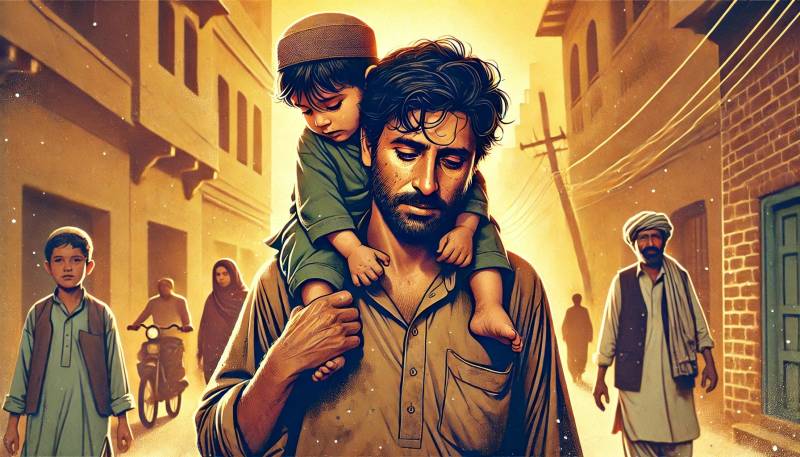
In every culture, fathers are seen as symbols of strength, guidance, and sacrifice. They work tirelessly to provide for their families, often putting their dreams aside to create a better future for their children. In Pakistani society, however, a father’s worth is often measured by his financial success. This creates a harsh reality for financially weak fathers, whose relentless efforts, love, and sacrifices are frequently undervalued because they cannot afford material luxuries. Despite their hard work and devotion, they are often judged by their inability to meet society's expectations, overshadowing the true essence of fatherhood, which is about love, care, and the countless unseen sacrifices they make for their families.
In Pakistan, wealth and social status are deeply valued, and people often judge others based on their financial situation. A financially weak father, no matter how hard he works, is frequently ignored, disrespected, or even mocked. Society tends to blame him for his poverty, overlooking the larger challenges he faces, such as high living costs, limited job opportunities, and a lack of proper social support. Instead of understanding these difficulties, many people view his financial struggles as a personal failure, without considering the broader circumstances that contribute to his situation.
A financially weak father often works harder than most to care for his family. He may take on physically demanding jobs, endure long hours, and face constant stress just to make ends meet. Many of them skip meals so their children can eat, walk miles to save on transportation costs, and go without basic comforts to ensure their family has the essentials. Yet, these sacrifices are rarely acknowledged. Instead, society judges him by the kind of house he lives in, the clothes his family wears, or the school his children attend. His love, effort, and dedication are overshadowed by these material standards.
By fostering a culture of empathy and respect, we can ensure that no father feels less worthy because of his financial struggles
This lack of respect deeply affects the father’s dignity. He is often left out of family decisions and social gatherings because people think his opinions do not matter. Even his children, influenced by societal pressures, may feel embarrassed by him. This emotional pain is far more devastating than the physical hardships he endures every day. A financially weak father also struggles to assert himself in his household because the constant comparison with wealthier families undermines his authority. His sacrifices are undervalued, and his efforts are often seen as inadequate.
This cycle of disrespect towards financially weak fathers needs to end. A father’s worth should not be judged by how much money he makes but by his dedication, hard work, and love for his family. Society needs to teach children to value their parents for the sacrifices they make and the responsibilities they shoulder, not for the luxuries they provide. Education plays a key role in shaping this mindset and developing empathy and understanding in young minds. By learning to appreciate the struggles of hardworking fathers, future generations can grow up with deeper respect for the true meaning of fatherhood.
Every father, whether wealthy or struggling, deserves to be valued for the sacrifices he makes out of love for his family. In Pakistani society, it is essential to look beyond material wealth and recognise the humanity and deep devotion behind the efforts of fathers who face financial hardships. Though they may not provide luxuries, their commitment, dreams, and unwavering love for their children are priceless. By fostering a culture of empathy and respect, we can ensure that no father feels less worthy because of his financial struggles. It is time to honor their sacrifices and give them the dignity and recognition they truly deserve.