


In the winter season, when the motorways would close because of dense fog, I travelled by train many times. First, hours would be spent sitting at railway stations, waiting for the train, and then nights would pass in conversations with complete strangers. Each passenger carried memories of loved ones in their heart. The rhythm of the wheels hitting the gaps in the tracks and the stories people told made every journey memorable. Whenever I look at a train now, those memories of foggy nights and candid conversations come rushing back.
One evening, I was at the Raiwind Railway Station for my regular walk. Raiwind is an administrative subdivision of Lahore District, and its name sometimes appears in international headlines, for it is the hometown of former Prime Minister Nawaz Sharif and hosts one of the largest religious congregations in Pakistan. The city's railway station is also a junction, and most trains, with a few exceptions, stop here, allowing passengers to get on and get off. The flurry of activity created by regular walkers and passengers and the blaring horns of passing trains make it a lively place. That night, within the span of an hour, three trains—Khyber Mail, Musa Pak, and Awam Express—arrived one after another, flooding the platform with passengers. My ears, with my earphones in them, were oblivious to the noise, but my eyes were wide open, watching the approaching crowds brushing past me.
Like all other marriage houses, the fragrance of fresh roses and jasmine emanating from the house and the tent had scented the air around the platform and compelled me to stay
During all this time, one event continued unhindered. It was the Walima ceremony of a Meewati family. I guessed the caste from the words chhora (boy) and chhoori (girl), which were uttered by some of the guests going in and out of the marriage house. I was able to decode the words because we shared our house walls with members of an influential Meewati family. The house hosting the marriage stands twenty metres from the station on the city side and is merely a hundred metres away from the Pakistan Railways Police Station, locally referred to as the Railway Thana. Whenever a train is scheduled to arrive, a few policemen with rifles slung across their shoulders are seen patrolling the platforms. They look at unfamiliar faces with suspicion and greet those they see every day. That day, their eyes also turned towards the humble venue.
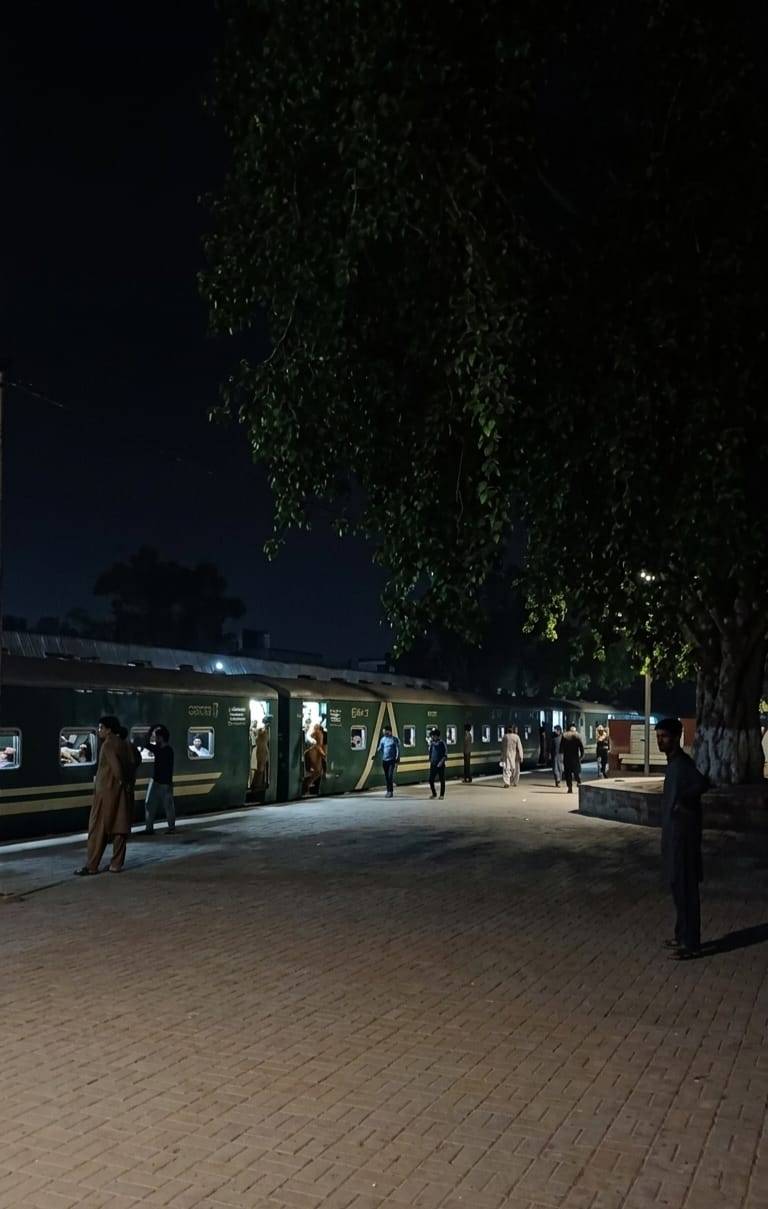
The Raiwind Railway Station was built during the British Raj, and some nearby houses date back to the pre-Partition era. I have seen such houses myself. Their arched doorways, old wooden doors, and the names inscribed a few inches above the entrances lend them a particular aura. One glance at them transports me to the times I have read about in novels and seen in films.
However, the house in question had ostensibly been built only three or four years earlier. Its façade was modestly lit with yellow fairy lights. A small tent had been set up with the help of yellow tarpaulin and bamboo, and it shared the warm glow of the fairy lights. The bulbs inside the tent and the fairy lights together created a yellow halo. Two deghs (large metal cauldrons) were placed next to the tent over a wood fire, and the cook, shielding his eyes with one hand from the smoke, constantly stirred the ingredients with a long-handled ladle.
Children between the ages of eight and twelve busied themselves playing different games. The tongues of some of the boys had been discoloured from licking colourful popsicles. Their indulgence had left stains on the collars and cuffs of their white starched kameezes. Forgetting the thrashing they might receive from their mothers, they continued playing in the dirt. I thought all their joy would vanish if they began burdening their young minds with the consequences of their innocent actions.
Meanwhile, the young girls wore dresses in bright shades of pink and orange, with khussas of matching colours. Zari and gotta work on the hems of their shirts and trousers, along with jhoomar tikkas on their foreheads, added to their graceful appearance. Five or six of them were playing Keekli or Kikli, a game in which girls interlock their hands, lean backwards, and spin rapidly in circles. Usually, girls sing songs while playing this game, but these girls were not old enough to take an interest in music, so they simply played and the others cheered them on.
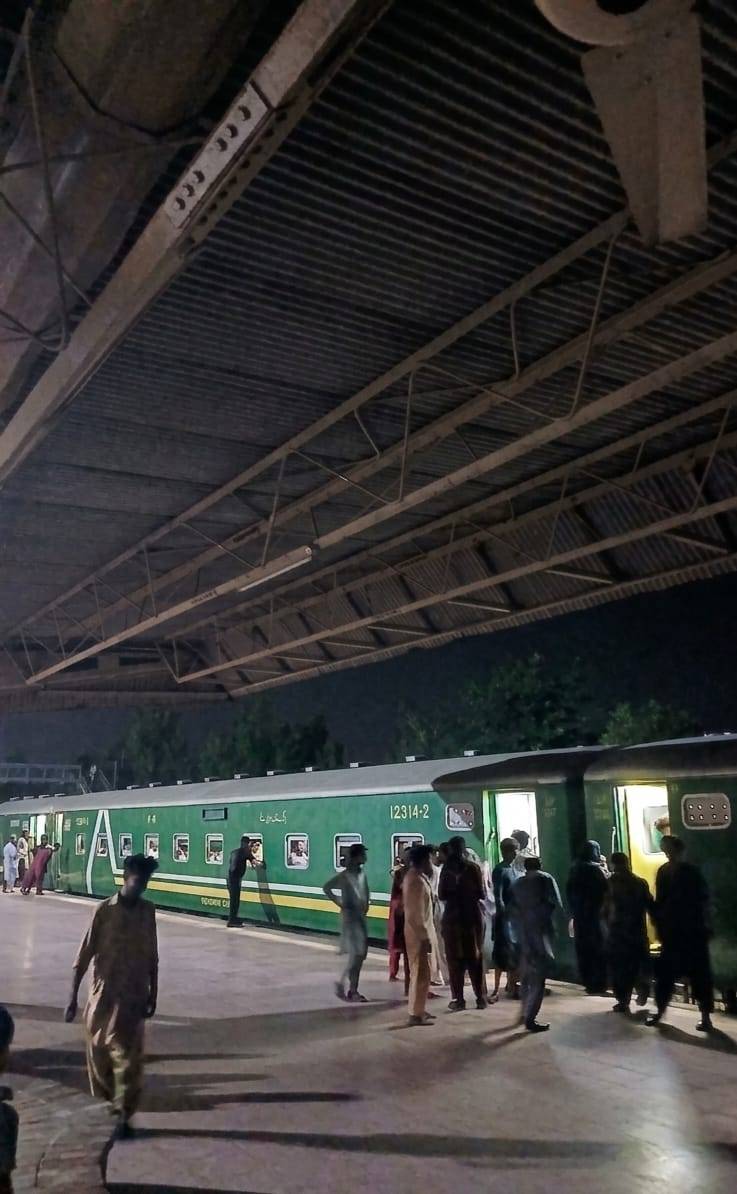
Throughout this time, I kept walking, pausing briefly in front of the house to watch the unexpected scene that had brought me immense joy. A phone call from home broke my reverie and made me realise that it was well into the night and that I had walked more than fifteen kilometres. Like all other marriage houses, the fragrance of fresh roses and jasmine emanating from the house and the tent had scented the air around the platform and compelled me to stay for fifteen minutes more.
The next day, when I passed by the same house, nothing remained: neither the tent nor the fairy lights. Only the ash of the burnt wood was left behind. The fragrance of roses and jasmine had given way to the scent of joss sticks burning on a nearby grave.