

Countries that descend into a state of disorder and ungovernability due to civil wars, criminal violence, terrorism, or rival nationalist claims need to be put on orderly footings. They pose threats not only to their own people but also to regional peace and security. The international community, particularly the United Nations, often intervenes to rescue them. Yet such interventions are mostly ad hoc and short-lived.
Presently, many countries are swept by ethnic and political divisions, resulting in the breakdown of political and administrative order. Haiti has almost no functioning government; it is ruled by criminal gangs. Sudan is the site of horrendous massacres and partisan or tribal fighting. South Sudan, though recently liberated, has descended into factional violence. Libya, Syria, Burkina Faso, Niger, Somalia, Eritrea, Venezuela, El Salvador, and Myanmar have had a series of coups, rebellions, jihadist insurgencies, and episodes of ethnic cleansing—resulting in millions displaced internally and driven out as refugees. These political and social disorders have spawned large waves of asylum seekers making perilous journeys across seas to reach Europe and North America. Clearly, the absence of fair and reliable governance is the driving force in turning millions into refugees.
Then there are long-standing disputed territorial and nationalist claims, such as in Palestine and Israel, or Russia and Ukraine. These have resulted in protracted wars, conquests, and resistance. The involvement of major powers, often aligning with one side or the other, further complicates these disputes—again jeopardising international peace and security.
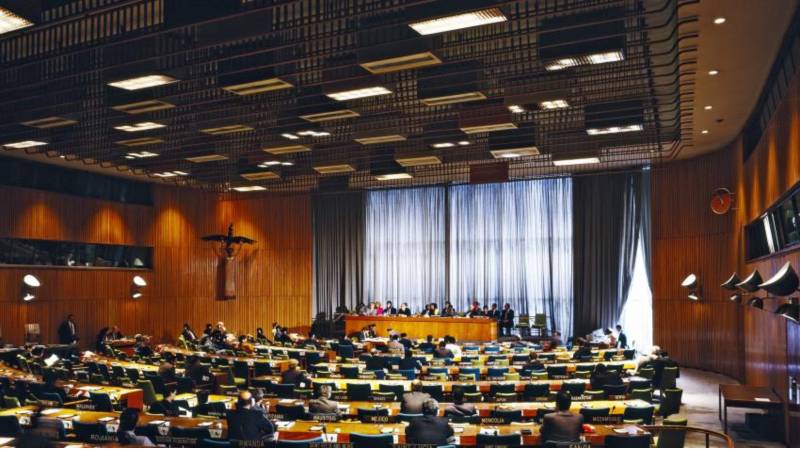
The Trusteeship Council
The Trusteeship Council is the sixth organ of the United Nations. It was established to administer territories “whose peoples have not yet attained a full measure of self-government”. It selected member states to administer former colonies and trust territories of the Axis powers after the Second World War, with the aim of preparing them for self-government and independence.
The trusteeship should last until a stable and peaceful Palestinian state takes root in the West Bank and Gaza, and Israel accepts peaceful coexistence in conditions of security
The Trusteeship Council comprises the five permanent members of the Security Council, plus other members elected by the General Assembly, including those administering trust territories. It has been one of the most successful organs of the UN. Eleven territories were brought under the trusteeship arrangement to be administered and prepared for independence by countries nominated by the Council. Notable among them were Tanganyika (administered by the UK), Rwanda-Urundi (administered by Belgium), and the last territory to gain sovereignty under the trusteeship—Palau, which became a UN member in 1995. Since then, the Trusteeship Council has remained dormant.
There have been occasional attempts either to disband the Trusteeship Council due to its inactivity or to assign it a new mandate. In 1997, Secretary-General Kofi Annan proposed a new role for the Council: to exercise collective trusteeship over global commons. Yet the Council remains in a state of suspension.
The Trusteeship Council may now be repurposed to administer contemporary warring and disputed countries, as well as territories engulfed in rebellion and ethnic violence. Haiti, Sudan, and the Israel–Palestine conflict are in urgent need of such attention. These are sites of mass killings and the collapse of public order. I will focus on the long-simmering Israel–Palestinian conflict as a case suitable for trusteeship to begin with, though Haiti and Sudan could also be considered candidates.
The Trusteeship Council to Resolve the Israel–Palestine Dispute?
Gaza has been in the news for its year-and-a-half-long war, resulting in nearly one hundred thousand mostly innocent civilians being killed, maimed, or injured. Now famine stalks the land. The territory has been reduced to rubble. Similarly, the West Bank is continually raided, civilians are killed, and land is appropriated for settlements.
Israel has its security concerns, made especially raw by Hamas’ attack and hostage-taking on 7 October 2023. The urgency and intractability of this conflict require a new approach.
It appears that trusteeship could be a viable solution to establish an order that meets the needs of both parties for peace and security. For a trustee regime to be instituted, several conditions must be fulfilled:
- It must be based on the internationally recognised two-state solution—Israel and Palestine.
- All great powers, particularly the United States, must support this initiative.
- The current administrations of Hamas and the Palestinian Authority may have to be dissolved.
One or more strong and neutral countries should be chosen to administer the Palestinian territories, while Israel remains sovereign but accepts the role of the trustee. Possible trustees could include Canada, Australia, Japan, the European Union, or a combination of these.
The borders between the two states should be based on the principles of the 1967 truce and the Oslo Accords (1993), though they may be adjusted through negotiations before the end of trusteeship. The trustee should disband armed groups, establish reliable institutions to maintain law and order, and promote peace and economic development. Gaza must be rebuilt with the cooperation of Arab states.
Thus, resolving this explosive international dispute could mark the beginning of a new mandate for the Trusteeship Council.