

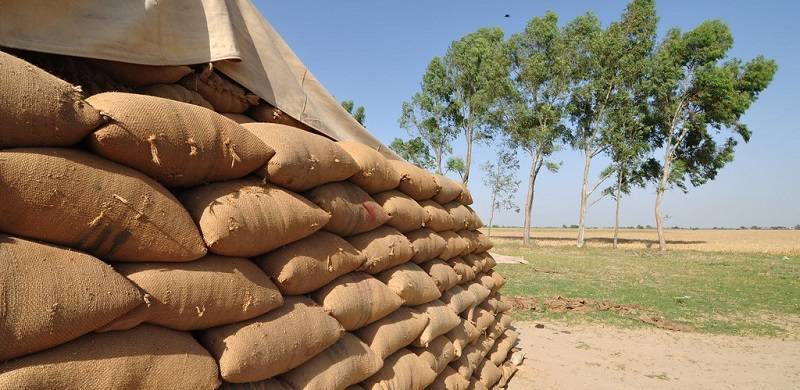
Pakistan experienced wheat crises due to supply chain issues or some other factors in 2022-23 however in 2024 when farmers were to sell their wheat the government was not purchasing it giving the reason that they had procured wheat from abroad and it led farmers to sell wheat harvest in the market. Wheat price per mound remained low and farmers were disappointed. I’m not arguing about the price of what should be or what should not be, however, the government claimed that they purchased wheat to avoid any wheat crisis.
Every year wheat consumed by Pakistani people is 30 million tons. In 2022, to get wheat flour people were standing and waiting in long queues, and even some causalities were also reported in stampedes at distribution facilities. In a country that is agriculture based how much food insecurity is possible? It’s not the first time Pakistan experienced even a famine in 1953 the US sent wheat to Pakistan to better the situation.
The problem lies in government policies and farming practices. Governments change such agricultural policies. The floor price is given for the staple crop like wheat so that farmers are encouraged to grow wheat. Floor price should be decided after a lot of consideration because it impacts the producer, end consumer, and the market. Pressure groups exist on social media that give a certain price that may not be reasonable from the end consumer's point of view. Low productivity is another issue. The average per acre production is 35-40 mounds which is much lower than countries like Russia, Ukraine, and the US. Higher prices of inputs like fertilisers, electricity, and gasoline also increase the cost of production.
Wheat is necessary for food security in Pakistan and the increasing population will need more of it in the coming year
In the rabi season or winter of 2024, the government of Punjab did campaigns to encourage farmers to grow wheat on a target number of acres in Punjab along Agriculture Extension Department Punjab. The results were hopeful, farmers cultivated wheat on 16.7 million acres while the target was 16.5 million acres. It's not about government campaigns alone; farmers also need this staple crop for their own families to secure this cereal crop for the year and sell the remaining to make cash.
I’m not writing in favour of farmers or government or end consumers. My opinion is that there should be stability of wheat in the supply chain that benefits producers, consumers, and the overall food security situation in Pakistan. Pakistan is already a low low-income country where people's calorie intake is mostly from cereals like wheat, rice, and maize. Meat and Milk consumption is lower in comparison to high-income countries. Inflation is more common in Pakistan, a rise in inflation further reduces the calorie intake of locals and negatively impacts the food security situation.
In conclusion, wheat is necessary for food security in Pakistan and the increasing population will need more of it in the coming year. For now, the government should make a policy that they import wheat in certain quantities to fix any shortage gap as well as purchase wheat from farmers and give a reasonable floor price to the farmers. In the future, Pakistan needs to increase its per-acre production to fulfill the increasing demand for food supplies.