

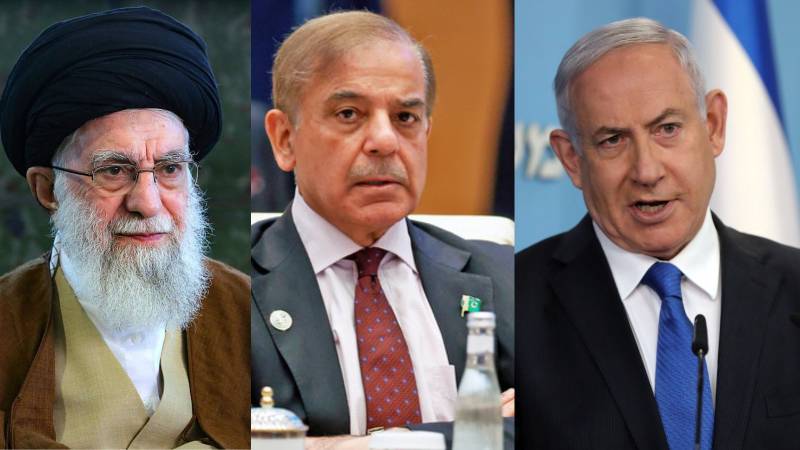
In line with the recent tensions between Israel and Iran—where both actors have launched missile and cyber-attacks on each other, claiming hundreds of civilian casualties—the conflict has intensified following accusations that Iran is developing nuclear weapons. On the morning of 22 June 2025, the same argument was used by the United States to justify attacking Iran. According to a Reuters report, the United States has carried out strikes on three nuclear sites in Iran.
The Regional Security Complex Theory by Barry Buzan and Ole Wæver emphasises that regional security cannot be understood in isolation but must be viewed as part of a larger “regional security complex.” The core argument of the theory revolves around “patterns of amity and enmity,” stressing that states' security concerns are deeply intertwined and interdependent. In this context, the security concerns of states are so closely connected that they cannot be addressed in isolation.
Pakistan, situated in the neighbourhood of Iran and historically an ally of the United States, is also a strategic and economic partner of China and a bitter rival of India. As such, it finds itself at a critical juncture in this evolving strategic contestation. Pakistan’s diplomatic objective must be to balance its strategic interests with economic vulnerabilities in a region on the brink of further conflict.
On this diplomatic chessboard, where Pakistan seeks to preserve its strategic deterrence vis-à-vis India, it must adopt a policy that prevents India from gaining strategic space in Iran. India has already invested in Iran’s Chabahar Port, and this collaboration may deepen if Pakistan fails to manage the shifting regional dynamics. Iran has also been accused of being used by Indian intelligence agencies against Pakistan. The historical geopolitical triangle between India, Pakistan, and Iran—where Iran and India have enjoyed close strategic and economic ties—could now be subject to change.
Iran has threatened retaliatory strikes on American bases in the Middle East—particularly in Saudi Arabia, the UAE, and Qatar—raising the risk of further regional escalation
Pakistan must engage Iran diplomatically, practising quiet diplomacy through backchannels and potentially offering humanitarian assistance. The Government of Pakistan has already condemned the U.S. strikes on Iran, asserting that such attacks violate international law and affirming Iran’s right to self-defence.
Another important dynamic is Pakistan’s fraught relationship with Israel. Israel has consistently supported India, both militarily and diplomatically, particularly during recent India-Pakistan conflicts. The current Iran-Israel confrontation presents Pakistan with an opportunity to indirectly weaken Israel by supporting Iran’s position—potentially through intelligence sharing or facilitating backchannel cooperation. However, this approach must be carefully calibrated.
At the same time, Pakistan faces the challenge of balancing global power rivalries. As a longstanding ally of the United States, Pakistan’s economy remains heavily dependent on financial institutions such as the International Monetary Fund and the World Bank—both of which are significantly influenced by the U.S. Furthermore, both countries maintain cooperation in counterterrorism. Strained relations with Washington could diminish Pakistan’s global standing, particularly due to the United States’ influence in institutions like the Financial Action Task Force (FATF), possibly resulting in sanctions.
Conversely, the U.S. has tied itself closely to Israel in its confrontation with Iran, going so far as to carry out direct attacks on Iranian nuclear sites. In this fraught context, Pakistan must position itself as a neutral mediator, seeking to bring both Iran and the U.S. to the negotiating table. Pakistan should work to preserve its sovereignty and territorial integrity while avoiding direct military involvement.
China, Pakistan’s largest economic partner and a major defence supplier, has substantial energy interests in Iran—being one of the biggest buyers of Iranian oil. China has called for peace in the region, with President Xi Jinping declaring, “If the Middle East is unstable, the world will not be at peace.” Pakistan must therefore adopt a “hedging strategy” to balance this geopolitical turbulence, particularly amid what resembles a modern Thucydides Trap between major global powers.
Moreover, Iran has threatened retaliatory strikes on American bases in the Middle East—particularly in Saudi Arabia, the UAE, and Qatar—raising the risk of further regional escalation.
This escalation poses a serious concern for Pakistan, given its religious sensitivities and diplomatic relationships. Pakistan must act as a mediator and an architect of peace. It should leverage its geostrategic position and unique status as the only Muslim-majority nuclear-armed state. Islamabad must call for de-escalation from all actors and work towards the creation of regional platforms to facilitate dialogue.
Most critically, Pakistan must avoid becoming a launch pad or proxy for any foreign actor. The lessons of history demand that Pakistan maintain a strict policy of neutrality. Through a carefully executed policy of hedging, Pakistan can achieve a win-win outcome—preserving its diplomatic objectives, securing its economic future, and sustaining cultural ties across the region.