

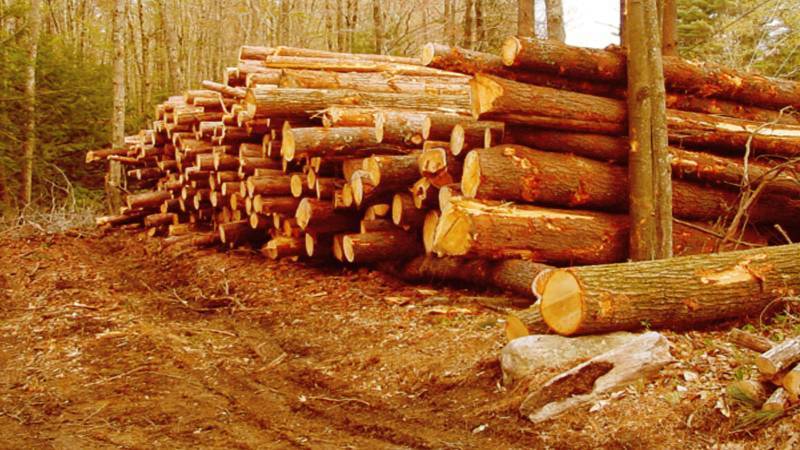
Deforestation in Diamer has emerged as one of the most pressing concerns of our time, and its consequences are visible in every corner of the district. Under the pretext of the so-called working plan, the timber mafia has been given a free hand to exploit nature. Forests that once stood tall in areas like Niat, Khinar, Daril, Khanbari, Tangir, and Babosar are now falling victim to unchecked cutting. The working plan, originally designed to regulate and preserve forests, has been twisted into a legal cover for mass destruction. Instead of conservation, it has turned into a licence for the mafia to uproot the green wealth of Diamer.
The tragedy lies not only in the policy itself but also in the silence and complicity of many people. Political figures, elites, and even non-political actors, driven by personal gains, openly or tacitly support this destruction. Ordinary people, some affiliated with influential groups, often repeat traditional sentences like “this is Azab from Allah” whenever natural disasters occur, conveniently ignoring the human role in triggering these calamities. By doing so, they absolve the mafia of its crimes and contribute indirectly to the destruction of their own homeland.
The impacts of this reckless exploitation are already unfolding. The recent floods in Diamer, particularly in Thack, wiped out houses, agricultural land, infrastructure, and even precious lives. Tourists, once drawn to the breathtaking valleys, are now confronted with destruction and danger. Floods of such magnitude are no longer natural phenomena alone; they are compounded by human greed and negligence. When forests disappear, the natural shield against floods and soil erosion collapses, leaving communities exposed to devastation.
If these forests vanish, the people will lose not only their ecological shield but also their economic backbone
The situation highlights a grim reality: Diamer is paying the price of man-made actions disguised as policy. Climate change in the region is not merely a global narrative but a local truth, shaped by decisions taken under the cover of laws that were supposed to protect, not exploit. The so-called working plan has become a black law, manipulated by vested interests while the masses remain unaware or deliberately kept in ignorance.
Chilghoza pine forests hold not only ecological but also immense economic importance for Diamer. The region is one of the key producers of chilghoza, and this dry fruit serves as a significant source of income for the local people. Thousands of households are directly or indirectly affiliated with this business, which sustains their livelihoods and contributes to the regional economy. However, this natural economic treasure is now under severe threat due to unchecked deforestation. If these forests vanish, the people will lose not only their ecological shield but also their economic backbone.
Diamer’s forests were not only the lungs of the region but also its economic and ecological backbone. Their loss means hotter summers, unpredictable rainfall, vanishing biodiversity, and recurring floods. It also means the erosion of a cultural and natural heritage that once defined the valleys. Unless the people and policymakers rise above personal and political interests and reclaim the true spirit of conservation, the district will continue to slide toward ecological collapse.
The devastation in Diamer is neither entirely natural nor accidental. It is man-made, driven by greed, protected by weak policies, and supported by silence. If this exploitation continues under the guise of development and regulation, the future generations of Diamer will inherit nothing but barren mountains, erratic floods, and a broken environment. The choice remains with the people: to keep appeasing the mafia under borrowed excuses, or to stand firm for the preservation of their land, forests, and lives.