

Across parts of Asia, whole communities are being pushed out of nations where they have lived for centuries. In Myanmar, the Rohingya are branded as foreigners, though their roots in Arakan go back over a thousand years. In India, two hundred million Muslims are being cast as outsiders, as if they were strangers to a civilisation they helped build. Without Islam, India would lack much of its architecture, food, music, and learning, yet now these citizens are being written out of the republic’s story. In Kashmir, the same logic of exclusion has taken hold, with a people treated as if they have no rightful place in their own land.
As a Jew, the child and grandchild of Holocaust survivors, I cannot read this without remembering my own family’s past. European Jews were treated in the same way by other Europeans: painted as the enemy within, blamed for wars and crises, and accused of betrayal. The Nuremberg Laws took away their citizenship and their jobs, barred them from schools, and pushed them out of public life. Long before the deportations and camps, the process of exclusion had already begun.
The sequence is familiar. Rights are withdrawn. Belonging is denied. Hatred becomes normal. Once this begins, it spreads through society and soon crosses borders. It is visible not only in Myanmar’s laws but also in India’s streets and Kashmir’s daily restrictions, where silence is enforced by curfews and surveillance.
Myanmar shows this clearly. In 1982, the government revoked Rohingya citizenship. After that came restrictions on travel, schools closed, and access to hospitals denied. By 2017, when villages were burned and hundreds of thousands fled to Bangladesh, the world expressed shock. But it was not shocking. The warnings had been there for decades.
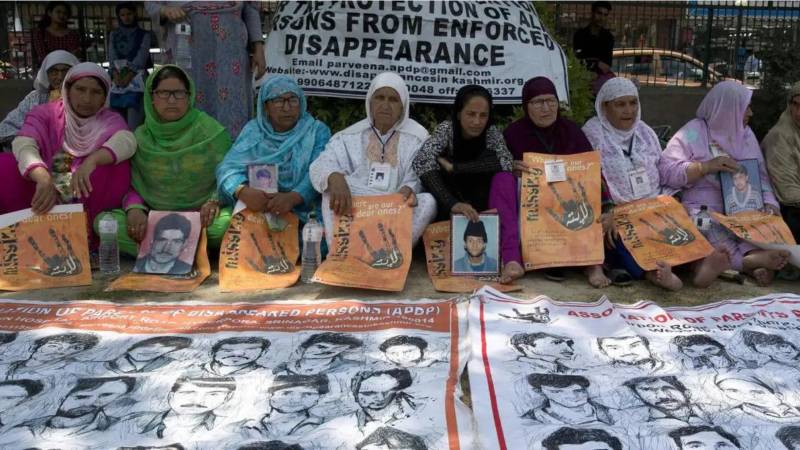
Kashmir too offers warnings: an entire population reduced to checkpoints, their voices muted, their autonomy stripped away long before the world cared to notice.
India is not Myanmar, but the logic runs along the same track. Muslims are not outsiders in India; they are part of its foundation. Yet Hindu nationalism says the country belongs to Hindus first. In 2015, Mohammad Akhlaq was lynched over an accusation of eating beef. Attacks on Muslim neighbourhoods followed.
In the West, the drumbeat of Islamophobia is loudest: politicians win votes by stoking fear, newspapers recycle stereotypes, and laws target visible signs of faith
In 2019, the Citizenship Amendment Act went further, giving preference to Hindus, Sikhs, and Christians, while putting Muslims in a second class. And in Kashmir, the revocation of autonomy in 2019 turned a constitutional promise into another act of dispossession. A secular democracy cannot survive if citizenship, or belonging, is decided by religion.
Jews know what this means. When citizenship is taken away, when neighbours choose silence, persecution follows.
The pattern is repeating: speeches turn into laws, laws give mobs confidence, and mobs open the door for the state to act. The Rohingya, stripped of citizenship, are left defenceless. Indian Muslims, though central to the country’s history, are being told they do not belong. Kashmiris, though inseparable from the subcontinent’s past, are treated as though their identity were a threat. Once these lies are accepted, persecution is not just possible—it is inevitable. What happened to the German Jews is ready to happen again, to another people in another place.
The international response has been weak. Myanmar has faced UN reports and resolutions, but no action. Bangladesh has carried the refugee burden almost alone. India’s decline is noticed, but discussed in soft tones, as if open criticism were impolite.
In the West, the drumbeat of Islamophobia is loudest: politicians win votes by stoking fear, newspapers recycle stereotypes, and laws target visible signs of faith. Under Donald Trump, such hostility was encouraged from the highest office, turning suspicion of Muslims into official policy, emboldening racist initiatives and regimes in Asia.
The cost is not only on the persecuted. Myanmar risks a permanent military dictatorship. India risks losing the strength of diversity and falling into fear and hate. A country that turns against its minorities will eventually destroy itself. Europe proved this in the 1940s, when persecution ended in the ashes of Auschwitz and Treblinka. Kashmir too risks permanent alienation, a society taught to live under fear rather than freedom.
For the Rohingya, exile threatens the disappearance of a culture. For Muslims in India, division threatens the future of the republic itself. For Kashmiris, the danger is suffocation, life reduced to silence under occupation. The signs are clear: minorities branded illegitimate, rights stripped away, fear used to silence. This was once the path to the destruction of European Jewry. Now, large Muslim populations face a similar threat.
History has already given its warning. The question is whether the world is willing to listen. Words are not enough. Restrained UN condemnations and half-hearted resolutions will not suffice. The world must act decisively and act now.