

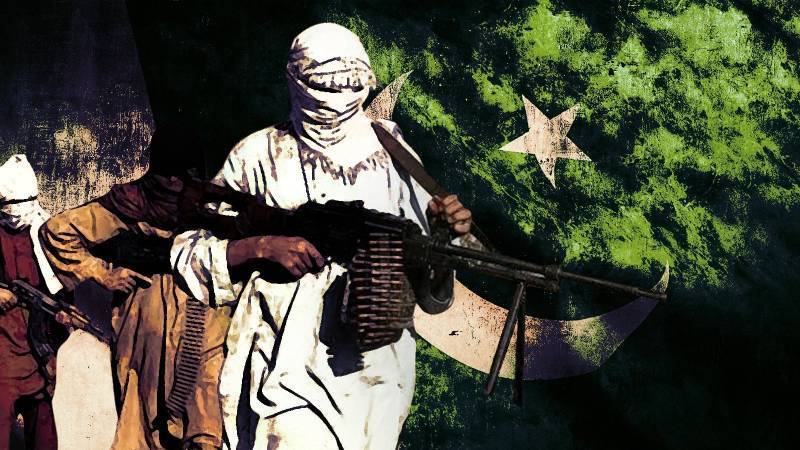
As a woman, a Pukhtun, from Balochistan and a Pakistani, I have endless reasons to dislike, despise, and loathe the mentality known as the Taliban.
Most associate this movement of men with Afghanistan, but they are not a political movement, nor an ideology-based group, unless violence, extortion, and hate as a means to an end are considered national, political, or civilisational. This is a disease, a mental health condition, a product of war, pain, anguish, deprivation, and dehumanisation, for generations.
The Afghans have lived with a multiplicity of people, ethnic, linguistic, and religious, throughout all their histories. Afghania, or Purushpura, is a land which extended all the way to the Indus civilisation and many parts of Central Asia. It has always been a multi-ethnic and multicultural place. Today, we know them as separate Azeris, Uzbeks, Tajiks, Turks, Hazaras, Aimaks, and many more, whom I am frankly unaware of. Afghania remains a land of many, plentiful in the crossroads of the greater Persian and Turkic/Mongol empires.
In contrast, what are the Taliban? Who do they represent? What ideas do they adhere to?
Nothing.
They have no conception of Islam scripturally, philosophically, economically, or politically. They associate themselves with Pukhtun. What is the basis of this association? Language and Pukhtunwali? What ideas and norms do they follow? They follow none of Islam’s principles, edicts, or ideas. There is no plan for a people or a community, or a nation. Pukhtunwali does not hate women, nor does it prevent its community from prosperity or hate anyone.
The Taliban openly hate women, an entire gender. There is no precedent for such a philosophical, political, or economic idea because it is a mental illness. Their strategies of negotiation for power or influence are solely predicated on violence, the threat of violence, and extortion. Their economic plans constitute smuggling, no rules-based structures, bullying, and threat-based fundraising backed by extreme violence. This is not a different culture or pre-modern tribal civilisation; it is a sickness, the deviant behaviour of men who grew up with perpetual war as a norm. They represent what happens when human beings are not treated humanely for a very long time.
Talibanisation was imposed on my people, my province. The memories of my parents and grandparents were not of fear, violence, or anti-women sentiments
This is not Afghan or Pukhtun.
I make these claims with confidence because both my provinces in Pakistan, Khyber Pukhtunkhwa and Balochistan, have suffered and been stripped of their culture and ethos by these madmen and their violent cultures. Talibanisation was imposed on my people, my province. The memories of my parents and grandparents were not of fear, violence, or anti-women sentiments.
Those who hold power in Pakistan in Pindi, and somewhat in Islamabad, have for generations supported, nurtured, and protected men with these insane mindsets. This culture was weaponised and enabled as a strategic tool to threaten big powers for financial aid and to support undemocratic rules Big Taliban. This culture, which was nurtured, emboldened, and weaponised, is sold as Pukhtun, Afghan, or Afghani. It is not.
If the state of Pakistan and its mouthpieces bothered to listen to or care about opinions other than those from the five rivers, perhaps we would not have seen our gentle, beautiful lands and people torn apart and in perpetual anguish.
Tribal affiliations with Pukhtuns across the Durand Line aside, we on this side of the border are Pakistanis. Yet, citizens from these two provinces have often felt overlooked in national priorities. In Quetta, for instance, the city’s expansion has increasingly centred around security zones, limiting public access and space. Even essential services like the CMH hospital remain difficult for ordinary residents to reach in emergencies — a reminder of the distance between citizens and institutions meant to serve them.
Multiple checkpoints, delays threatening lives, while Dallas was packed with black-turbaned men who whizzed past without checks or hassles through these impenetrable gates. There are countless stories and incidents residents have witnessed. The madmen from across the borders have been settled, protected, and privileged, while the law and order situation destroyed their gentle culture and sense of community, and unchecked violence and impunity to those unwelcome. The simmering disquiet and observed discrimination at the locals’ expense is at a point I am not quite sure is repairable.
In light of this truth and reality check, when I read misplaced, arrogant statements and articles in Islamabad- or Pindi-based rags suggesting “good riddance to the Afghans who have lived in Pakistan for 45 years” or “finally we are showing the Taliban who is boss,” it makes me even more furious. Own your appeasement and role.
Chagai should be like Brunei, but it is like Burundi
Do I believe the state managers in Pindi and Islamabad have realised that supporting madmen in Afghanistan was a folly? Not for a second. Why? Have the state managers signalled internally, inside Pakistan, that madmen of our variety, who think and believe the same nonsense as the Taliban, will not be tolerated? Have we signalled this to our managed courts, society, madrassas, proscribed organisations, fully funded and protected? Is there a signal that no religion-based violence will be tolerated in Pakistan? Has there been a signal that there will be no ethnic profiling? Is there a signal that Balochistan and KP residents will no longer face state-sanctioned violence, disappearances, and extortion? Will there be democracy, voices, opinions, and rights included in the national discourse and development agendas? Is this real change?
Instead, we see on national television our minerals being offered in the White House. Who did they ask, pray tell, before Balochistan’s national resources were being auctioned? The farce of parliament, provincial or federal, was not even consulted for pretence’s sake. Are the households in Balochistan going to see affordable housing, clean drinking water, sanitation for all, and quality education for all?
What has CPEC achieved so far for Gwadar and the Makran division? How many jobs, education, and economic benefits have the Baloch seen? The Reko Diq mines of gold and copper have enriched chief ministers and their backers, the Argentinians, the Australians, the Singaporeans, even the Chinese, and God knows who else, but nothing for Chagai or its 270,000 residents! Chagai should be like Brunei, but it is like Burundi.
Why are the human development indicators of a district with barely any population and unimaginable wealth abysmal? Who owns this wealth? Who is extracting and benefiting from it? Why is the richest province in Pakistan the poorest province? Why do 2% of the population in Pakistan have the lowest human development indicators when they have all the resources to develop 21st-century tools and opportunities? They should have been the wealthiest, most prosperous, most educated, and most developed of all in Pakistan.
With the latest farce, the Saudi-Pakistan alliance, another mirage of Saudi investments in Pakistan, or should I say in Balochistan, is again being dangled. I will not be holding my breath for the rivers of honey flowing through my lands anytime soon.
This model of lying and deceiving citizens is unsustainable. Who believes anymore? Legitimacy has been thrown out in all things Pakistani politics and governance, but for how long will the teeming millions watch?
A recent “Tourism in Balochistan” conference and campaign was being widely advertised in Islamabad. This is another example of an Orwellian bubble. On offer to whom, I wonder? A province which remains inaccessible to most diplomats and multilaterals living in Pakistan is being sold in Islamabad as a tourist destination? What exactly are you selling as tourism, is my question.
The recent expulsion of Afghans from Pakistan has been welcomed by almost all in Pakistan, including many who belong to KP and Balochistan. The bogeyman “Afghan” is blamed for all Pakistan’s ills, the traditional (racist) scapegoat for the establishment’s racist policies.
Should we believe the current anti-Taliban narrative is the beginning of a new chapter in Pakistan’s journey towards a safer, saner future for all Pakistanis?