

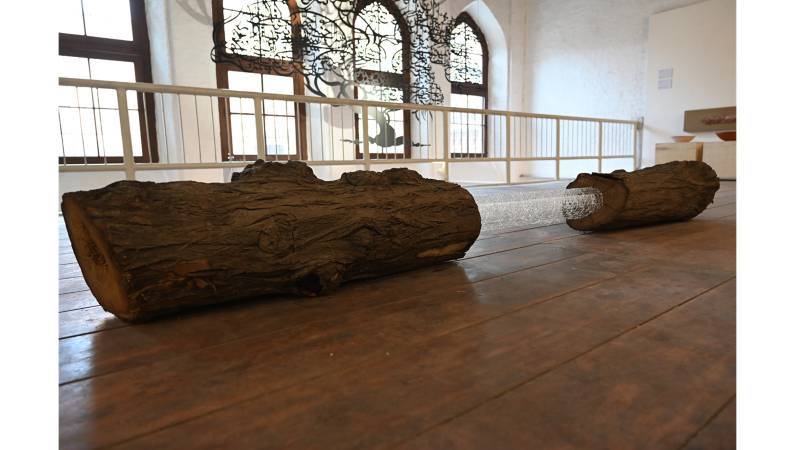
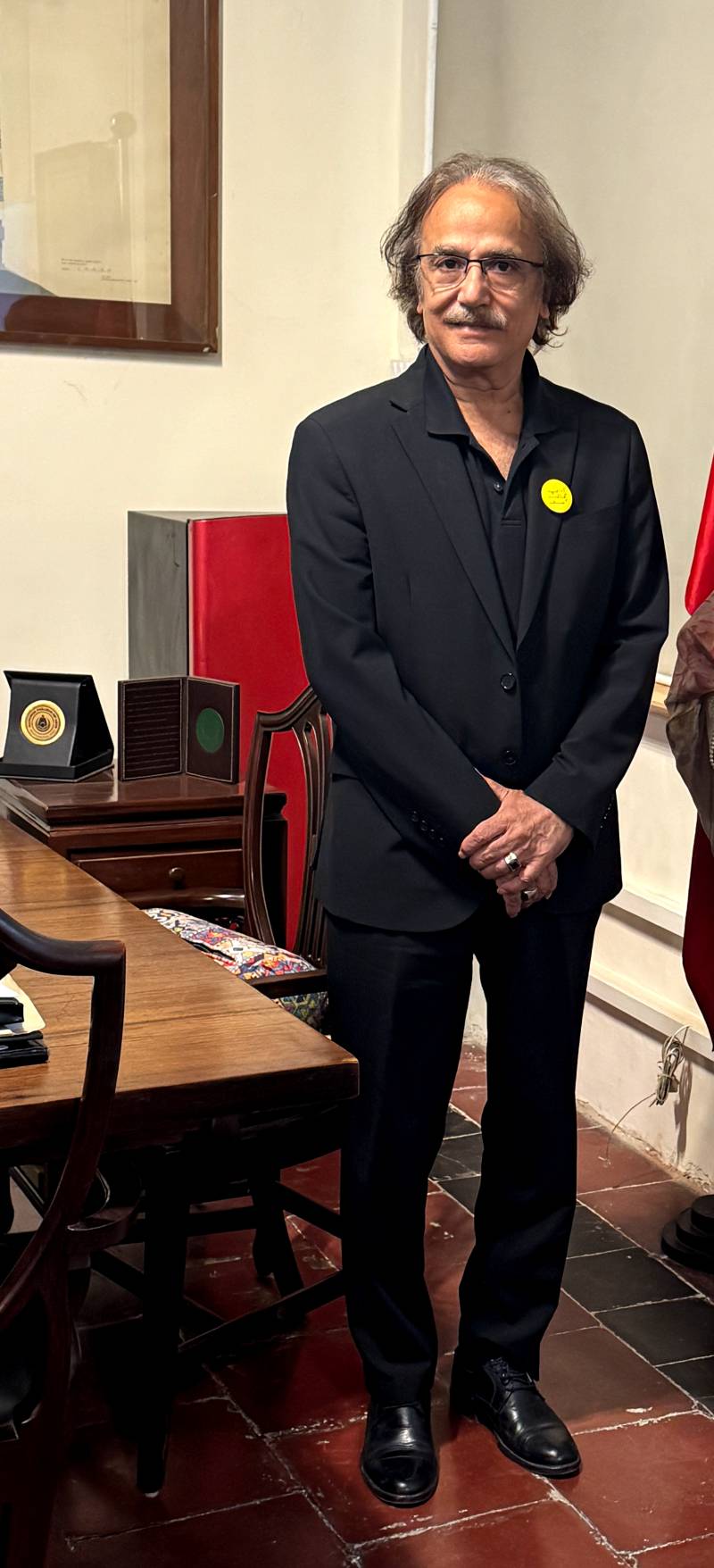
Inspired by emerging art hubs in the Middle East and Europe, Prof Murtaza Jafri sought to replicate that vibrant energy and create a similar center of excellence within Pakistan. In this interview, he talks about the concept and its execution.
***
Ayesha Majeed (AM): How did you get the idea to organise the Triennale at NCA? What were your feelings behind this initiative?
Murtaza Jafri (MJ): It was a mix of emotions, but I was confident we would be able to pull it off because I trust my efficient team. The idea of organising an event of such magnitude came to me during my trips to the Middle East and Europe, where new art hubs are emerging around the world. I wanted to create a similar center of excellence here.
AM: Wasn’t the time span too limited to organise an event of this scale?
MJ: Yes, it was. Normally, biennales and triennales take two to three years to plan and execute, but we managed to accomplish this within just three to four months, which I believe is a success.
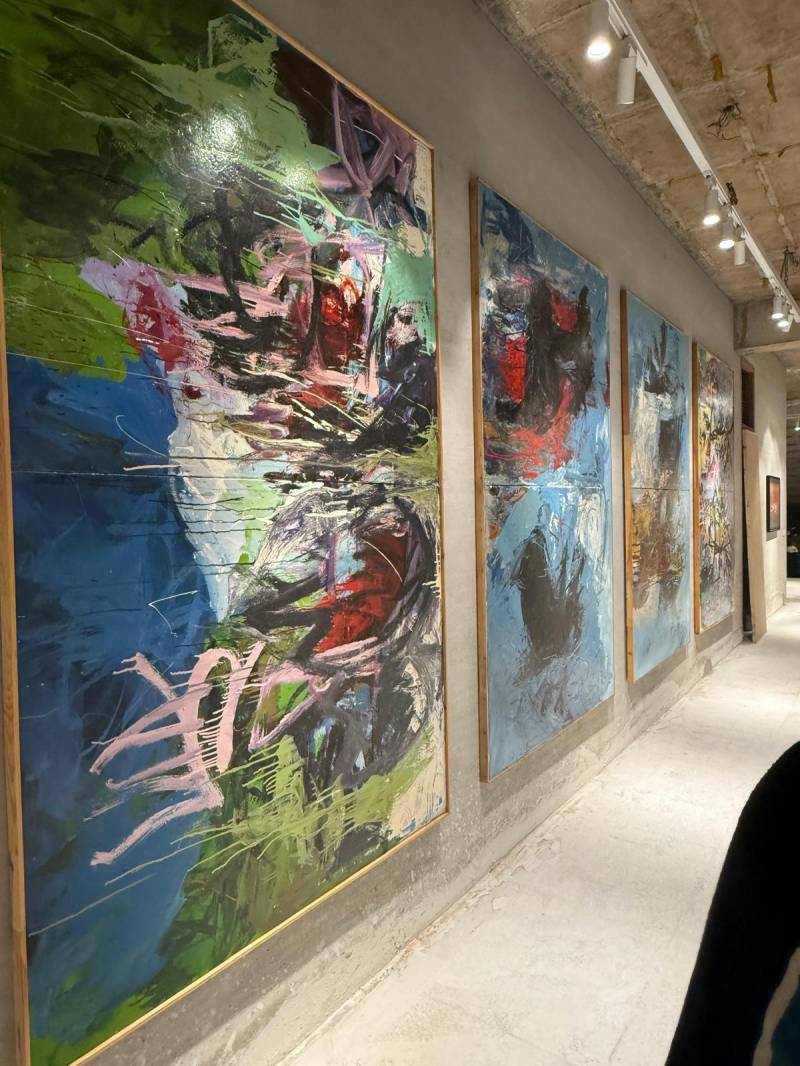
This Triennale carries the message "NCA tere naal hai"—a way of saying that NCA stands with artists who do not have access to major galleries. We created a platform for established national and international artists, as well as students, recent graduates, and members of the general public, to present their work together on a shared stage. It also offers the public an opportunity to walk in, experience the exhibited works, and leave with inspiration.
AM: NCA completes 150 years this year. In your view, what has been its most defining contribution to art?
MJ: Since its inception as the Mayo School of Art, NCA has had a long and distinguished history of producing master craftsmen and artists who practiced a tradition grounded in manual skill and material exploration. We want to highlight the art that has emerged in these 150 years and the images that have evolved in this region.
"Normally, biennales and triennales take two to three years to plan and execute, but we managed to accomplish this within just three to four months"
The institution was built on a foundation of traditional crafts, manual skill, and material-based practice. Over the decades, this legacy has evolved into a rich blend of craftsmanship and contemporary art, shaping generations of artists who continue to contribute to Pakistan’s cultural landscape. Keeping this legacy in mind, we gave the Triennale the title “Kasb-e-Kamal Kun.”
AM: How was the selection of the artwork made?
MJ: The work displayed at the NCA Triennale was selected by a team of NCA’s expert artists.
AM: What was the call for the display of work?
MJ: It was an open call. Anyone who wanted to display their work was welcome—even amateur artists. The idea was to give a platform to everyone which is a totally new concept.

AM: How many international artists participated in the residencies and exhibition?
MJ: We invited almost 20 international artists from around the globe.
AM: From which regions of Pakistan did the majority of artists participate?
MJ: Participants from all regions of Pakistan were included.
AM: Do you think this event served as effective cultural and public outreach?
MJ: Yes, absolutely. The Triennale served as an exceptional platform for communication and cultural engagement, bringing together artists, students, scholars, and audiences in a shared cultural space. It reflects our commitment to making art accessible and meaningful beyond the boundaries of the campus.
AM: With rapidly expanding technology, especially in the age of AI, are you planning to introduce a modern curriculum for art education in campus?
MJ: No, not yet.
***
Murtaza Jafri concluded his interview with the Urdu couplet:
Tumhain in mosamoon ki kia khabar milti agar hum bhe
Ghutan key khoof sey ab o hawa tabdeel kar leetay.
(How could you ever know these seasons?
If we too, out of fear of suffocation,
Had changed our surrounding milieu?)
Note: The Triennale is on display from 31 October until 28 November 2025.