

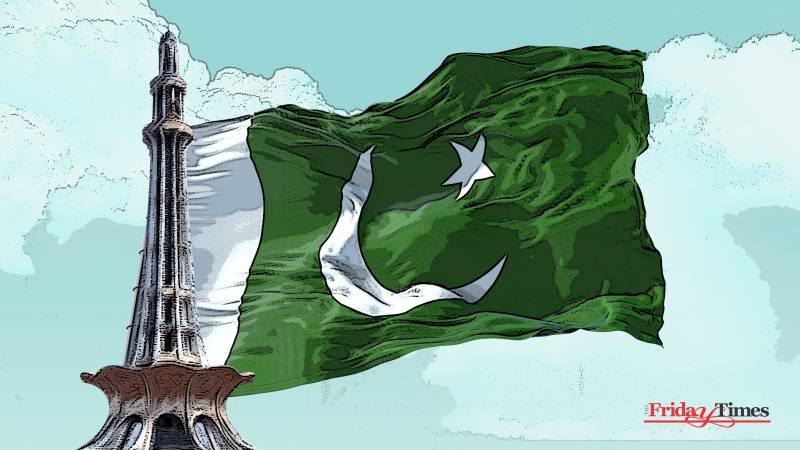
On this Pakistan Day, I want to pay homage to the country that was my home for 6 months. This is not to ignore the challenges faced by the people of Pakistan and there were aspects of life that were sad to witness, particularly the number of people begging in the cities, domestic workers waiting on the middle and upper classes, and stray animals going uncared for. However my interactions with people from across the spectrum of society and my experience of everyday life in the suburbs of Islamabad certainly did not conform to the image of Pakistan that is fed to us in the Western media and public imagination.
Sadly, it is not uncommon in my own country (the UK) to hear racist and Islamophobic prejudice against Pakistan and Pakistanis from people who know very little about Pakistan, who don’t know Pakistanis, and who, of course, have never visited the country. This is evidence of the powerful narratives used against the people of South Asia during the colonial period and afterward, particularly when people from the region were encouraged to come to the UK in the post-war period to fill labour shortages, only to face discrimination.
But the 6 months that I had in Pakistan were some of the best of my life, mainly because of the people I met along the way. The hospitality that was shown to me by my colleagues, matched only by the kindness I have been fortunate to know from Pakistanis living in the UK, was unparalleled. There is no doubt that the support I was provided to navigate the practicalities of living in Pakistan and in facilitating an all-round experience went well beyond what a Pakistani might expect if they were to relocate to and work in the UK. For them, it was not just about meeting my contractual obligations at work; it was about making memories and seeing what the country is truly like.
Most of my writings and research focus on challenges within Pakistani society, but it would be wrong not to share the unforgettable experience I had while living in the country and the people were truly at the heart of that experience
That was exactly the experience I had, no doubt helped by my pre-existing love for Pakistani khana, chai, and music. It is right to be cautious when it comes to eating and which brands of bottled water to drink, but the culinary experience far exceeds any I have had previously. My favourite dishes and drinks were halwa puri for nashtah, BBQ, Kabuli pulao, karak chai, and meethi lassi. I learned to make elaichi chai, which is far superior to the way we take tea in the UK, as well as to cook biryani and karahi properly. Pakistani TV shows and films have been my cornerstone for learning Urdu, and it was great to be in the country watching the popular ‘Kabhi Main Kabhi Tum’ during its release. My love for local music grew, dominated by the songs of Mehdi Hassan, Nusrat, Rahat Fateh Ali Khan, Atif Aslam, Ali Sethi, AUR, and Arooj Aftab.
It was how guests are treated in Pakistan that had the most significant effect on me and it is undoubtedly connected to faith in Islam, though the kindness of all Pakistanis regardless of religion points to the importance of hospitality within the wider culture. Given the prominence of Islamophobia in the UK, it should be noted that the Muslim community in the UK is the most charitable, donating over 4 times the national average. This is reflected in Pakistan itself through the institution of zakat. People also invite acquaintances to their homes and share what they have, regardless of their financial circumstances. Friends fight over paying the bill, rather than keep a close and transactional eye on who owes the other what. Strangers will go out of their way to be helpful and welcoming.
Those who promote Pakistan’s natural beauty online often accompany images of the country with statements like ‘this isn’t Switzerland, it’s Pakistan.’ But, as with every country, Pakistan is unique. The northern areas of the country are perfect for adventurous hikers and climbers, the major cities and UNESCO sites for history buffs, and the diverse places of worship for pilgrims and students of religion. There are increasing numbers of community groups promoting exercise, academic discussion, and cultural activities, particularly in Islamabad. The public transport was largely on time and affordable. I felt comfortable using it alone between cities, as with taxis in Islamabad, Lahore, and Karachi.
One of the most rewarding aspects of work was interacting with Pakistan’s youth when lecturing at universities in these 3 major cities. Much of my research centres on sensitive issues often avoided in the public sphere, but the students were engaging and inquisitive, asking thought-provoking questions that caused me to reflect on my work and findings. They certainly offer hope as to the country’s future. I learned a lot from them, as well as from the brilliant lecturers who face funding challenges, a narrowing space for freedom of expression, and demanding workloads that preclude a healthy work-life balance. Their commitment in light of economic and political instability was truly inspiring.
Most of my writings and research focus on challenges within Pakistani society, but it would be wrong not to share the unforgettable experience I had while living in the country and the people were truly at the heart of that experience.