

Trump’s convention speech gestured toward national unity. He said, “Now it’s time for America to bind the wounds of division — have to get together. To all Republicans and Democrats and independents across this nation, I say it is time for us to come together as one united people.”
This is the kind of gesture, of course, with full force and determination we want to see in our elected prime ministers. As leaders, they must work to keep the flow of reconciliation going.
Whoever comes to power in our country ends up abusing it by crushing political opponents instead of working towards reconciliation. The result is a divided society, where progress is blocked by internal conflicts, growing tensions, and weaker social ties. Since the death of the Father of the Nation, our country has been trapped in a cycle of conflict and discord. The noble ideal of national unity that inspired our forefathers in their fight for freedom never turned into the stable and progressive welfare state they envisioned.
Corruption, exploitation, and confusion took over, weakening the foundations needed for collective progress. Without national unity, unnecessary disputes have drained our national strength, keeping us in a constant state of crisis. To find a lasting solution, all political parties must work together to build national unity and establish true democracy, which is so important for the well-being of our people.
The real problem is not the absence of leaders but the absence of true statesmen. Real statesmanship means rising above personal or party interests and focusing on what is best for the nation
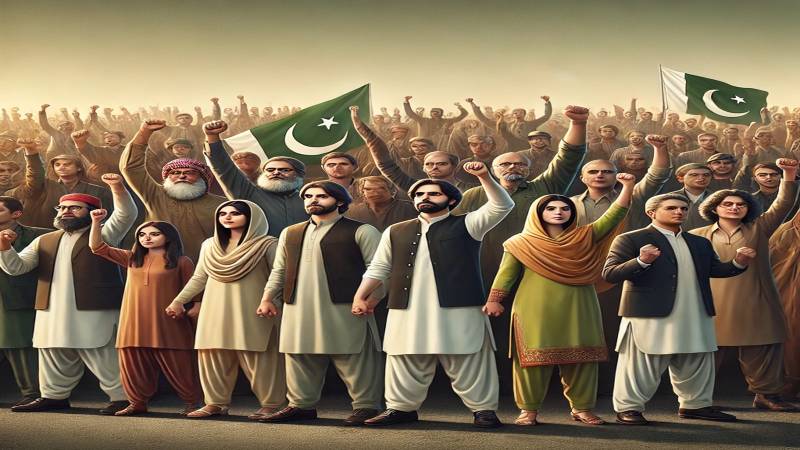
National unity is essential for political stability in any country. There must be a shared sense of identity and common values that bring people together as one nation. Without unity, governments cannot build policies and programs that benefit all citizens equally. When people feel connected to their country and its culture, they are less likely to engage in violence or unrest. This sense of belonging allows the governments to focus on progress without unnecessary obstacles, as everyone works toward the country’s betterment.
Sadly, our post-independence history is marked by a lack of true statesmanship. Instead of prioritising national unity and good governance, leaders often focus on silencing opposition and securing personal gains. This only deepens divisions, leading to more distrust and unrest in society. In Pakistan, unity remains out of reach. Leaders often use divisions for their own benefit, preventing progress. Without a strong sense of national identity, we remain vulnerable to both internal chaos and foreign interference. Without a common vision that puts national interests first, we will continue to struggle with stagnation and conflict.
Nationalism, when used wisely, can be a powerful tool for unity and growth. But here, nationalist sentiment is either weak or completely missing. Instead of working towards the collective good, the leaders have often focused on narrow political, religious, or ethnic interests. This lack of a unifying vision has stopped us from reaching our full potential.
The real problem is not the absence of leaders but the absence of true statesmen. Real statesmanship means rising above personal or party interests and focusing on what is best for the nation. Statesmen understand that unity is key to progress and work hard to strengthen it. Unfortunately, such leadership is now rare in our country. The failure of leaders to rise above petty differences has caused decades of unnecessary conflict and suffering. Hundreds of lives have been lost, and countless resources wasted because of the failure to create a united national identity.
Despite progress in some areas, internal conflicts and political divisions have repeatedly set the country back. These divisions have also made us vulnerable to foreign influence, as outside powers take advantage of our weaknesses to serve their interests. A strong, unified nation that prioritises national interests is necessary for long-term stability and growth.
For a developing country like ours, the only way forward is to embrace a unifying national vision. This does not mean following the kind of nationalism that creates division or exclusion. Instead, it means building a shared identity and purpose that goes beyond ethnic, religious, and political differences.
Unity is the real strength of a nation. Without it, progress will remain an impossible dream. The leaders must understand that division weakens a country, while unity has the power to bring strength and prosperity. The reality of nationalism must be recognised by all political parties. It is not just a political idea but a force that can bring a nation together and push it towards success. Only by committing to national unity can we unlock our true potential.