


As the year slips away in its quiet, almost sublime manner, it gently invites reflection. The passing of time urges us to look back: not always on grand events, but on the small, personal threads that have woven through our days. While such a review might touch many layers—personal growth, collective experiences, social shifts, or political currents. I choose to limit mine to something intimate and steady: some books I read in 2025. To set the scene, let me first trace the quiet evolution of my reading over the decades. In the 1980s, my mind turned toward political literature. I immersed myself in the works of GM Syed, Rasool Bux Palejo, Shaikh Ayaz, Pir Hisamuddin Rashidi, and others, alongside Russian classics that deepened my understanding of ideology and South Asian politics.
By the 1990s, the horizon widened to African literature and thinkers such as Frantz Fanon, whose voices added new layers of insight into colonialism and resistance. Late in that decade, a lasting taste for the classics took hold. I still remember the Harvard Classics—the famous “Five-Foot Shelf” of fifty-one volumes-lined up in shining wooden almirahs at the Sachal Sarmast Public Library in Khairpur Mirs. My old notebook from 1995 still holds copied passages from Benjamin Franklin’s autobiography, John Woolman’s journal, William Penn’s Fruits of Solitude, Epictetus’s Golden Sayings, Francis Bacon’s Essays Civil and Moral and New Atlantis, Milton’s complete English poems, Emerson’s Essays and English Traits, Saint Augustine’s Confessions, and Thomas à Kempis’s Imitation of Christ.
In the 2000s, my interests shifted toward The Thinker’s Library series, where I read titles such as HG Wells’s First and Last Things, Charles Darwin’s autobiography and The Origin of Species and The Descent of Man, Anatole France’s Penguin Island, Sir JG Frazer’s Adonis, and Mark Twain’s What is Man?. Around the same time, Will Durant’s suggested reading list, “The Road to Freedom: One Hundred Best Books for an Education,” guided me further. Fiction, especially works by Nobel laureates and Booker Prize winners, remained a constant—often approached systematically, either by exploring an entire country’s major authors or by reading an author’s complete oeuvre.
Looking back, these earlier phases of reading served clear purposes: in the 1980s and 1990s, to sharpen political awareness and grasp leftist thought; later, especially after my PhD in history, to explore social sciences, history, archaeology, anthropology, peasant studies, and Sindh studies.
Yet all of this forms only the gentle backdrop to my true purpose here: to reflect on what I read in the year just passed.
Recently, I have come to see that my reading now gathers around three quiet but essential streams. I read books that serve as sources or companions to what I am writing; books that help shape and refine my own style; and books that teach me to look at ordinary things with fresh, unhurried eyes. It is within this last stream—learning to see the everyday differently—that I wish to introduce three modest yet profound works to aspiring writers that I read in November and December of 2025. These are: The Volcanoes from Puebla by Kenneth Gangemi, The Gray Notebook by Josep Pla, and Letters from an American Farmer by J. Hector St. John de Crevecœur.
These books are mentioned here, in the order I turned their pages. First came The Volcanoes from Puebla by Kenneth Gangemi. This is an American poet, novelist, and short-story writer whose work is marked by a minimalist, objective, and sometimes avant-garde spirit. The book itself is a hybrid of travel memoir and fiction, drawn from a solo motorcycle journey through Mexico.
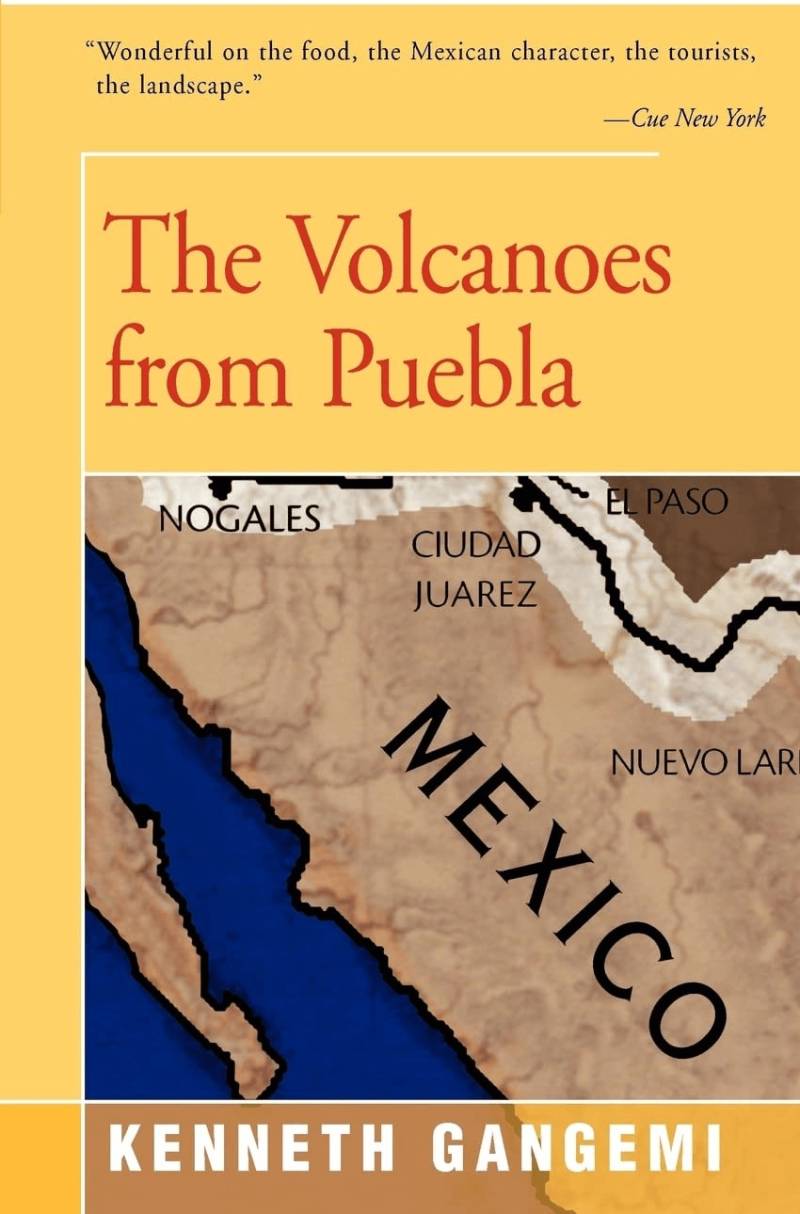
Unusually, it is arranged in alphabetical order, like entries in a dictionary or an atlas of impressions. Gangemi records the country through precise snapshots: the shape of a plaza, the heat of a street, the taste of a dish, the glance of a stranger. There is no heavy emotion or drama—only careful attention to what is there. For a young writer, it stands as a pure lesson in observation-based writing, where short sentences and plain facts build vivid scenes and reveal the quiet beauty hidden in the ordinary.
Next, I read The Gray Notebook by Josep Pla. A Catalan journalist, essayist, and tireless traveller, he became one of the most important chroniclers of twentieth-century European life. The book notes things such as the changing light on the sea, the smell of salt and pine, the rhythm of village talk, the flavour of simple food and the feel of weather against the skin.
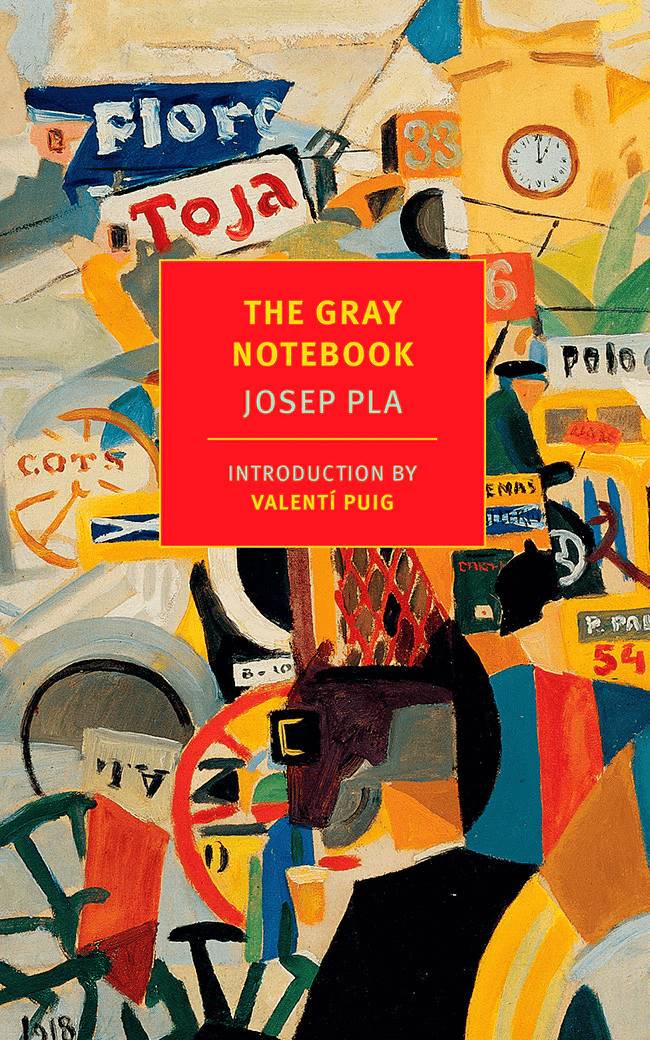
Pla writes without ornament or exaggeration, choosing instead a calm, honest style that makes the smallest details luminous. The work teaches that the most unremarkable days can grow extraordinary when seen by a patient and attentive eye. The book shows young writers how restraint and truth can turn the everyday into something lasting and beautiful.
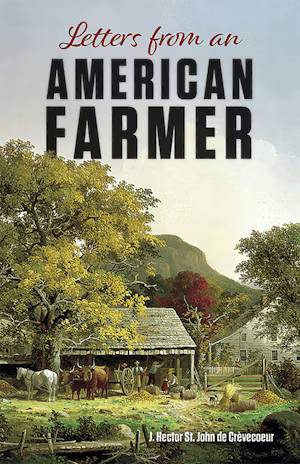
Finally came Letters from an American Farmer by J Hector St John de Crevecœur. A French-born writer and farmer who settled in colonial America, Crevecœur blended Enlightenment ideas with close pastoral observation. The book takes the form of twelve letters from a fictional farmer named James to a friend in England. Through plain, direct language, the book sow dawn’s first dew on new leaves, the low murmur of wind through ripening wheat like a lullaby shared between lovers, the slow bloom of belonging born not of conquest but of shared sweat and starlight. For an aspiring writer, the book offers a model of how to weave personal experience with wider social reflection. It reminds us that writing about one’s own backyard—the chores, the earth, the local sounds—can open a path to larger truths about freedom, belonging, and change. These three books gently guide young writers toward real-life observation, the use of short and clear sentences, and the careful gathering of sensory details—what the eye sees, the ear hears, the nose smells, the hand touches, the tongue tastes.
At the end of 2025, while the subtle glow of these three books still warmed my thoughts, I committed these lines to my journal: “I believe to read Kenneth Gangemi taught me the beauty of minimalism: how a cold, unblinking list of objects can echo the silence of a modern soul more loudly than any dramatic prose. I hear Pla’s voice urging me toward the quest for the luminous adjective—strip away the flowery mask of sentiment, and the naked clarity of a landscape becomes its own form of prayer, a truth held in the precision of the word. Crevecœur taught me to focus to the pastoral heartbeat, showed how the soil beneath a man’s feet and the raw labour of his hands can forge an entirely new identity from the ashes of the old.
These three masters remind me that my most sacred act as a writer is to look at the world until it truly reveals its marrow—whether I am cataloguing the fractures of Hyderabad city, the scenic mountain of Karoonjhar, or the wildness of the Runn of Kutch. In sum, these writers helped me learn how to be a participant in the slow, beautiful work of making the invisible world seen.
To all aspiring writers, I wish a happy new year and good luck. May their eyes stay open, their sentences remain true, and their pages keep growing.