

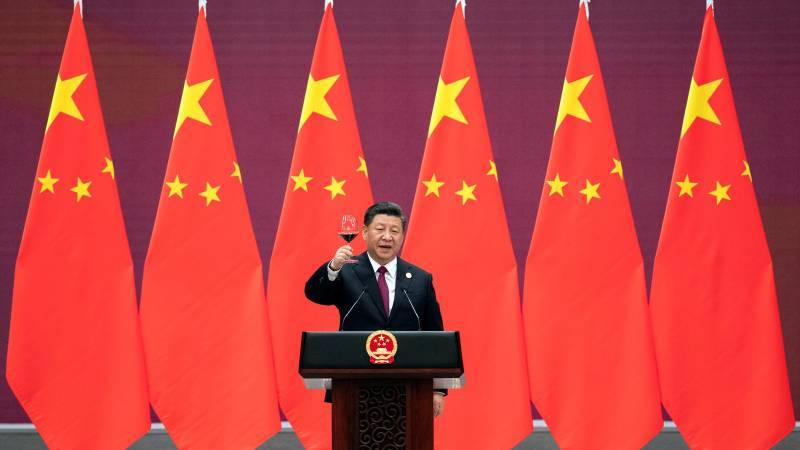
History bends through sacrifice, patience, and vision. Among the nations of our age, China’s rise is without precedent. It is the chronicle of a people who endured war, revolution, and poverty—and then, within two generations, transformed themselves into a global power. For Pakistan, and for nations seeking rebirth, China’s story is not merely an inspiration. It is a lesson.
China’s rebirth was born in fire. In the Second World War, tens of millions perished resisting Japanese aggression. That crucible forged resilience. Even the upheaval of the Cultural Revolution could not extinguish the will to rise. In 1978, under Deng Xiaoping, China turned from ideology to pragmatism. He declared that it did not matter whether the cat was black or white, as long as it caught mice. From this philosophy grew the Special Economic Zones—Shenzhen, foremost among them. What was once a fishing village of 30,000 is now a metropolis of 17 million, home to Huawei, Tencent, and BYD.
The results were staggering. For more than three decades, China grew at nearly 10 per cent annually, the fastest sustained expansion in modern history. It lifted over 800 million people out of poverty, three-quarters of the global reduction in extreme poverty. It created the world’s largest middle class, transformed infrastructure, and became the workshop of the world.
Yet this ascent did not come through confrontation. In 2001, when a US spy plane collided with a Chinese fighter jet near Hainan Island, Beijing could have escalated. Instead, it chose resolution. After 9/11, China avoided entanglement in the War on Terror, focusing instead on industry, exports, and technology. This restraint allowed it to rise unchallenged, building its economy while others exhausted themselves in distant wars.
Today, that discipline is visible in every parade on Tiananmen Square. Recent military displays revealed intercontinental ballistic missiles, hypersonic glide vehicles, stealth drones, and fifth-generation fighters. Western analysts who once dismissed Chinese arms as derivative now concede parity, even superiority, in fields from missile defence to naval power. These parades are not spectacles of aggression—they are diplomatic messages. They say: China will defend its prosperity, but it will not squander it in endless conflict.
The lesson from China is not only about growth, it is about discipline
Here, the comparative lens sharpens. India, with a population nearly equal to China's, has recorded genuine successes. Its economy, now over $4 trillion, ranks fifth in the world. Its IT services dominate global outsourcing, its stock markets soar, and foreign investors eye it as a future hub. India aims to become the world’s third-largest economy by 2030.
But contradictions persist. Over 200 million Indians remain in poverty, while youth unemployment and rural distress remain chronic. The rise of Hindu nationalism has sown division, threatening long-term cohesion. Militarily, India spends billions on imported Rafales and US platforms but struggles to achieve self-reliance. Growth has been real, but uneven—raising questions about whether its social fabric can support sustained ascent.
The Gulf states, Saudi Arabia and the UAE offer another lesson. Their Visions 2030 and 2050 are not imitations of China but independent responses to the challenge of a post-oil world. They invest in tourism, clean energy, artificial intelligence, and cultural industries. Their message is clear: prosperity lies in diversification, not dependency.
And where does Pakistan stand? Tragically, caught in cycles of short-termism. We debate personalities, not policies. Only five million Pakistanis pay direct taxes in a nation of 240 million. Of these, four million are salaried workers who contribute ₨600 billion annually, while the business elite contributes barely ₨38 billion. Meanwhile, real estate speculation thrives, industry stagnates, and reforms collapse after a single meeting.
The lesson from China is not only about growth, it is about discipline. It is about choosing engagement over confrontation, long-term stability over short-term gain. It is about institutions that outlast personalities, strategies that span decades, and policies anchored in merit rather than patronage.
If our rupee continues to devalue by 20 per cent every three years, no investor will come. If our passport remains unwelcome at global borders, no medal ceremony will restore dignity. Only education, innovation, and a transparent economy can anchor the future.
China’s parades show what disciplined vision can build. India’s rise shows that markets reward scale but punish inequality and division. The Gulf shows that vision can diversify even resource-dependent states. Pakistan must now choose: will we remain fragile, or will we rise?
The world has shifted. America no longer stands alone. China is here. India is rising. The Gulf is transforming. Pakistan’s moment has arrived, but only if we are willing to learn.