

Punjab has made it easier to register a business. On the street, small entrepreneurs are still paying for their survival in juice, ice cream and cash. As a lawyer, I have spent several years working with start-ups and new businesses in Lahore. I have met many young Pakistanis with ideas, ambition and the nerve to stake their savings on both. Their success matters far beyond their own balance sheets. A business that takes root pays rent to its landlord, buys from other traders, gives jobs to people who might otherwise have none, and contributes taxes to the exchequer. When one business grows, many households benefit. That is why I have always held that enterprise is among the surest routes to growth for Pakistan and its people.
The Punjab government deserves credit here. Its ease of doing business facilitation centres and online guidance have made compliance far simpler than it once was. There are people in positions of authority who genuinely want to do good, and they have delivered. Yet their efforts are undermined by others who use the power of their office to do the opposite.
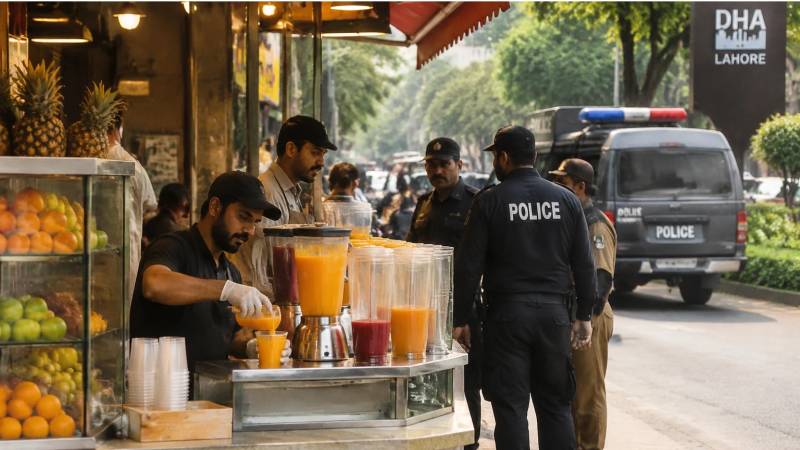
I saw this recently at a popular takeaway juice shop in DHA, Lahore, where I had stopped with my family. A police van stood nearby, and its occupants were served before us. Five or six glasses were handed over, and the van drove off. When the order-taker came to me, I asked whether they had paid. Quietly, he said this was routine. Some days the police come in person; on others, the shop is asked to deliver 20 or 30 glasses for officials and their guests. He named the station they belong to. By my rough calculation, 20 glasses cost the shop between Rs6,000 and Rs7,000 a day. Over a month, that amounts to nearly Rs200,000, an enormous sum for a small business.
I asked why they did not simply refuse. The owner, whom I spoke to by phone, explained that the police insist every new employee be registered at the local station and produce a police character certificate. Many of his workers, he said, could barely afford a meal before he hired them, and some cannot easily obtain such paperwork. The shop feeds and pays them, but the added cost and hassle of compliance is more than it can bear. Any lapse, real or alleged, brings the same threat: register your staff or we will seal your premises. Rather than run that risk, the owners hand out free juice.
Other businesses nearby told the same story. Food, juice and ice cream for officials, and sometimes their guests, are a daily expectation. When I offered to take the matter to the relevant authorities, most were reluctant. They said they had neither the time nor the resources to fight, and they feared what would follow. Nor does this appear to be confined to one market. Business owners have since told me that in other parts of DHA, restaurants that pay are allowed to keep their dine-in service open beyond permitted hours, while those that do not are made to close. I was also told that the police once took a smaller sum for this arrangement, but the Punjab Enforcement and Regulatory Authority (PERA) now expects a share as well. I have not verified these claims myself, and they call for independent inquiry. They came from multiple sources, however, and are consistent with what I witnessed. If true, this is far more than petty corruption. It distorts the market by rewarding those who pay and punishing those who do not, and it erodes the fair competition our laws are meant to protect.
This is bhatta, a word most of us associate with the gangster films of another era. It is bitter to find it alive in modern Lahore, imposed on young entrepreneurs who are doing exactly what the state says it wants them to do. The problem lies partly in the law itself. Requirements that are impractical to follow, or that nobody expects to be followed, become instruments of leverage. If compliance is impossible, everyone is technically in violation, and enforcement becomes discretionary. Whoever holds that discretion holds the power to demand a price. Bad laws that are widely ignored are not harmless; they give petty officials a licence to extract.
There are several practical steps the government can take to address this problem. Punjab, which has already introduced online business registration, should extend the same approach to employee registration by creating a free, accessible digital portal that clearly outlines the documentation required and any applicable costs. This would eliminate unnecessary paperwork while closing opportunities for harassment. At the same time, the government must review outdated regulatory requirements imposed on small businesses, retaining only those that serve a genuine purpose and simplifying or abolishing the rest. Equally important is the creation of a confidential complaints mechanism through which business owners can report harassment without fearing retaliation, backed by meaningful consequences for officials who abuse their authority. Finally, enforcement bodies must be held to clear standards of accountability. Sealing a business premises is a serious administrative action and should only be undertaken on clearly defined legal grounds, following written notice and with an effective right of appeal, rather than being used as a threat to extract compliance or payments.
On behalf of the many young entrepreneurs I work with, I urge the authorities to inquire into these practices and to remove the burdens that turn honest enterprise into an act of appeasement. Pakistan cannot ask its young people to build businesses and then let them be bled dry for the privilege. If the government wants growth, it must first ensure that those who create it can operate without paying a private tax to those meant to serve them.