

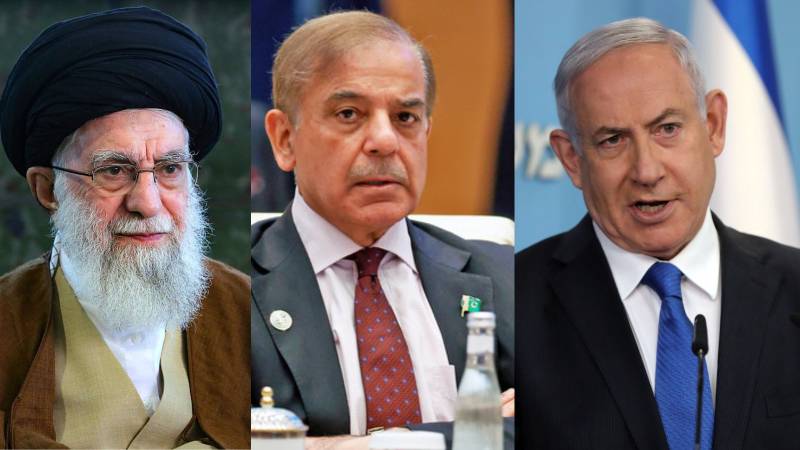
As tensions escalate between Israel and Iran, the world braces for the possibility of another drawn-out regional war. In the swirl of strategic manoeuvring and shifting alliances, one country—often underestimated in such calculations—holds quiet but significant sway: Pakistan.
Officially, Pakistan does not recognise Israel. It has consistently condemned Israeli aggression, particularly against Iran, at international platforms like the United Nations. Yet, behind its firm public stance lies the strategic importance of Pakistan—a country that the United States cannot ignore if it wishes to shape the regional balance, especially in any attempt to weaken or isolate the Iranian government.
For Washington, Pakistan is a key regional player. If the U.S. wants to isolate the current Iranian regime, it needs diplomatic alignment across the Muslim world. And many Muslim-majority nations, either directly or tacitly, look to Pakistan’s foreign policy as a reference point. If Islamabad were to adopt even a neutral or vaguely pro-Western position in the Israel–Iran confrontation, it would give other states the space to follow suit.
While Pakistan cannot stop the Israel–Iran war, its direct or indirect influence on how the conflict unfolds across the region should not be underestimated
Moreover, the U.S. knows what Pakistan is capable of in times of geopolitical conflict. It was Pakistan that helped defeat a global superpower—the Soviet Union—in Afghanistan in the 1980s, in close cooperation with the CIA. Decades later, despite being a “major non-NATO ally,” Pakistan’s post-2001 Afghan policy ultimately contributed to America's retreat from Afghanistan. In Washington, this is often framed as Pakistan’s “double game.” But for Islamabad, it was simply the pursuit of national interest.
Pakistan has always been a country you want on your side—especially when the theatre of war lies in its neighbourhood.
Field Marshal General Syed Asim Munir was invited to a lunch at the White House by President Donald Trump. It was more than just a diplomatic courtesy—it was an acknowledgement of Pakistan’s pivotal role in any future regional realignment.
During the meeting, General Asim Munir likely thanked the president for supporting a ceasefire with India after a brief five-day war. He would have reiterated Pakistan’s desire for a peaceful South Asia and may have asked Trump to encourage India to return to the negotiating table. Trump, in turn, would have expressed his support for peace—before making his ask: that Pakistan stay away from the Israel–Iran conflict, or better yet, play a constructive role in support of Israel and the United States.
Whatever General Munir’s response was inside that room, one thing is certain: the Pakistani establishment and its elected government will ultimately adopt a policy that best serves Pakistan’s national interest. Not America’s. Not Israel’s. Not Iran’s. Pakistan’s.
While Pakistan cannot stop the Israel–Iran war, its direct or indirect influence on how the conflict unfolds across the region should not be underestimated.
Washington understands this. So does Tel Aviv. That’s why Pakistan now has a quiet but critical seat at the table.
This isn’t a story about alliances on paper—it’s about realpolitik, about what decisions are made in shadowed rooms far from the podium. And in those rooms, Pakistan is not a spectator. It is a player—one whose presence can shift the calculus of war or peace in the Middle East.