

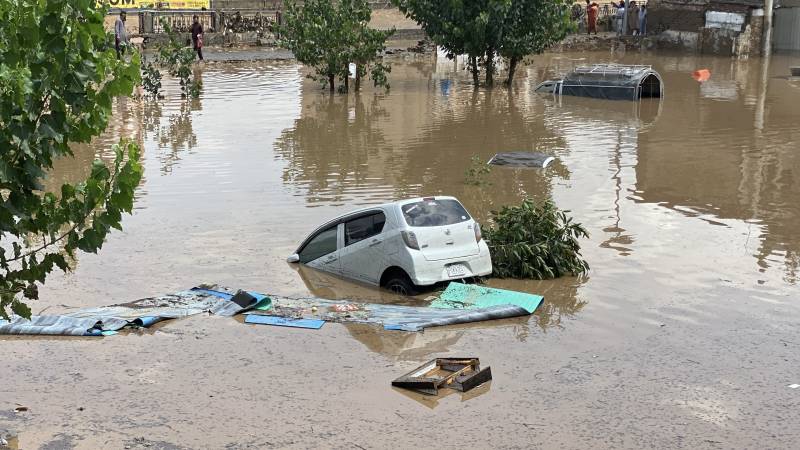

Khyber Pakhtunkhwa has been devastated by torrential monsoon rains, flash floods and landslides, plunging 11 districts of the province into crisis. The provincial government has declared a flood emergency as the death toll has climbed to 371, with rescue operations underway in the worst-affected areas. Officials warn that the number of fatalities may rise further as bodies are still being recovered from mud and debris.
According to PDMA’s latest report, Buner remains the worst-hit district, where 228 people have lost their lives, particularly in Gadezai tehsil’s Qadarnagar and Peshonai villages. Other districts also reported heavy casualties, including Shangla (36 deaths), Swabi (33), Mansehra (25), Bajaur (22), Swat (20), Lower Dir (5), Battagram (3), Nowshera (2), Abbottabad (2), Torghar (1), and South Waziristan (1) Districts like Mohmand, Charsadda, Haripur, North Waziristan, Kohat, and Kurram reported damages but no fatalities.
Access to disaster-hit areas remains difficult due to damaged roads and landslides, hampering rescue operations. Videos circulating on social media showing submerged villages and grieving families have plunged the province into mourning.
Northern Painful Tales
Buner remains the worst-hit district, with the hardest-hit areas including Pir Baba, Peshonai, and several villages in Tehsil Gadezai. The village of Qadar Nagar has witnessed catastrophic losses. According to officials, 225 bodies have been recovered in Buner so far, with many more still missing.
Entire households have been wiped out. In Qadar Nagar, 35 members of one family were swept away, while in another home 28 people perished. A third household lost 10 members, with two still missing.
Umar Khan, 30, a survivor from Qadar Nagar, told The Friday Times that he lost 24 members of his family. “A day later, a wedding was scheduled at our home. My brother had returned from Malaysia for his marriage, but tragically, he too was swept away with the rest of the family. I survived only because I was outside the house at the time,” he said. “So far, I have buried 20 members, while four are still missing. My wife and children, my parents, brothers, sisters, nephews and nieces are all gone.” His family’s two-storey, nine-room house has now been reduced to rubble.
Swat and Other Districts
Nine northern districts have also suffered severe losses, including Shangla, Mansehra, Battagram, Dir and Swat. In Mingora, Swat’s largest city, urban flooding submerged large parts of the city, including Bangladesh Mohalla, Landikas, Malak Baba and Makan Bagh. Several homes, shops and plazas collapsed, leaving residents to clear mud and debris days after the disaster.
Electricity and internet services remain disrupted, damaged roads and broken bridges have paralysed traffic, and hundreds of families are left without clean water, food or money to meet basic needs. “We barely escaped with our lives,” said Waqar Khan, a resident of Landikas. “Our house is completely destroyed, the walls and roof have collapsed, and all our belongings are gone.”
Rescue Operations and Relief
District administrations and rescue teams remain deployed in the affected areas. In a press briefing, Chief Minister Ali Amin Khan Gandapur said relief operations were underway and promised compensation for victims. He pledged new houses for displaced families and the relocation of vulnerable households to safer areas. “These are natural disasters—this time even a cloudburst struck,” he said, while assuring that encroachments on land would be curbed in future with public support.
PDMA spokesperson Anwar Shehzad told The Friday Times that 89 trucks carrying non-food items had already been dispatched to nine districts. Camps have been set up in government buildings and civil society groups are also providing support. “We cannot prevent disasters, but we can work to reduce their impact,” he said.
Fact Check: Was It a Cloudburst?
Local and international media, as well as the KP Chief Minister, have attributed the devastation in Buner to “cloudbursts”. Meteorological experts, however, dismiss this claim.
According to the World Meteorological Organization, a cloudburst occurs when more than 100 millimetres of rain falls in one hour over a small area. KP has 23 weather stations, none of them located in Buner. Daily rainfall data from 1–19 August shows that no station recorded rainfall exceeding 100 mm in one hour.
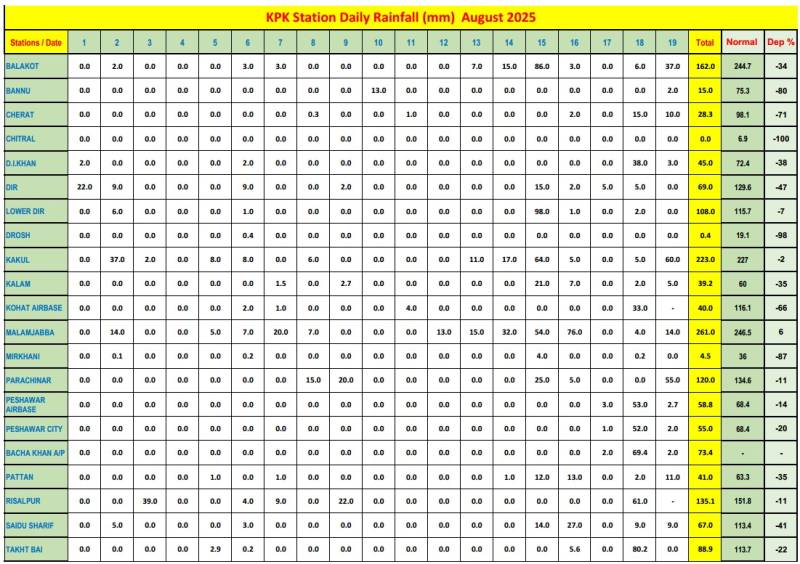
Dr Adnan Shehzada, Deputy Director at the Pakistan Meteorological Department in Islamabad, told The Friday Times: “A cloudburst is a rare event. The suggestion that multiple cloudbursts struck Buner, Swabi or elsewhere is misleading. What we saw was consistent with monsoon activity, which often brings more than 100 mm of rainfall over three hours.” He clarified that no cloudburst occurred in Pakistan during the recent disaster.
Climate Crisis and Disaster Risk Reduction
Meteorologists warn that climate change is intensifying extreme weather events in Pakistan. Rainfall patterns are becoming more erratic, with precipitation that once fell over a week now occurring in just hours, amplifying devastation.
Pakistan is a signatory to the Sendai Framework for Disaster Risk Reduction (2015–2030) and has national policies in place, but implementation remains weak. KP drafted a Disaster Risk Reduction Policy in 2024 with GIZ support, but it has yet to be approved.
A former Additional Deputy Commissioner told The Friday Times that “there is no concept of pre- or post-disaster planning at the district level. We respond quickly during disasters, but preparedness and community awareness remain absent.”
Capacity gaps also hamper PDMA’s work. During the June 27 Swat tragedy, where 13 tourists were swept away by the river, local authorities lacked drones to drop life jackets. Only after the incident were drones provided for rescue operations.
As of now, rescue teams remain on the ground, with 479 deaths recorded in KP since 27 June due to rains and floods. Experts warn that unless early warning systems and local-level planning are strengthened, the province will remain highly vulnerable to future climate shocks.