

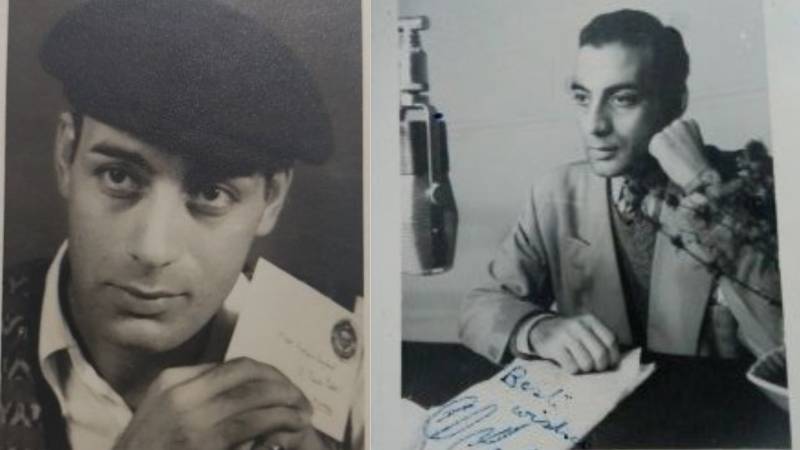
It had to be done some day, in spite of all the evasions, all the reasons not to start putting it down on paper. But it has been five years already. He left us on March 21, 2020.
Losing a loved one is the most dreaded experience, but it is also the most common. And as anyone knows who has lost someone, life goes on. We don’t have a choice. Life moves on inexorably, though it’s never the same. What more is to be said? Words are such poor substitutes for feelings. We do need to commemorate those who have passed on; we need to tell ourselves that they have not lived in vain; that we are not living in vain, and that this transition into another life--this intiqaal as we say in Urdu, this transference--is not erasure.
My father was loved by many. He was probably hated by many, too. He was a difficult man to live with, prone to rages, terrifying to me as a child, but which I understood much later to be due to his pessimism, his frustration, and his low self-esteem. It may be surprising to the reader to know that this handsome man, this film star with the celebrated deep voice, had low self-esteem, but he acknowledged it himself in the foreword to one of his poetry books. He was always trying to get his father’s approval, even late in his own life.
The thing with families is, when you are a child living in that nuclear circle, you don’t realize how different your family might be from others. Kashmiris are notorious for being cold. I don’t know if that was the reason why my father’s family members were so reserved and formal with each other. Now when I look back, I see that my father maintained this same reserve with us, his children. He was always an authority figure, never a friend. I’m sure he loved us, but he never demonstrated his affection by being close to us. We never sat and talked. He lived in his own world and we children in ours. I never realized until much later that I knew very little about my parents. For us they were just ammi and abu, with no lives or histories of their own before they became our parents.
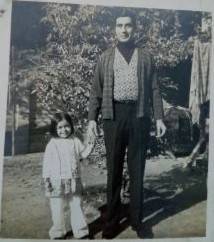
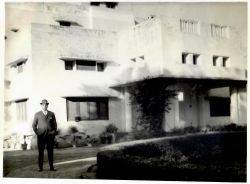
All I know of my father is that he was born in Amritsar in 1927. He was named Iqbal but later changed his name to Rehan. My grandfather, Mir Abdul Rahim, migrated to Model Town Lahore with his family at the time of partition. My father studied at Dyal Singh College Lahore--it must have been just after partition--and got a diploma in drawing from the National College of Arts in 1945. He also played Badminton and held the national color for Pakistan. His film career started at Shimla when the famous director Mehboob offered him a role in his film. After partition he worked in Pakistani films, usually playing a strict father or a cruel British officer. He had the distinction of starring in Pakistan’s first horror film, Zinda Laash. He also worked for Pakistan Radio. Sometime in the 1970s he bade farewell to films and started helping his father in his business, but he was not a businessman at heart, and not very successful at it. He kept writing and published two volumes of poems in Urdu later in life—Mujhay Izn-e-guftagoo Day Do and Kulliyat-e-Mir Rehan. He was a meticulous record keeper. I found in his effects innumerable books, letters, manuscripts, miscellaneous papers, and photographs. Old, black-and-white photos from so long ago, easily over a hundred years old, many of people I have no clue about.
He was not harsh because he was cruel, but because he was unhappy. He was perennially unhappy because he wanted a better world
This long-overdue piece of writing, hopefully part of a larger project to appear in the near future, is to commemorate a man who was well-loved on screen and on radio, someone whose persona combined old-world gentility with culture and beauty; a man who was deeply unhappy most of his life because he was so sensitive, but also someone who fought five years of debilitating disease with courage, and with a smile for anyone who visited his sick bed, no matter what condition he was in. He loved it when people came to see him and interview him. He loved being appreciated for his work, even though he had always been, in his own words, “ashamed of it” because of his family’s disapproval.
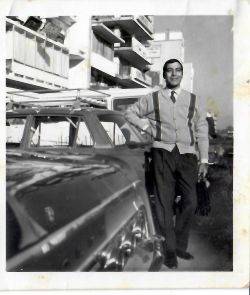
He should have embraced it—it was part of his love for the fine arts, for poetry, and for literature. But he was too mindful of what people thought of him, and at the same time he was a retiring loner, staying away from a social life, happy to be a handyman around the house after his retirement.
Could anyone foresee what this handsome man would become in the end? How he would suffer? How he became a ghoul, a skeleton? No, let that be a bad memory. Try to forget how he lay on the bed day after day, getting emaciated, going out of his mind because of God knows what demons. He once said he felt as if snakes were gnawing at him. He repeated over and over: put me to sleep; put me to sleep. He would send his caretaker out to get extra Lexotanil that he would keep in his pocket. He was not lucid half the time because of the effects of the Deltacortril he had to take. He often said that there was a fire at his feet. He could not articulate himself. How his flesh started to leave his bones in the end, how we desperately tried to turn him over, using a sheet, every hour as the doctor said, to avoid the bed sores.
He was completely bedridden for two months in the end. How do we get over our traumas? We beg the Almighty for mercy, in fear and trembling, with tears down our cheeks. Forgive us. Have mercy on us. He was not a bad man, though he was self-centered, self-pitying. He was not demonstrative; he never told his children he loved them. He was not that kind of a father. He was authoritative, even tyrannical at times. He expected to be obeyed without question, without explaining why he was so harsh. I understood much later that he was not harsh because he was cruel, but because he was unhappy. He was perennially unhappy because he wanted a better world, perhaps. I don’t know. His Urdu poem, “Meri Lauh e Qabar” gives a clue. He shouldn’t have written it though. In it he addresses God and says that of all His gifts, death was the best because he didn’t want to live in a place where men were so evil. In the end we had to pray to God to end his suffering, when it went on and on, day after day, and death didn’t come.
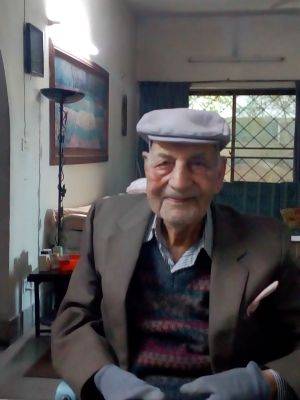
I remember the last time he dressed up, put on his jaunty cap, his coat, like old times. There was a swelling on his face. He asked me to take his photo; he smiled, and said: you’ll remember me like this when I’m gone. He had so much courage. I want to remember him like this…no, like his old self when we were children. But I still have his other photos, the ones I would rather forget, the ones I never look at, except accidentally. They are impossible to forget; they are etched in the mind. What comfort is there, but in God, in His grace and mercy? Sometimes I can’t help saying to Him: we didn’t ask for this, all this pain and suffering. Why were we created? Weak as we are, longing after happiness and joy, and finding only strife? This is not the right way to think, I know, and one must not give way to self-pity. We are enjoined to believe that this life is a gift, and that we bring all our ills upon ourselves. One can spend a long time trying to understand this, and trying to convince oneself of this. I guess it comes more easily to some people than others. Maybe that is the meaning of grace. Perhaps, like positivity, like happiness, like good health, one has to work at it. It doesn’t come naturally—not for many people at least.
My father suffered so much in his last days that many people said he had atoned for his sins here in this world and purified himself. May that be so. May God’s kindness and mercy surround you, Abu, and may your face be shining when He resurrects you, along with all the other mortals, on the promised Day.