

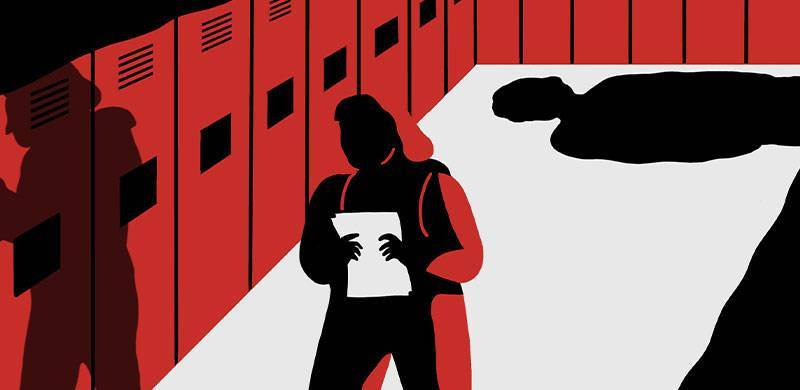
Sexual harassment in higher education institutions (HEIs) in Pakistan has reached a crisis point, creating a hostile and unsafe environment, particularly for female students & faculty. Universities, meant to be centers of intellectual growth and personal development, have instead become spaces where many face academic coercion, exploitation and fear. Those in positions of power—lecturers, supervisors, and administrators—have, in numerous cases, abused their authority to harass, intimidate, and manipulate students. What makes the situation worse is not just the prevalence of such misconduct, but the institutional failures that allow it to persist. Cultural taboos, fear of retaliation, and ineffective reporting mechanisms force victims into silence, enabling perpetrators to act with impunity. As a result, many universities continue to be breeding grounds for exploitation rather than centers of learning.
Recent incidents have brought into limelight the gravity of the problem. At the University of Malakand, a lecturer was arrested and suspended following allegations of sexually harassing and intimidating a female student. Investigations revealed obscene photos of multiple female students on his mobile phone, along with reports that he demanded explicit favors in exchange for higher marks. Similarly, at the University of Haripur, multiple allegations have emerged, including a case where an assistant professor was suspended following accusations of harassment by a female student. The university administration faced severe criticism for allegedly attempting to suppress the incident by temporarily closing the campus to prevent student protests. Moreover, a security supervisor was dismissed after video evidence surfaced implicating him in another harassment case involving a female student.
These incidents highlight the systemic nature of sexual harassment in Pakistani universities and the urgent need for comprehensive reforms. Despite the existence of anti-harassment policies, enforcement remains weak. Many HEIs have constituted anti-harassment committees, yet these bodies are often criticised for being ineffective, biased, or even complicit in protecting perpetrators. Survivors frequently report experiencing victim-blaming attitudes, delayed inquiries and institutional pressure to withdraw complaints. Instead of serving as a safeguard for victims, these committees often function as a shield for those accused, further discouraging victims from coming forward.
Universities must introduce comprehensive awareness programs that educate students and staff about their rights, reporting procedures, and the severe consequences of misconduct
Compounding the issue is the misuse of academic authority by some teachers and supervisors, who weaponise their power to grant internal marks against female students. Instances of coercion, threats of low grades, and academic blackmail have been reported, making students vulnerable to exploitation. This abuse of power severely compromises academic integrity and the learning environment, forcing many victims to choose between their education and their dignity. The impact extends beyond individual victims—such cases contribute to a growing sense of insecurity, reinforcing societal perceptions that educational institutions are unsafe for women. In a conservative society, where sending daughters to universities is already a challenge, these incidents serve as justification for families to restrict female mobility, ultimately widening the gender gap in education.
Lack of awareness further exacerbates the crisis. Many students and faculty members do not fully understand what legally constitutes sexual harassment or the mechanisms available for redress. Universities must introduce comprehensive awareness programs that educate students and staff about their rights, reporting procedures, and the severe consequences of misconduct. These training sessions should be mandatory and conducted regularly to reinforce that sexual harassment is not merely an ethical lapse but a serious violation of human rights and dignity.
Beyond policy and awareness, accountability remains the most pressing challenge. Many perpetrators continue to operate within varsities without facing meaningful consequences. Strict disciplinary measures—including dismissal, suspension, expulsion, and legal action—must be consistently enforced to deter misconduct. Universities must also implement rigorous background checks before hiring faculty and administrative staff to prevent individuals with histories of misconduct from entering academic spaces. The Protection Against Harassment of Women at Workplace Act, 2010, which applies to HEIs, mandates the establishment of inquiry committees and provides a legal framework for addressing harassment complaints. However, its implementation remains inconsistent, and the Higher Education Commission (HEC) must ensure that all universities comply with its provisions. A national oversight body should be established to monitor HEIs' adherence to anti-harassment policies and investigate cases of institutional negligence or cover-ups.
Creating a safer academic environment requires a fundamental shift in institutional culture, moving away from the normalisation of inappropriate behavior toward proactive prevention. Universities must promote an atmosphere where victims feel safe to report misconduct, offenders are held accountable, and respect and dignity are upheld. Without decisive action, sexual harassment will continue to plague academic spaces, deterring excellence and personal growth while leaving generations of students vulnerable. The time for incremental change is over—HEIs must implement concrete, enforceable policies that ensure universities become spaces of learning rather than sites of fear and exploitation.