

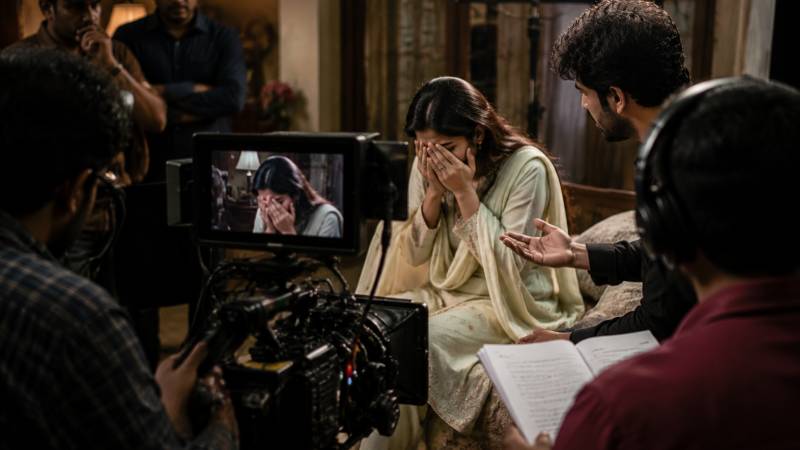
Every night, millions of Pakistanis gather around their television screens. And every night, they are taught the same lesson. A good woman suffers. She sacrifices. She forgives. She stays silent. She cries alone. She survives.
From the very first episode of countless Pakistani dramas, the audience already knows who the "good woman" is. She is insulted by her in-laws, betrayed by her husband, burdened with responsibilities she never chose, blamed for problems she did not create, and expected to endure every humiliation with patience. Her tears become the story. Her silence becomes her virtue.
The tragedy is not that these stories exist. The tragedy is that they rarely end by questioning the suffering itself. Instead, suffering becomes the reward. The woman who stays in an abusive marriage is praised. The daughter who sacrifices her dreams is celebrated. The wife who forgives endless betrayal is called noble. Meanwhile, the woman who walks away, demands respect, or chooses her own happiness is often portrayed as selfish, arrogant, or morally questionable.
This is more than entertainment; it is psychological conditioning. When millions of girls grow up watching women praised for enduring pain instead of escaping it, they begin to believe that suffering is simply part of being a woman. Emotional abuse starts looking normal, manipulation is mistaken for love, silence is celebrated as strength, and asking for help begins to feel like failure. Over time, this shapes a dangerous reality in which women struggle to recognise emotional abuse because they have spent years watching it romanticised on their screens. Instead of questioning those who hurt them, they question themselves. Anxiety is ignored because every television heroine seems to survive hers, depression is dismissed with reminders to "be patient," and overwhelming emotional burdens are carried in silence because resilience has been redefined as never breaking. This is how mental health becomes invisible.
Her tears become the story. Her silence becomes her virtue.
Pakistani media rarely portrays women seeking therapy, receiving professional support, or healing from trauma. Conditions such as panic attacks, chronic anxiety, postpartum depression, and emotional burnout are seldom depicted with honesty or compassion. Instead, a woman's emotional collapse is reduced to dramatic background music, a few tears, and another episode before the story moves on.
Pain becomes entertainment, while healing is almost never written into the script. The consequences of these narratives extend far beyond television screens, shaping how countless women perceive their own suffering and whether they believe it deserves to be acknowledged at all. Many women already live in environments where speaking about mental health is considered shameful. When media reinforces the idea that endurance is a woman's greatest strength, seeking psychological help begins to feel like weakness. The result is a generation of women who know how to survive almost everything, but have never been taught that they deserve to heal.
When a nation repeatedly writes women into stories of suffering, it eventually expects them to live those stories in real life. Media does not simply entertain; it teaches. And what it teaches today becomes tomorrow's social norm. Perhaps the strongest woman is not the one who suffers in silence, but the one who refuses to believe that suffering is her destiny.
Pakistani media holds immense power—not only to entertain but also to shape the values, expectations, and beliefs of society. It can continue producing stories in which a woman's pain becomes the driving force behind ratings, or it can choose to tell stories where women heal, seek therapy, leave abusive environments, rebuild their lives, and redefine strength on their own terms. True strength should not be measured by how much suffering a woman can silently endure, but by her courage to protect her dignity, prioritise her well-being, and choose herself without shame.
A society that only applauds women when they suffer is not celebrating resilience; it is normalising emotional neglect and teaching generations that pain is the price of womanhood. Until our screens stop glorifying women's suffering and begin portraying healing, justice, and emotional recovery with the same conviction, countless girls will continue to grow up believing that silence is strength, endurance is virtue, and suffering is simply what it means to be a woman. A nation cannot claim to honour its women while teaching them that their greatest achievement is how much pain they can endure.