

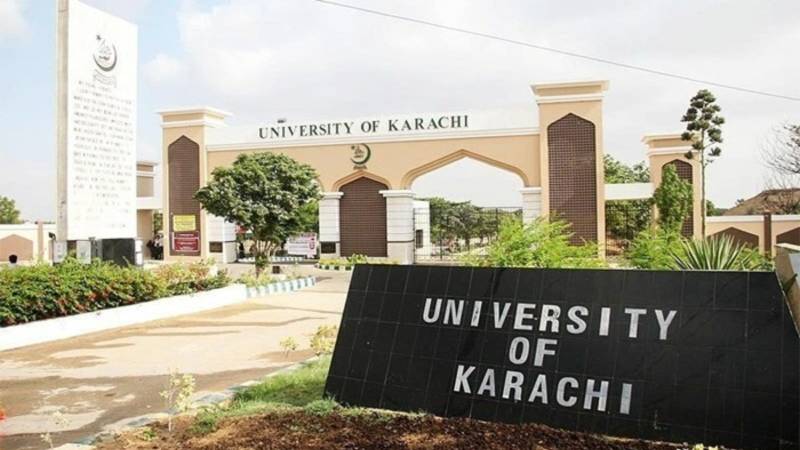
According to news reports, on 15 July, a University of Karachi professor from the Faculty of Pharmacy, Dr Afaq Ahmed Siddiqui, was assaulted by Rangers personnel when he attempted to stop them from burning garbage adjacent to his campus residence. A senior Rangers officer living next door to Dr Afaq had ordered his subordinates to burn the garbage to prevent mosquitoes from affecting goats kept outside his house. When Dr Afaq tried to stop the Rangers personnel from burning the garbage, citing health concerns, he was verbally abused and physically assaulted. The incident broke his glasses and caused injury to his eye.
The incident was witnessed by several individuals and widely reported in the media. The Karachi University Teachers’ Society (KUTS), while taking notice of the unfortunate event, demanded an apology and disciplinary action against the Rangers personnel responsible. Initially, the sector commander of the Rangers accused Dr Afaq of grabbing a Ranger by the neck — a claim the professor denied. The matter was eventually resolved on 17 July when the Rangers Wing Commander, in the presence of the University of Karachi’s Vice-Chancellor, KUTS office-bearers, and Dr Afaq, issued a formal apology and announced the suspension of the personnel involved.
Assaulting a university professor by a law enforcement officer is a criminal and unpardonable act. Even though the matter has been “resolved”, mere suspension of the responsible Ranger is insufficient. Similar incidents of misconduct by Rangers toward students and faculty at the University of Karachi and other educational institutions have previously been either covered up or met with only symbolic punishment. The case of Dr Afaq is particularly serious — physically assaulting a senior academic without justification is a cause of national shame and embarrassment for both state institutions entrusted with enforcing the law and for the university itself.
To understand the implications of the 15 July incident, one must reflect on the historical context of Rangers’ deployment at the University of Karachi. Their presence began in July 1989 following a deadly clash between the People’s Students Federation (PSF) and the All Pakistan Mohajir Students Organisation (APMSO), which left three students dead. Prior to that, there was neither a Rangers deployment nor a boundary wall. Reacting to the violence, then-Chancellor and Governor of Sindh, Justice (Retd) Fakhruddin G Ebrahim, in consultation with then-Corps Commander Karachi Lt Gen Asif Nawaz Janjua, deployed Rangers on campus to restore law and order. Notably, the deployment was initially meant to be temporary. Yet 36 years later, the Rangers remain stationed within the university grounds, occupying the former boys’ hostel and some staff residences.
The sanctity of Karachi University was once fiercely protected, even the police required permission from the Vice-Chancellor to enter university premises
In 2007, when Dr Riaz Ahmed, an Assistant Professor in the Department of Applied Chemistry, was mistreated by a Rangers official, the matter sparked widespread outrage. The then Vice-Chancellor ordered Rangers to stay within their defined limits. While Rangers were later withdrawn from the university gates, they continue to maintain a physical presence on campus.
The sanctity of Karachi University was once fiercely protected even the police required permission from the Vice-Chancellor to enter university premises. But since 1989, paramilitary forces have been deployed across multiple academic institutions in Sindh. The University of Karachi, the largest in both Sindh and Pakistan, now hosts a sizeable contingent of Rangers, though their role is largely limited to sporadic patrolling.
This raises serious questions: does it make sense for academic institutions to rely on paramilitary forces for maintaining order? Why can’t universities establish their own professional, accountable security apparatus? Despite the Rangers’ presence, several students have been killed in on-campus clashes and shootings. Yet no one has held the Rangers accountable for these incidents, nor has their effectiveness been meaningfully scrutinised.
A troubling pattern has emerged over the past 36 years: whenever students and faculty demand the Rangers’ withdrawal, clashes conveniently erupt — justifying continued deployment. The 15 July assault on Dr Afaq should serve as a wake-up call about the university’s declining autonomy and the compromised integrity of its teacher associations. Why should a delegation of the Vice-Chancellor, KUTS, and Dr Afaq need to meet the Rangers' wing commander to resolve the matter? This indicates a profound loss of self-respect within the academic community, and a disturbing dynamic in which university professors can be coerced or pacified by those wielding state power.
The implications of the 15 July incident can be examined from three perspectives:
First, the days when university administrations asserted their authority are long gone. Once, even police required permission to enter the campus — now, professors are assaulted by those meant to enforce the law. Unless faculty can assert their dignity and resist humiliation, such incidents will recur. Public outcry will briefly erupt, only to dissipate. The tendency to cover up such matters at the highest levels only emboldens state actors. Rangers and similar institutions understand that the fragility and internal divisions within academia allow them to act with impunity.
Second, lasting peace on campuses is only possible if student organisations resolve their disputes independently, free from political interference. The Rangers’ continued presence is largely a symptom of administrative failure to maintain internal harmony. If university leadership, teachers, students, and staff united based on merit and dialogue, no external force could exploit internal crises.
Third, unless universities focus on academic excellence and establish strong partnerships with industry and civil society, they will remain mired in financial instability and administrative disorder. With deteriorating academic standards and declining meritocracy, neither students nor faculty possess the institutional strength to resist indignities like that inflicted on Dr Afaq.
Until universities, especially the University of Karachi, restore their dignity, the state and even civil society will continue to dismiss them. Without elected student representatives and leadership training grounded in academic rigour, students will fail to emerge as future leaders. Likewise, when merit is abandoned in favour of corruption and nepotism, institutional respect collapses. This paves the way for more incidents of teacher mistreatment.
Universities must once again become bastions of knowledge and leadership. This is only possible if admissions and staff appointments — both academic and non-academic are made purely on merit, and corruption is decisively rooted out. Only then can internal matters be handled by professional campus security, rather than by inviting the intervention of Rangers or police.
Needless to say, the incident of 15 July not only tarnishes the image of the Rangers but also damages the reputation of the University of Karachi and, by extension, the country itself. What message does it send to the world when paramilitary forces can assault university professors with impunity?