

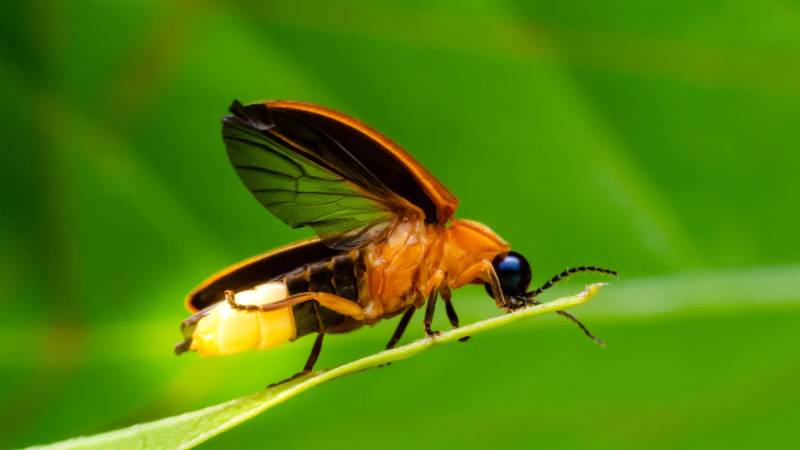
The firefly, once a magical character straight out of childhood fairytales, seems to have all but disappeared from our lives. Environmental research suggests that changes in our surroundings, such as drying canals, reduced greenery, and a noticeable decline in humidity, have led to a dangerous drop in firefly populations.
An American study reports that the reproductive cycle of fireflies spans six years. During the first three years, their population increases, while in the following three years, it gradually declines.
Dr Adila, Project Coordinator at WWF Khanewal, says that in our childhood, fireflies were an essential and magical part of eco-life in rural fields or green, quiet, and dark spaces near cities. But with time, they have swiftly faded away. She explains that fireflies are now mostly confined to rural agricultural areas where there is more darkness, moisture, and dense vegetation.
According to her, rapid population growth has led to a significant reduction in agricultural lands. The construction of motorways and highways through farmland, the heavy use of harmful chemicals on crops, and the unrestrained use of artificial lighting in rural areas during the evenings have all contributed significantly to the extermination of fireflies.
In Pakistan, fireflies are commonly found in humid and moist regions such as Islamabad, Rawalpindi, Murree, Abbottabad, Mansehra, Balakot, Naran, Kaghan, Sialkot, and Azad Jammu and Kashmir. Globally, the majority of firefly populations are concentrated in northern regions.
Dr Adila states that fireflies act as natural indicators for monitoring environmental changes, and therefore, protecting their habitats is crucial to maintaining ecological balance. Speaking about the unique concept of “natural indicators,” she calls fireflies nature’s thermometer. A decline in their glow indicates increasing light pollution in their surroundings. If their larvae or eggs are not developing properly, it signals the growing presence of chemicals (sprays) in the soil, water, and air. A decline in their reproduction suggests falling humidity and worsening water scarcity. And their rising death rates are a sign of increasingly erratic and extreme weather conditions.
On 6 and 7 July each year, World Firefly Day is observed to raise awareness about the conservation and reproduction of fireflies
So, considering all these warning signs, what are we doing to address these issues?
Encouragingly, both the government and environmental organisations are taking commendable measures. Leading the way is the Islamabad Wildlife Management Board. Since 2021, entry to the Margalla walking trails has not been permitted after sunset. From 2023 onwards, any kind of evening activity in the Margalla Hills—including loud noises, lighting fires, causing disturbances, or using artificial lights—has been restricted to ensure wildlife remains undisturbed and humans stay safe.
In the same context, in 2023, the National Assembly’s Standing Committee on Climate Change proposed installing streetlights in the Margalla Hills for security. This suggestion was rejected by the Wildlife Management Board. Meanwhile, the National Climate Change Policy 2021 made a formal commitment to promote natural forests and ensure that forests cover 15% of the country’s total area.
In agricultural regions, WWF is working on ecological restoration and insect conservation. Wetland protection and cleanliness projects are active at 19 different locations. Farmers in Punjab and Sindh are being trained to grow eco-friendly cotton. They are encouraged to replace toxic chemical sprays with natural mixtures made from neem and other bitter organic ingredients. For pest control, yellow sticky traps are used, which have contributed to the improved reproduction of fireflies and honeybees.
In South Punjab, the “Green Book” has been introduced in schools to raise awareness about climate change and ecosystem restoration, encouraging students to play both an individual and collective role in addressing these critical issues.
On 6 and 7 July each year, World Firefly Day is observed to raise awareness about the conservation and reproduction of fireflies. In developed countries, students and environmental workers are taken to such places where firefly breeding is underway, and they are educated about how to protect these insects and their environment.
The Operations Manager of the Pakistan Tourism Development Corporation (PTDC), Naeem Iqbal, says that fireflies represent both the beauty of nature and a wonderful part of eco-tourism. He explains that firefly tourism is a popular attraction in countries like Japan and Indonesia. The organisation is taking relevant steps to promote this idea in Pakistan. Dedicated walkways are being built to protect firefly larvae and other delicate insects from being trampled. Since insects are highly sensitive to noise and light, PTDC is also making special lighting arrangements that allow people to enjoy the fireflies’ glow without disturbing them. The initiative promotes small, limited tours that use minimal artificial lighting and follow other eco-friendly precautions. He remains hopeful that the return of fireflies to their natural habitats will significantly contribute to restoring the ecological system.
Firefly conservation aligns with global commitments under SDG 6 (Clean Water), SDG 13 (Climate Action), and SDG 15 (Life on Land) by protecting natural habitats, ensuring water sustainability, and restoring ecological balance.
Muhammad Usman, a schoolteacher who launched a project this year to build artificial ponds in Kashmir and Murree, says:
“Our individual and collective actions should never harm the environment, or any life form connected to it. Every step we take must contribute positively. The pond initiative is one such step. It will create a safe and ideal environment for the reproduction of fireflies and other beneficial insects.”