

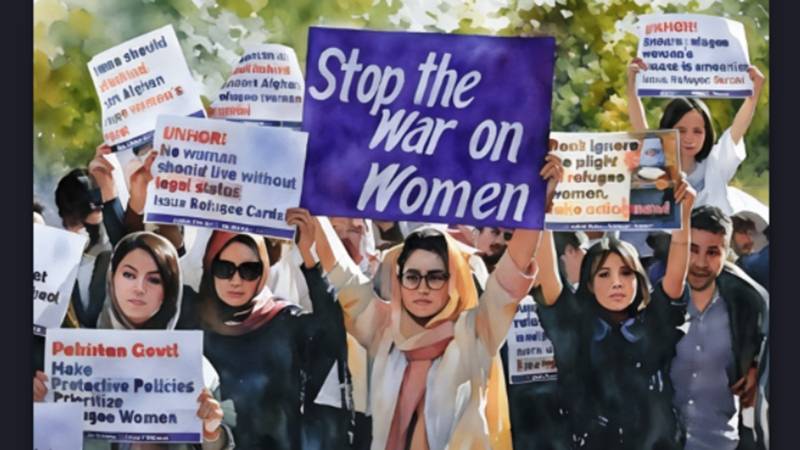
The recent surge in reports of murders and sexual assaults of women is alarming, to say the least. The brutality and intensity of these crimes are escalating, leaving a trail of devastation and despair in their wake. The stories that have emerged over the last ten days are a grim reminder that violence against women remains a pervasive and entrenched issue in our society.
A decomposed woman's body was found in a plastic drum in Karachi's Sharafi Goth, her hands and feet bound, and her face burned beyond recognition.
A suspect in a gang-rape case reported in Kasur ,Punjab's hospital.
A 13-year-old domestic worker, Iqra, was killed under mysterious circumstances. A 16-year-old girl was allegedly killed by her father for refusing to delete her TikTok account in Rawalpindi. A madrassa student got pregnant after allegedly being sexually assaulted by an Imam of a mosque in Kabirwala . A six-month pregnant woman Iqra and her unborn baby lost their lives after allegedly being subjected to brutal torture by her husband in Sheikhupura.
A man and woman were killed in the name of honour in Bolan's Thana Bhag area.
Ending the cycle of violence requires bravery and unity—from the state, civil society, and every individual
A husband killed his wife by strangling her on suspicion of infidelity in Dera Murad Jamali.
These cases, though shocking, are not isolated incidents. They are part of a larger pattern of violence against women that cuts across urban and rural divides. The fact that these cases are being reported in urban areas, where access to media and law enforcement is relatively better, suggests that violence against women is a widespread issue that affects various parts of society.
The other disturbing trend that emerges from these cases is the role of familial perpetrators. In many instances, the killers are relatives, highlighting the need to address power dynamics within families and promote healthy, respectful relationships.
The consistency in patterns across different cases suggests systemic issues that need to be addressed through comprehensive reforms, education, and community engagement. It is imperative that we adopt a multifaceted approach to address violence against women, including education, legal reforms, community awareness, and support services for survivors.
Until we acknowledge the gravity of this issue and work collectively to address its root causes, the cycle of violence will continue to claim innocent lives. The state and society must share the responsibility of protecting women's rights and ensuring their safety. To address this deeply rooted problem, it is crucial to explore its broader implications and the urgent need for a concerted response:
The following are some of the structural and systemic factors involved:
- patriarchal norms: many communities continue to uphold traditional gender roles that reinforce male dominance, often silencing women and discouraging them from seeking help.
- legal gaps: although laws exist to protect women, implementation is inconsistent. Cases are often underreported due to fear, stigma, or lack of trust in the system.
- socioeconomic barriers: women from marginalised backgrounds face additional disadvantages, such as limited access to education, economic dependence, and social isolation, making it harder to escape abusive situations or seek justice.
- crisis centres and shelters: safe spaces are urgently needed, offering immediate protection, emotional support, legal aid, and long-term rehabilitation for survivors and their children.
- efforts to address violence must involve religious leaders, educators, local influencers, and men themselves, all advocating openly for women’s safety and dignity.
Ending the cycle of violence requires bravery and unity—from the state, civil society, and every individual. By rejecting silence, speaking up for victims, and demanding accountability, we honour the lives lost and pave the way for a society where women and girls live with dignity and safety.
True progress will be made when every woman feels protected, valued, and empowered—not just by law, but by the culture and conscience of society.
The fight against gender-based violence is long and complex, but with sustained commitment and collective responsibility, meaningful change is within reach.