

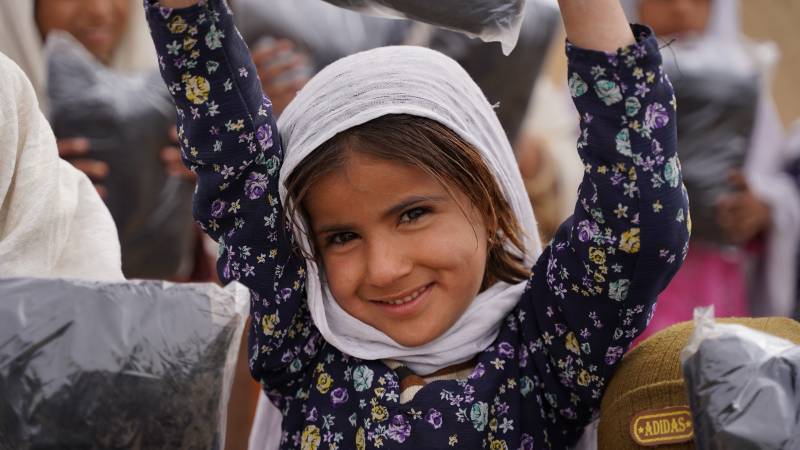
Pakistan, along with the world community, celebrated the International Day of the Girl Child on 11th October 2025. This is the day to honour and celebrate the strength, leadership, and courage of all girls across the length and breadth of Pakistan. Today in Pakistan, a vast majority of our girls fall victim to the archaic system of child marriage, the scourge of illiteracy, or the ignominy of domestic violence. Observed annually on 11 October, the International Day of the Girl is a key global moment on which to celebrate girls everywhere, amplifying their voices, actions, and leadership.
From modern private universities to rural ramshackle, broken-down schools, plucky and brave girls like Malala Yousafzai, who rise, speak out, and lead from the front in the face of daunting and unimaginable odds, are a true inspiration for the nation. This year, under the theme “The Girl I Am, The Change I Lead: Girls on the Frontlines of Crisis,” UNICEF celebrates and honours girls as active agents of change, not victims, but visionaries shaping a better tomorrow. Their voices, ideas, and leadership are not just valuable; they are essential in overcoming the multifaceted crises threatening their future from harmful social norms, unacceptable levels of violence, poverty, and climate shocks.
“We cannot all succeed when half of us are held back. We call upon our sisters around the world to be brave to embrace the strength within themselves and realise their full potential.” — Malala Yousafzai.
“When girls are educated, their countries become stronger and more prosperous.” — Michelle Obama.
The plight of the girl child in Pakistan is a systemic issue rooted in deeply entrenched patriarchal, social, and economic factors. Girl children in Pakistan face disproportionate challenges concerning education, child marriage, health, and protection from violence and exploitation. Twenty-five years ago, Pakistan became a signatory to the Beijing Declaration and Platform for Action in Beijing.
This was a blueprint for the advancement of women’s rights around the world. In addition to being exceedingly progressive, the declaration was the first to particularly emphasise girls’ rights, sowing the seed for the International Day of the Girl Child, which was formally announced sixteen years later, on October 11, 2011. The core purpose of the day was to understand and uproot the specific forms of gender violence that young girls face.
Pakistan ranks 153 out of 156 in the Global Gender Gap Report, and according to UN Women, 53.6 percent of women are deprived of education, training, and employment in Pakistan, compared to only 7.4 percent of men
Over two decades after signing this historic document, Pakistan has failed miserably to do much to ameliorate or improve the standard of living of girls in the country. According to statistical data released by the Ministry of Education, only 13 percent of Pakistani girls make it beyond the ninth grade in education. Moreover, incidents of forced marriages and enforced conversions remain rampant.
On top of these, sexual assault and abuse of young girls and women are on the rise across the country. Voices of the girl child, their ideas and leadership, are not just valuable; they are essential in overcoming the many crises threatening their future from harmful social norms, unacceptable levels of violence, and poverty.
Just as Malala Yousafzai, students and often girls keep on being attacked by terrorists just for wanting to go to school. Malala was awarded the Nobel Peace Prize for her tireless advocacy for children’s and girls’ rights to education. Above all, she is one of Pakistan’s youth. She represents the passions and enthusiasm many young Pakistanis have. As Malala said herself: “One child, one teacher, one book and one pen can change the world!” She makes clear that it all begins with the child. In Pakistan, 32 percent of our children are out of school, and two-thirds of them are girls, which means that over three million girls are out of school.
However, too often we portray girls as without power and with no opportunities to prosper in society. When they can, young girls in rural areas are countering this notion through access to education. Like Malala, many girls are full of joy, dreams, and passion for what their future holds. We should hope for a society in which education and professional development for girls are normal. Our girls dream big, and they have a lot of love and passion for their country, yet society and sometimes even their families do not help them to grow and develop their talents and potential.
These Pakistani girls who dream with a doubt of fulfilment need attention. They need support so that they can pursue their dreams. They can change the world, but need a place to make their dreams come true. If there is one Malala in Pakistan, there may be many more who could change the fate of the country; they just need to be invested in. Sadly, behind every statistic is a child with dreams deferred, a young girl whose potential Pakistan cannot afford to lose.
During this important stage of life, girls face multiple risks like child marriage, early pregnancy, gender-based violence, and limited access to sexual and reproductive health care, challenges that not only steal away their childhood and hope but that are too often life-threatening.
Pakistan ranks 153 out of 156 in the Global Gender Gap Report, and according to UN Women, 53.6 percent of women are deprived of education, training, and employment in Pakistan, compared to only 7.4 percent of men. Dismal as reports may look, it is a wake-up call for us as a nation to take strident steps towards improving the fortunes of our female population and empower them to become equal contributors to the economic progress of our country.
Let us celebrate every girl for her courage, her dreams, and her power to lead change. Let us open the doors to the architects of our shared future and ensure that their voices echo at every table where decisions about their lives are made.