

This true story highlights a doctor's professional dedication in the face of personal tragedy.
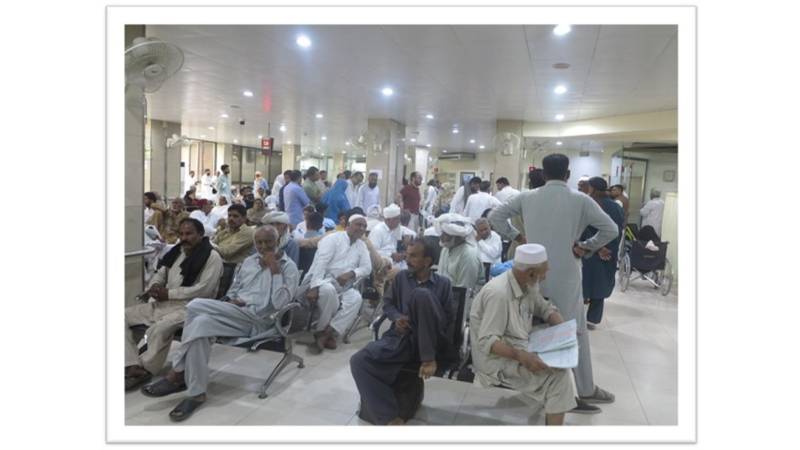
Busy in a crowded outpatient department of Tahir Heart Institute in Rabwah, a doctor had been examining patients. He'd been toiling since morning. As evening was approaching there were at least 40 patients still waiting to be examined. Patients had come from far and wide – within the country and even abroad. Some patients had travelled long distances and been waiting for hours. When suddenly personal tragedy struck! The phone rang and the doctor was informed that his wife had died. He completed the examination on the last patient, who had come from Lahore, reassured her and smilingly bade her farewell.
The doctor got up, and without saying a word he told his colleagues: "I'll be back in a giffy". He waved at the patients-in-waiting with a smile – gesturing, "I'll be with you shortly". He swiftly paced his steps and left for home. Sadly, his wife, whom he loved dearly, had passed away minutes ago. The doctor, her husband, checked her pulse and respiration and confirmed that she had died. He bent down, gave her a last kiss, wrote a will, and returned to the hospital as soon as he could. However, on return to the hospital he was confronted by some irate patients for being late and accusing the doctor of being uncaring, self-centred, and apathetic. It was an ugly scene. The doctor remained calm, apologised and told the patients that he would do all he can to expedite their examination. Even this did not appease some of the patients and they continued to verbally harangue the doctor.
After having seen each and every patient till late at night – he hurried back. On the way out he consoled them and wished that all would go well for them. He then promptly left. A patient told the nursing attendant that: "He couldn't believe how callous and cold the doctor was, first for making us wait so long and second for being so brusque with his departure after the clinic". The nursing assistant with tears in his eyes then told him the rest of the story. "The doctor had rushed because his wife had passed away. He was actually at his dead wife's bedside and returned so that he could take care of you all". Needless to say, some of those patients did not say another word.
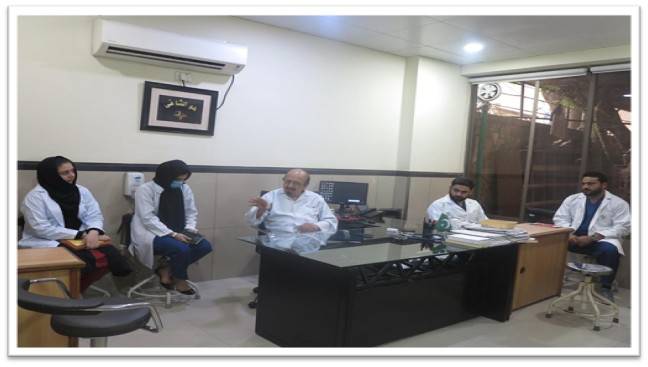
Quite a few times one had been in this situation. I can think of times, maybe not as tragic as this, but still difficult times, when I am running around only to be confronted by an angry patient or family member: "for being so thoughtless and uncaring as to waste their time." If only they knew. "I reassure you I was late seeing you, even though you had waited so long, was that my wife passed away and I spent some minutes with my grieving family", he apologetically mentioned.
We learn to dissect cadavers, operate high risk procedures, and deal with patients' deaths by removing our emotions from the equation. But Osler believed in cultivating calmness without losing our humanity
This story depicts the doctor's professional dedication in the face of personal tragedy. It exemplifies the doctor's commitment to his profession and his ability to set aside personal grief to focus on the needs of his patients. This true story can be viewed as an example of resilience and the ability to prioritise duty even in difficult circumstances. Despite his grief, he performed his medical duty successfully, prescribing medication with alertness and honesty. This demonstrates the doctor's commitment to his profession and his ability to put aside his personal pain to help others.
In the face of difficult situations, a doctor has to recognise the polite and well-practiced smile that should creep its way onto his face when he recalls all the times he's had to keep his cool. Being a doctor is hard though. Between seeing patients, dealing with administrative issues, keeping oneself updated, and – you know – saving lives, the medical environment can be very stressful. Add difficult situations (like a spouse's death), infuriating patients, and complex interventional cases to the mix, and keeping a cool head all the time becomes downright challenging. But the ability to stay calm is as important for the practice of medicine as the ability to perform challenging interpretations and giving second opinions on patient's data.
Famed physician William Osler, considered a father of medicine, once described "aequanimitas" (or coolness and presence of mind under all circumstances) as the premier quality of a good physician. This state of aequanimitas, or imperturbability, was considered by Osler to be the "quality, which is most appreciated by the laity though often misunderstood by them, and the physician who has the misfortune to be without it, who betrays indecision and worry, and who shows that he's flustered and flurried in ordinary emergencies, loses rapidly the confidence of his patients".
Doctors often nurture their ability to stay calm as a natural by-product of cultivating the emotional skill of detachment. We learn to dissect cadavers, operate high risk procedures, and deal with patients' deaths, by removing our emotions from the equation. But Osler believed in cultivating calmness without losing our humanity. He implored physicians to "cultivate such a judicious measure of obtuseness as will enable you to meet the exigencies of practice with firmness and courage, without at the same time, hardening the human heart by which we live".
So how do we embody a state of aequanimitas without simultaneously losing touch with our humanity?
Staying calm in distress
Fourteen hundred years ago, the Prophet Muhammad (pbuh) built a powerful philosophy that has made a decisive come back in recent years. A way of living whereby building a life based on tranquillity, personal growth, and love for humanity. With earnest prayers and firm faith in a living God is sufficient for happiness. Focusing heavily on prayers plays in the development of personal meaning and that science plays in forming morality, and indeed daily life. This is a genuine love for humanity, moving you along the path to building a life of consistent tranquillity and joy.
Think happy, be happy. Think calm, be calm. Pray quietly and keep praying. Accept your situation and with prayers be proactive about resolving them. Stephen Covey describes similarly this to exercising your "internal locus of control" in The 7 Habits of Highly Effective People. He suggested that your greatest power is your ability to choose your response to whatever situation you find yourself in. When we're faced with a particularly difficult patient in the hospital, we find ourselves trying to beat down the rising wave of complex emotions with prayers, enacting a rational voice in our heads telling us that these feelings need to be packed away.
Physicians spend so much time on the humdrum of daily clinical work, reacting against thousands of problems, big or small, that gnaw at us each and every day, that we forget to devote time to building our emotional armour. We aim to survive rather than thrive. For a physician to take a leaf out of the Holy Book, remaining calm in the face of adversity isn't even a question. It just happens.
Maintaining tranquillity on a 'crooked road'
This is a practice & it requires prayers and exercise based on managing your emotions. To guard against emotional instability and maintain a calm attitude in the face of life it is important to seek out role models for themselves and map out to becoming more like them. In my case, my superhero is one and only awesome, Prophet of Islam (pbuh).
Work hard & accept the eventuality
It ought to be accepted that not everything is within an individual's domain of control. With prayers one should focus on what one can control and learn to love one's life as it is. One should become okay with one's life, remain content, and shouldn't tear themselves up if it doesn't work out. God helps those one way or another.
Free yourself
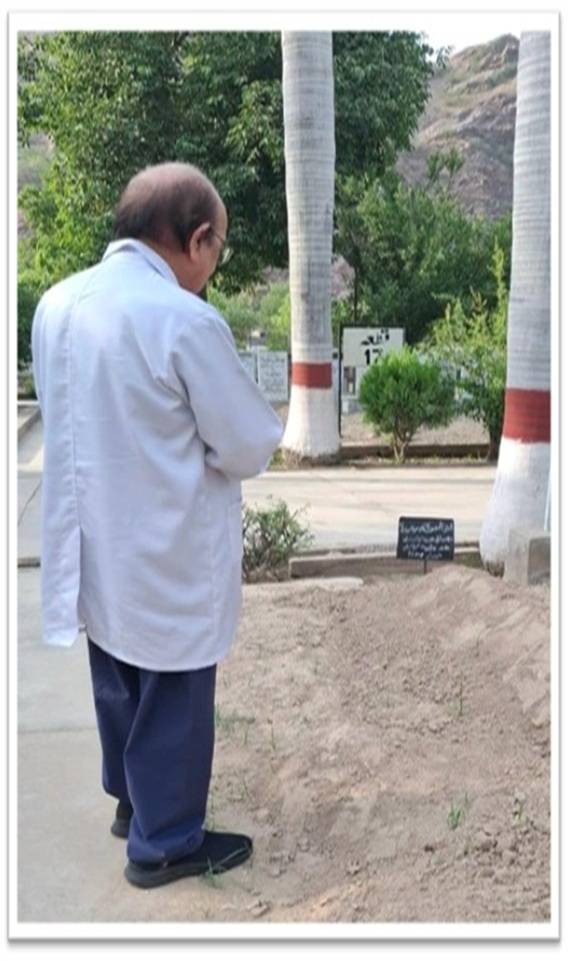
Remind yourself that everything you own is not really yours – it can be taken away from you. God is the only power to be attached to. Living with this reality makes it far easier to stay calm, if you really were to lose them. This is what happened to the doctor when he lost his wife. He stayed resilient and calm in the face of adversity with prayers and firm faith in God. Ultimately, tranquillity and peace of mind prevailed.
A doctor deeply scarred by a personal loss, finds renewed purpose when he attends his patients suffering from incurable heart disease. The above story highlights the doctor's emotional journey as he comforts his grief while dedicating himself to the ailing patient's well-being. The patient's well-being becomes a beacon of hope reminding the doctor of the power of human connection and the importance of his profession. He realised that his grief was not a barrier to his ability to attend to his patients in distress, but rather a reminder of the preciousness of life. He continued his work with newfound dedication; a living embodiment of hope, and he found a renewed sense of purpose.