

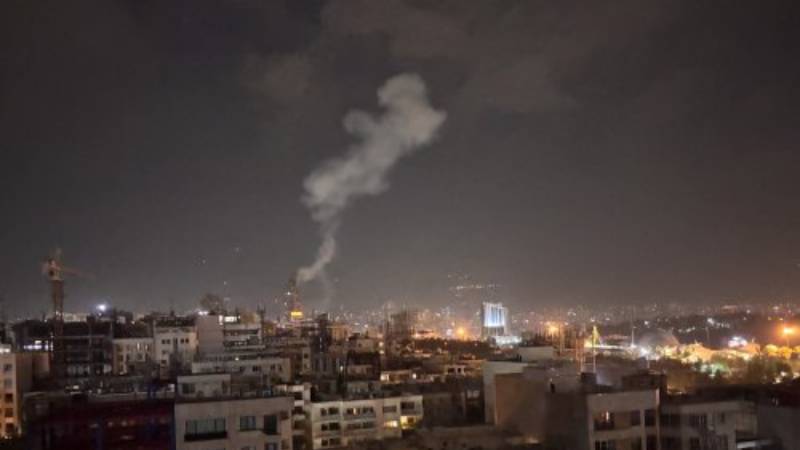
On 13 June 2025, Israel conducted a daring pre-emptive airstrike deep into Iranian territory, targeting what it described as key nuclear and military sites. Dubbed Operation Rising Lion, the attack immediately raised alarm across the region and beyond. Yet beneath the headlines, the strike reflects more than a flashpoint between two hostile states. It is emblematic of a broader transformation in how states perceive threats and pursue deterrence in an increasingly fragmented international system.
The Israeli government cited intelligence indicating Iran had accelerated its efforts to weaponise enriched uranium — a red line long established in Tel Aviv’s defence doctrine. But the timing was equally strategic. Israel was facing mounting international pressure over its operations in Gaza, legal scrutiny from the International Criminal Court (ICC), and growing domestic unrest. In that context, the operation served multiple goals — reclaiming strategic initiative, reinforcing deterrence credibility, and uniting a politically divided nation under a narrative of existential defence.
Though the strike was unilateral in execution, it likely benefited from a network of tacit support. The United States, while publicly urging de-escalation, had deployed additional naval forces in the Persian Gulf just days before the strike. This strategic posturing, along with long-standing intelligence cooperation, suggests Washington offered quiet consent. It’s a familiar pattern: Israel acts, while the US maintains plausible deniability — a division of roles that has defined their security relationship for decades.
Even more telling was the silence from Gulf monarchies. Traditionally outspoken critics of Israeli military action, states like Saudi Arabia, the United Arab Emirates, and Bahrain refrained from any meaningful condemnation. Their strategic interests are increasingly aligned with Israel’s, particularly in countering Iran’s regional reach via proxies in Yemen, Iraq, Syria, and Lebanon. The Abraham Accords may have formalised economic and diplomatic ties, but Operation Rising Lion reveals a deeper convergence on hard security matters. Their silence was not passive; it was strategic.
Operation Rising Lion did not just alter the Iran–Israel balance; it reshaped the global deterrence map, reinforcing pre-emptive logic for states that reject multilateral constraints
There is also speculation that Azerbaijan and Kurdish-controlled areas in Iraq may have provided logistical corridors for Israeli aircraft or drones. While these reports remain unconfirmed, Israel’s historical ties with these actors and the geographic proximity of their territories to Iran make the claims plausible. The operation underscores Israel’s ability to project power far beyond its borders, leveraging informal regional partnerships outside of traditional treaty frameworks.
But the deeper story lies in what the strike reveals about the state of global order. In bypassing diplomatic mechanisms and acting pre-emptively, Israel reaffirmed the growing irrelevance of international institutions like the UN Security Council and the ICC in crisis management. As global consensus fractures and enforcement mechanisms weaken, states are turning inward — prioritising capacity and timing over legal authorisation. Operation Rising Lion represents a reassertion of realism in international relations: survival, deterrence, and calculated use of force are once again front and centre.
In the aftermath of Israel’s 13 June airstrikes, Iran has already begun retaliating through asymmetric means rather than conventional warfare. Over several days, Iran launched waves of missiles and drones targeting Israeli cities such as Tel Aviv and Jerusalem, triggering air raid sirens and widespread evacuations. While the Israeli military intercepted the majority of these projectiles, the barrage marked a clear escalation.
Simultaneously, Iran issued firm diplomatic warnings, with its ambassador to the United Nations cautioning that any direct U.S. involvement would provoke a strong Iranian response. Although a recent tanker collision in the Strait of Hormuz was deemed unrelated, Iranian lawmakers have hinted at the strategic option of closing the crucial waterway, signalling Tehran’s readiness to weaponise maritime disruption if the conflict intensifies. These moves reflect Iran’s effort to balance retaliation with strategic restraint, navigating the credibility dilemma of responding forcefully without igniting a full-scale regional war.
Meanwhile, Asia’s major powers are not mere bystanders. China, Russia, and North Korea are watching — and calculating.
China has long viewed Iran as a strategic partner, especially under the 25-year cooperation agreement signed in 2021. Iran is central to China’s access to Gulf energy and a key node in the Belt and Road Initiative. Beijing’s muted response to the strike reflects its balancing act: preserving ties with Iran while avoiding a direct clash with Western security blocs. Yet China may interpret Israel’s unilateral move, particularly with US backing, as a precedent that could justify its own assertive actions — perhaps in Taiwan or the South China Sea.
Russia, deeply involved in Syria alongside Iran, stands to gain from any regional disruption that diverts Western focus from Ukraine or weakens US-backed alliances. It likely views the Israeli strike as proof that military force still defines geopolitical outcomes. Russia has already invested in strengthening Iran’s air defences and may now accelerate joint strategic planning.
North Korea sees in this operation a validation of its deterrence doctrine. The message is clear: the only reliable shield against pre-emption is a credible threat of retaliation, ideally nuclear. Pyongyang may escalate missile testing or even deepen its covert defence relationship with Iran, as both nations face similar international isolation and rely on asymmetric tools of resistance.
In short, Operation Rising Lion did not just alter the Iran–Israel balance; it reshaped the global deterrence map, reinforcing pre-emptive logic for states that reject multilateral constraints. This includes Turkey in Syria, Egypt in the Red Sea, and potentially India in its strategic competition with Pakistan.
The operation illustrates how power, not process, defines security behaviour in today’s world. In a system drifting away from liberal norms, alliances are flexible, legal frameworks are slow to respond, and the actor willing to move first often defines the terms of engagement — even if they face condemnation afterwards.
For scholars and policymakers, the Israeli strike raises urgent questions: Can international institutions evolve to address this resurgence of unilateralism? Will global security now depend more on credible force than on negotiation and diplomacy? And are we witnessing the final breakdown of the post-WWII global order — or merely its adaptation to a multipolar reality?
Whatever the answers, Operation Rising Lion is more than a regional military action. It is a strategic statement. In a world of shifting power centres, blurred alliances, and weakened norms, Israel’s strike may well mark the return of hard deterrence as the defining language of statecraft.