

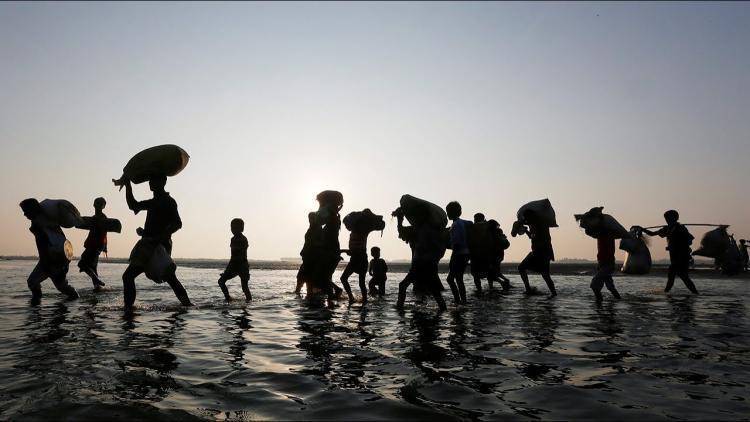
Pakistan stands at the frontline of an intensifying climate crisis—one that threatens its ecosystems, economy, and the well-being of its people. Ranked among the world’s most climate-vulnerable nations, it has already endured devastating shocks from extreme weather, most notably the catastrophic floods of 2010 and 2022. These disasters claimed thousands of lives and caused economic losses exceeding USD 30 billion, serving as a stark warning of future risks. Climate projections suggest a trajectory of rising temperatures, erratic precipitation, severe droughts, heatwaves, and accelerated glacial melt, compounding existing vulnerabilities.
For millions, climate change is not a distant risk—it is a daily reality. Agriculture, employing almost 40% of the workforce, is under severe stress from shifting weather patterns and declining water availability. Per capita water supply has plunged from over 5,000 cubic metres in 1951 to near the critical threshold of 1,000 cubic metres, exacerbated by shrinking glacial sources.
Rapid urban expansion and population growth heighten exposure to sea-level rise in the south and glacial lake outburst floods (GLOFs) in the north. Combined with constrained fiscal space and political volatility, this creates a high-risk landscape. Yet, the crisis also presents a rare window for systemic transformation. Pakistan must pivot from reactive disaster relief to a proactive, evidence-based adaptation agenda, drawing lessons from global leaders in resilience.
Global Models of Adaptation
The Netherlands – Adaptive Water Governance
The Netherlands’ Delta Programme epitomises forward-looking, integrated flood management, merging flood safety, freshwater management, and spatial planning. Its hallmark is Adaptive Delta Management—a flexible planning framework that evolves alongside scientific insight—and ambitious safety standards designed to shield every resident from a 1-in-100,000-year flood by 2050. Through initiatives such as Room for the River, the Dutch have combined ecological restoration with engineering marvels like storm surge barriers, financed through a dedicated Delta Fund and bolstered by extensive public participation.
Despite contributing less than 1% to global emissions, the toll of inaction is already severe
Japan – Multi-Layered Disaster Readiness
Japan has transitioned from post-event reconstruction to a science-led, multi-layered flood management system. Its River Basin Disaster Resilience framework requires synchronised action between government, private sector, and communities, underpinned by robust legislation and advanced predictive modelling. Frequent evacuation drills, inclusive of vulnerable groups, ensure communities remain prepared and engaged.
Bangladesh – Community-Centred Resilience
In a resource-constrained environment, Bangladesh has achieved significant reductions in disaster-related mortality through legally mandated, community-driven disaster management structures. With over 2,500 cyclone shelters, strong volunteer networks, and gender-sensitive strategies (UNDRR), Bangladesh demonstrates how local action can seamlessly integrate with national frameworks—an approach highly relevant to Pakistan.
A Pakistan-Specific Strategic Roadmap
Reinforce Early Warning Systems
Strengthen multi-hazard, multi-channel warning platforms that are accessible to all at-risk communities, integrating satellite data, river gauges, mobile alerts, and community drills. Decentralise authority so district-level actors can act swiftly when national systems falter.
Climate-Resilient Infrastructure & Ecosystem Restoration
Mandate climate risk assessments for all new builds and embed nature-based defences—restored forests, mangroves, and floodplains—into urban design (Recharge Pakistan serves as a model). Apply sponge-city concepts such as permeable surfaces and expanded green cover to mitigate flood and heat risks.
Institutionalised Community Preparedness
Scale volunteer training and school safety programmes nationwide, adapting models from the Aga Khan Agency for Habitat (AKDN). Empower communities as first responders through sustained capacity-building.
Expand Climate Finance and Private Sector Engagement
Bridge the USD 348 billion adaptation financing gap by operationalising the National Climate Finance Strategy and creating a one-stop coordination hub for funding. Mandate ESG reporting for listed companies, incentivise green investment, and develop climate-risk-proof supply chains.
Strengthen Institutions and Data Systems
Enhance data-sharing between agencies, fully operationalise the National Emergency Operations Centre, and produce granular vulnerability maps to guide targeted interventions.
Pakistan’s climate challenge is a test of its governance, science, and social cohesion. Despite contributing less than 1% to global emissions, the toll of inaction is already severe. However, the experiences of the Netherlands, Japan, and Bangladesh show that resilience is achievable. With a cohesive national strategy rooted in science, local empowerment, and accountable institutions, Pakistan can redefine itself from a climate hotspot to a global model of adaptation.