

Much has been said about Pakistan’s space programme. Despite being a regional space pioneer in the 1960s, Pakistan shifted its focus away from space towards its nuclear and missile programme. Since then, the country’s space programme has remained largely on the sidelines, while other states have gradually become major space-faring nations. That, however, seems to be changing. In recent months, Pakistan has launched two earth observation satellites, the PAUSAT-1 and PRSC-EO1, and plans to send its first manned mission into space. These are all significant milestones and, while there is certainly a long way to go, point to the fact that Pakistan’s space programme is undergoing a renaissance.
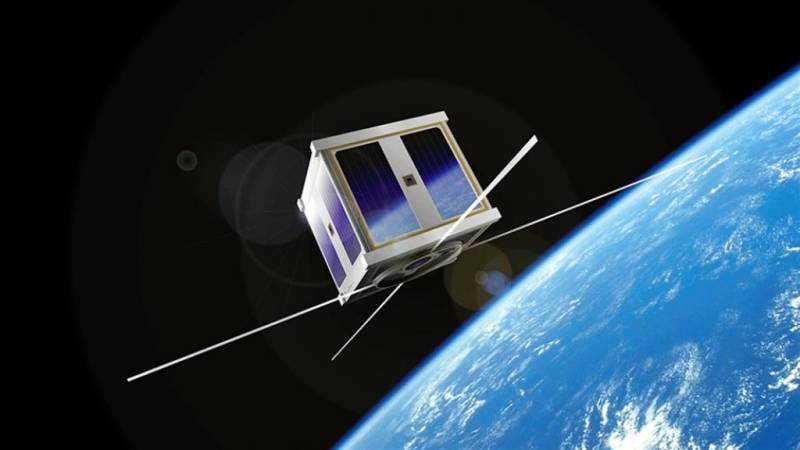
In 2025, Pakistan has made significant progress in making the key objectives of its Space Vision 2040 and National Space Policy a reality. In January 2025, within just one week of each other, Pakistan launched two earth-observation satellites: PAUSAT-1 and PRSC-EO1. The PAUSAT-1 satellite was launched from the US on January 14th, in collaboration with SpaceX, Air University in Pakistan, and Istanbul Technical University in Türkiye. It is an advanced CubeSat, which is equipped with a high-resolution multispectral imager that has an image capture resolution of 1.5 metres. It also has a hyperspectral imager, through which it can capture detailed Earth imagery across multiple spectral bands.
Soon after, Pakistan launched its first fully indigenous earth observation satellite, the PRSC-EO1, from China on January 17th. The satellite has significant applications and can be utilised to enhance Pakistan's ability to monitor and manage natural resources, respond to disasters, and improve urban planning and agricultural development. It uses electro-optical sensors to collect data and images of the Earth's surface by detecting and measuring reflected sunlight or emitted radiation. PRSC-EO1 is the first of a series of three optical remote sensing satellites that Pakistan plans to launch into orbit soon.
The launching of the PRSC-EO1 and PAUSAT-1 satellites, and the news of China training Pakistani astronauts, indicate that Pakistan’s space programme is undergoing a renaissance
The launch of these two satellites indicates a major shift in Pakistan’s space programme. Firstly, it points to the indigenous development of satellites, which is the hallmark of any major space-faring nation. As conveyed through a statement released by SUPARCO, “this remarkable milestone marks a giant leap forward in Pakistan’s journey toward self-reliance and technological excellence in space exploration”. Indeed, the PRSC-EO1 satellite is the first that was completely designed and built by SUPARCO engineers. The next step for Pakistan is to develop its indigenous satellite launch vehicles (SLVs), so that it does not have to rely on other states to launch its satellites.
Secondly, it also displays the diversification of Pakistan’s space collaboration, with the satellite launches taking place from both the US and China. This is a crucial point, as although Pakistan should certainly expand its space collaboration with China, it should not become overly reliant on it. Thirdly, it shows that Pakistan understands the crucial role of space as a domain for both civilian and military applications. Along with their civilian applications, earth observation satellites also have significant military applications, particularly for intelligence, surveillance and reconnaissance, and to monitor an adversary’s troop movements and strategic assets.
In another mark of Pakistan-China space collaboration, Pakistan announced its plans to send its first manned mission to China’s Space Station (CSS). Under the agreement with China, two Pakistani astronauts will undergo training at the Astronaut Centre of China. Interestingly, this will be the first instance of any international astronaut being trained by China. According to the agreement, the Pakistani astronauts will be selected, trained, and subsequently enter CSS alongside Chinese astronauts to perform ‘short-term flight missions’ within the next few years. The Pakistani astronauts will carry out specialised research and experiments aboard the CSS, including in the fields of aerospace, fluid mechanics, applied physics, and more. The training of Pakistani astronauts by China makes clear Pakistan’s intent of becoming a major space-faring nation, and signals the growing space collaboration between the two states.
The recent space-related achievements of the National Aerospace Science and Technology Park (NASTP), which is an initiative of Chief of the Air Staff Air Chief Marshal Zaheer Ahmad Babar Sidhu, are also noteworthy. NASTP aims to bridge the gap between the industry, academia, and government in space and other domains, and to make Pakistan technologically independent and self-reliant. NASTP has already established several regional chapters across Pakistan, and envisions transforming the national landscape through design, innovation, and research and development centres.
Pakistan’s recent space-related advancements are certainly a welcome development. In recent years, Pakistan has clearly stated its space-related objectives through its Space Vision 2040 and National Space Policy. The launching of the PRSC-EO1 and PAUSAT-1 satellites, and the news of China training Pakistani astronauts, indicate that Pakistan’s space programme is undergoing a renaissance. Going forward, Pakistan should focus on the indigenous development of satellites, increase its space collaboration with major space-faring nations, and move towards the development of its SLVs.