

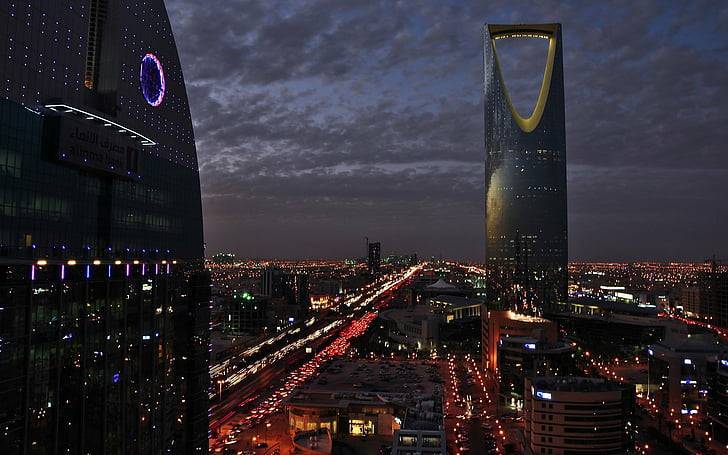
As the world steadily transitions toward renewable energy and sustainable alternatives, oil-rich nations like Saudi Arabia are being forced to rethink their economic futures. In recent years, the Kingdom has launched Vision 2030—an ambitious roadmap aimed at diversifying its economy, reducing its reliance on oil, and establishing itself as a global hub for tourism, technology, and investment. A striking component of this vision is the Kingdom’s initiative to expand religious tourism by increasing the number of pilgrims allowed to perform Hajj and Umrah each year. With improved infrastructure, eased visa restrictions, and state-of-the-art facilities, Saudi Arabia is opening its doors to spirituality more widely than ever before. But beneath the surface of this well-branded transformation lies a more profound concern: Is Saudi Arabia quietly surrendering influence over its internal affairs to foreign powers, particularly the United States, under the guise of economic reform?
The Palestinian struggle is not just one of occupation—it’s a powerful lesson in how foreign interests can systematically erode a people’s control over their land, politics, and future. Over the decades, unwavering U.S. support for Israel has created a deeply uneven playing field. Despite international laws, U.N. resolutions, and the moral weight of the Palestinian cause, strategic alliances and economic interests have repeatedly taken precedence over justice.
Today, many Arab states have shifted their foreign policies to align with Western interests, often at the expense of Palestinian sovereignty. The Abraham Accords, for instance, normalised ties between several Gulf states and Israel, leaving Palestinians increasingly marginalised on the global stage. This raises a critical question: Could Saudi Arabia be heading down a similar path, not through territorial occupation, but through foreign-directed national transformation?
Vision 2030 can indeed be a vehicle for transformation—but only if it's driven by the Kingdom's people and principles, not by those who see Saudi Arabia merely as a market or a strategic pawn
With oil reserves depleting, Saudi Arabia is transforming the sacred into a strategic asset. Religious tourism is no longer just a spiritual journey—it’s a key pillar of economic survival. Hajj and Umrah now contribute billions to the national economy, with targets of hosting 30 million pilgrims by 2030. But who benefits from this transformation? International companies are securing contracts in hospitality, transport, technology, and crowd management. Western allies, especially the U.S., are increasingly involved in shaping this “new Saudi Arabia,” positioning themselves as partners in reform. On the surface, this appears to be modernisation. But beneath it lies a subtle redistribution of influence, where religious tourism is folded into global capitalism, and foreign interests gain unprecedented leverage over the Kingdom's future direction.
In parallel with its economic diversification, Saudi Arabia has undergone a dramatic transformation of its cultural and social landscape. The Kingdom has gone from banning cinemas and concerts to hosting global music festivals, mixed-gender events, and even nightclubs. World-famous entertainers—from BTS to David Guetta—have performed on Saudi stages—unthinkable just a decade ago.
While this is promoted as progress under Vision 2030, it raises serious concerns among many citizens and observers. For a nation rooted in Islamic tradition, the sudden embrace of Western-style entertainment, while simultaneously monetizing sacred rituals, feels contradictory and unsettling. Critics argue this cultural pivot dilutes the Islamic identity of the Kingdom and opens the door for moral confusion. Even more concerning is the reality that Western powers are eager to support these shifts, not necessarily to promote “freedom” or reform, but to gain soft power, access markets, and cement strategic influence. This leads to a sobering question: If reforms are shaped more to please investors than to reflect the values of the people, then who is truly in control?
The introduction of liberal entertainment and Western-style social norms is often framed as “modernisation.” But modernisation should not mean abandoning cultural roots or mimicking Western models of success. True progress means building a future that honors the past—rather than replacing it for global validation. Saudi Arabia may risk compromising its cultural and religious sovereignty if it continues down a path that prioritises global appeal over internal values. Vision 2030 can indeed be a vehicle for transformation—but only if it's driven by the Kingdom's people and principles, not by those who see Saudi Arabia merely as a market or a strategic pawn. The pilgrimage, after all, is not just a source of revenue. It is a sacred trust—one that belongs to the entire Muslim world, not to corporate contracts or geopolitical deals. And the Kingdom’s cultural identity is not a commodity—it is the soul of a people.
This is not a rejection of reform, progress, or partnership. It is a call for caution—a reminder that foreign influence often arrives disguised as opportunity, and that sovereignty is not just about borders, but about beliefs, values, and the right to chart one’s own course. Let us hope Saudi Arabia’s transformation remains firmly in the hands of its people, not dictated by investors or foreign agendas, but guided by a deep respect for its values, heritage, and Islamic identity. Because what looks like a partnership today may, in time, become dependence. And sovereignty—like faith—is too precious to be quietly traded away.