

On the morning of May 7, a major development took place in South Asia. India had reportedly launched airstrikes on targets inside Pakistan and Pakistan-administered Kashmir. That same day, I published a news report for Nikkei Asia, which stated that Pakistan claimed to have shot down five Indian fighter jets, including three Rafale aircraft. This was a serious escalation in one of the world’s most dangerous nuclear flashpoints.
Two days later, on May 9, I filed another story for Nikkei Asia. The report gave more details. Pakistan had stated that it brought down three Rafale jets, one MiG-29, and one SU-30 fighter aircraft using Chinese-made J-10C fighter jets. This was a major development not just because of the number of aircraft involved but also due to the presence of the highly advanced Rafales in the list.
Both these stories were based on verified information. I made sure to double-check each detail. Claims made by the Pakistani side were cross-referenced with intelligence insights, including assessments from U.S. and French sources. Contrary to what some critics might say, this was not one-sided reporting. It was journalism based on facts that had been thoroughly vetted.
However, the backlash began almost immediately. As soon as the stories went live, I started receiving a wave of angry messages, mainly from Indian social media users. My inbox filled up quickly. My X (formerly Twitter) account was tagged in dozens of posts, many of them abusive. Some people accused me of spreading lies. Others questioned my integrity simply because I am a Pakistani journalist. The fact that I was working with a credible foreign media outlet like Nikkei Asia did not seem to matter.
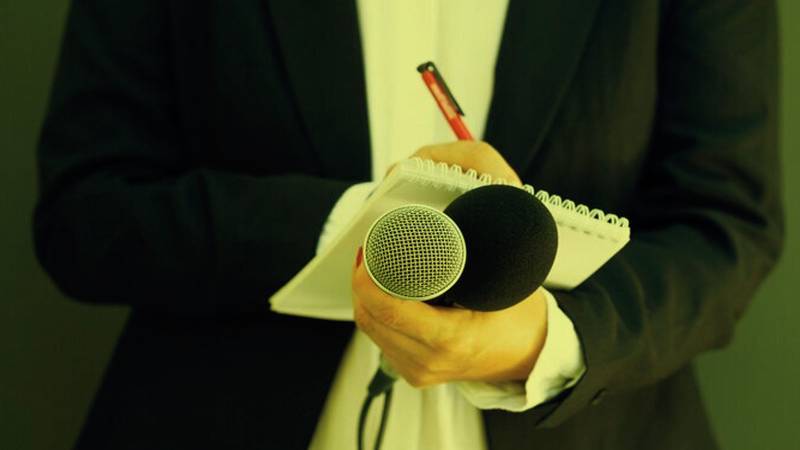
Journalists must also be ready to defend themselves against mobs, political attacks, and censorship, often all at once
It did not take long for the criticism to go beyond anonymous online trolls. Indian journalist Palki Sharma from First Post publicly called me out in one of her news segments. She labeled me a “biased journalist” and accused foreign media outlets of relying on Pakistani reporters to shape the global narrative on the Kashmir issue. My work was held up as an example of this alleged bias.
To be honest, the attack felt personal. It is one thing to be criticised for your work. That is part of being a journalist. But it is something else entirely when your identity is used against you, when your nationality becomes a weapon in a media battle. I did not write those stories as a Pakistani trying to push a certain viewpoint. I wrote them as a journalist reporting developments as they unfolded, based on verified information.
The claim about Pakistani J-10C fighter jets shooting down Indian aircraft, including a Rafale, was not something I made up. It was confirmed by independent sources outside Pakistan. In fact, both U.S. and French intelligence had acknowledged the likelihood of Pakistan’s claims being accurate. If those sources had disputed the claim, I would have included that in my report as well. But they did not. The reports were fair and balanced.
Unfortunately, in times of heightened nationalism, even honest journalism becomes suspicious. Reporters are expected to pick a side, and if they do not, they are accused of betrayal. That is exactly what happened in my case. Instead of focusing on the facts of the incident, critics focused on me. They made it about who I am, rather than what I reported.
On Saturday morning, I received another blow. My X account was withheld in India. There was no prior warning, no official explanation. One moment, my posts were visible, the next, they were not accessible in India. I was effectively silenced for simply doing my job.
This action by Indian authorities raises serious concerns about press freedom. India often presents itself as the world’s largest democracy. But what kind of democracy censors journalists from neighboring countries just because they publish reports that are uncomfortable or inconvenient?
Yes, Pakistan too has a long list of restrictions on free speech. There is no denying that. Twitter has been banned in Pakistan for months. Journalists face threats, censorship, and even physical harm here as well. But what India has done in this case is a reminder that no country is immune to the temptation of suppressing dissent. And in this moment, India has gone a step further by blocking access to a foreign journalist’s social media profile just because he reported facts they did not like.
It is important to note that foreign media organisations like Nikkei Asia operate independently. They are not under the control of any government. Their goal is to present an accurate picture of events for a global audience. Trying to pressure such organisations into following a particular line is not only unethical, it is also doomed to fail. Journalism thrives on credibility, and credibility comes from reporting the truth, not from towing any state’s official line.
This episode made me reflect on how fragile the idea of free speech really is. We often talk about press freedom and the right to express ourselves. These ideas sound great in theory. But when push comes to shove, they are often the first to be sacrificed. In times of conflict or political tension, even basic truths can become dangerous. And those who speak them out loud are often punished.
Journalism has always carried risks. But in today’s world of digital nationalism and online armies, those risks are multiplying. It is no longer enough to be accurate. Now, journalists must also be ready to defend themselves against mobs, political attacks, and censorship, often all at once.
What happened to me can happen to any journalist. And that is the real danger. When journalists are punished for simply reporting facts, it sends a chilling message to others: stay silent, or pay the price. This kind of environment is harmful to democracy, to public debate, and to the global understanding of complex issues like the Indo-Pak conflict.
The backlash I faced is part of a bigger pattern where the messenger is attacked instead of addressing the message. My reporting was not about victory or defeat. It was about what happened in a military clash between two powerful and nuclear-armed neighbours. I was not taking sides. I was just doing what journalists are supposed to do: inform the public.