

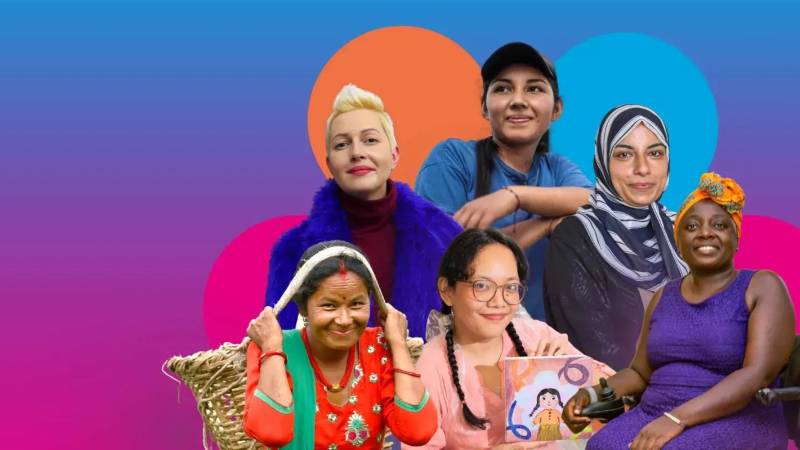
“My call to action for every president and every country is simple: Make space for young women to lead when the time is right, and that time is now.” As Botswana’s youngest minister at 26, and the youngest minister in Africa, Minister Chombo delivered this powerful message at a side event during the 69th Session of the Commission on the Status of Women (CSW69) in New York, hosted by the SADC PF in collaboration with Africa Renaissance. The audience, visibly energised and full of admiration, responded with palpable enthusiasm, applause, and unwavering support.
Minister Chombo, who also chairs the African Union’s Specialised Technical Committee on Gender Equality and Women’s Empowerment (STC on GEWE), emphasised Botswana’s progress in advancing gender equality since the 1995 Beijing Declaration. She highlighted several key legal reforms, including the Penal Code (1996), the Citizenship Act (2003), and the Domestic Violence Act (2008), all of which have contributed to fostering gender equality. Additionally, Botswana established the Gender Affairs Department and introduced policies like the National Policy on Gender and Development. At CSW69, Minister Chombo focused on empowering young girls, advocating for their inclusion in leadership, education, and policymaking. She proudly shared that “Botswana achieved gender parity in education in 2010 through ten years of free, compulsory schooling.” As a result, the literacy rate for females reached 87.12%, while that of males was 86.34%. Botswana also supports the reintegration of pregnant girls into schools and promotes female participation in STEM through mentorship programs, encouraging young girls to pursue careers and leadership roles in these fields.
While Botswana’s achievements are commendable, the global landscape of gender equality remains a mix of progress and setbacks, as highlighted during CSW69. The ongoing session, being held from March 10 to 21 at the UN Headquarters in New York, provides an opportunity to reflect on both the milestones reached and the gaps that remain. Despite historic milestones such as the election of the first directly elected female Presidents in Mexico, Namibia, and North Macedonia, 106 countries have never had a woman leader. Women currently hold top state positions in only 25 countries, with Europe leading the way, having the highest number of women-led countries at 12. At the opening session of CSW69, Sima Bahous, the Executive Director of UN Women, warned that “misogyny is on the rise,” a sentiment echoed by UN Secretary-General António Guterres, who stated, “The masters of misogyny are gaining strength.”
Despite these concerning statistics and rising misogyny, CSW69 has generated a powerful movement, particularly in the form of youth leadership. As part of this momentum, youth-led initiatives have become central to the conversation. The first week of the session focused on empowering young women and highlighting their role in shaping the future of gender equality. On March 9, the very first day of the session, the CSW69 Global Youth Forum took place, empowering young advocates with the tools and strategies to actively influence the discussions and hold the international community accountable for advancing the Beijing+30 Agenda.
That same day, another significant event, POWER4Girls: Invest in Girls, Transform the World, was held at the ECOSOC Chamber at UN Headquarters. The event aimed to accelerate actions that support the rights, well-being, and leadership of adolescent girls, influencing policy and programming in both development and humanitarian sectors. UNICEF Ambassador Millie Bobby Brown, along with young leaders and government representatives from Sierra Leone, Nepal, the UK, and Canada, shared their commitments. In addition, the event Bridging the Gap: From Beijing to 2030 – Ending Child Marriage in All Forms, co-hosted by UNICEF, UNFPA, and several governments, highlighted the urgency of ending child marriage worldwide. Ambassador Bob Rae, Canada’s Permanent Representative to the UN, opened the discussion with a powerful statement: “Ending child marriage is essential for the well-being of girls, women, and communities everywhere. No government has the right to curtail the future of a girl. The time to act is now.”
Just as visa barriers restrict young women from participating in global platforms like CSW69, patriarchal mindsets in my own country continue to limit leadership opportunities for young women, especially those from religious minorities
This call to action was echoed by leaders at the Bridging the Gap event, where the staggering reality that 12 million girls are married off every year became a sobering reminder of the need for urgent change. Reflecting on this crisis, leaders like Liga Perez Pena, Hon. Isata Mahoi, and JISRA delegate Nagwa Botros stressed the critical role of laws, funding, faith-based advocacy, and education in the fight to end child marriage. Fanta Toure-Puri, Director of the Girls First Fund, led a powerful moment, urging the audience to reflect: “Close your eyes and picture a girl in your life, someone you would do anything to protect.
Now, imagine her becoming a child bride. Will you stand with us to ensure every girl has a bright, safe future?” The atmosphere became even more electrifying when a panel of young women survivors of child marriage from Zimbabwe, Zambia, and Guinea, Chipasha (Chichi) Illampu, Loveness Mudzuru, and Oumou Khairy Diallo shared their personal and powerful testimonies. Each speaker emphasised the importance of empowering local activists, tailoring efforts to meet the unique needs of communities, and securing more resources to support grassroots initiatives in the fight against child marriage. Chipasha (Chichi) Illampu argued that having survived child marriages, they are now fighting to end them in all forms on the world's largest stage. She boldly declared, “We are not victims; we are victors.” Her words resonate deeply with the situation in Pakistan, where young children from minority communities, in collaboration with Christian parliamentarians and former member of the minority of the National Commission on the Rights of the Child, played a key role in the passage of the Christian Marriage (Amendment) Act, 2024. This law raises the legal marriage age for Christian girls from 13 to 18 and for Christian boys from 16 to 18, marking a significant step in the fight against child marriage.
Building on this progress, the conversation continued at CSW69, where young women have been carving out their own space. At the High-Level Multi-Faith Reception hosted by the Gender Working Group of the UN Multi-Faith Advisory Council (MFAC), a platform for meaningful collaboration and solidarity in advancing gender equality and human rights was created. The event reached its climax when the names of two young women were announced as the new Co-Chairs of the Gender Working Group of the UN Multi-Faith Advisory Council. Dimitra Missira, the European Union Liaison Officer at the Office of the Deputy Secretary-General for the KAICIID International Dialogue Centre in Vienna, and Jessica Roland, Senior Specialist for Inclusive Peace at The Network for Religious and Traditional Peacemakers and a JISRA delegate, were appointed to lead the group. In her remarks, Jessica emphasised the importance of advancing intergenerational dialogue between women and young women. “As a young woman myself, we are working to create spaces that address the specific barriers young women face,” she said. “My hope for the next 30 years of CSW is that we can transform the New York space to ensure young women have opportunities to fully participate.”
However, Stephanie Joubert, a JISRA delegate, highlighted that “in preparation, we ensure young women faith leaders, along with senior faith leaders, can attend CSW69. Unfortunately, young women faith actors were unable to obtain visas, as it is often more difficult for young women to get visas, especially when considering factors such as whether they have a family or hold a certain position in society.” Similarly, just as visa barriers restrict young women from participating in global platforms like CSW69, patriarchal mindsets in my own country continue to limit leadership opportunities for young women, especially those from religious minorities.
During CSW69, I came across a position paper from the Centre for Social Justice (CSJ) that analysed two bills currently under consideration in Pakistan’s national parliament. These bills, the Government Bill (January 2025) and the Private Member Bill (February 2025), both propose the creation of a National Commission for Minorities Rights (NCMR). A key issue that caught my attention was the proposed age limit for members. The Government Bill suggests that members should be over 40 years old, while the Private Member Bill sets the age range between 40 and 60 years, with the Chair required to be at least 60. These age restrictions reinforce the idea that leadership positions should be reserved for senior individuals, further marginalising younger women who seek to engage in decision-making roles.
This debate on age limits made me reflect on a statement by Loretta Jeff Combs from the Tlesqox First Nations in Canada during the opening ceremony of CSW69. She remarked that the Beijing Declaration was a historic moment because it paved the way for recognising the rights of Indigenous women and girls. “Too often, Indigenous women are left out of decision-making spaces that impact our future,” she said. In my own country, religious minority women, especially young minority women, face a similar exclusion from decision-making spaces. While visa policies may prevent young women from attending high-level forums like CSW, domestic policies in my country similarly restrict young women, particularly those from religious minorities from assuming leadership roles. This raises an important question: How can we dismantle these barriers, both globally and locally, to create opportunities for young women to step into leadership roles? This is the key takeaway I am bringing home, and it will be my agenda for Beijing +30.