

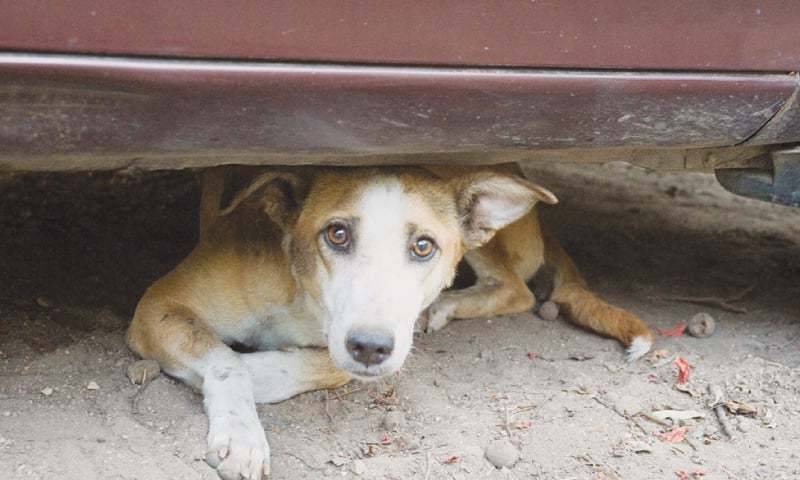
In Pakistan, especially in urban areas like Lahore, Islamabad, and other cities, residents are not trained enough and have little experience living with stray animals. They are afraid of them and usually see them as the only villains of society, even though human behaviour is often more dangerous, both towards each other and towards stray animals as well.
For years and years, dogs, cats, and sometimes buffalo, horses, and small animals like squirrels have been living alongside humans. People who live in rural areas, villages, and small towns have experience and understanding of living with stray animals. When a pack of dogs comes towards a person with swag and terror, he does not panic and start running because he knows the trigger button of stray dogs.
Dogs get triggered when you run. You cannot challenge a dog, and you cannot win a marathon against a stray dog. Your hamstrings are not as strong as his, your core is not as strengthened as his, and your lungs are not as healthy as his because he did not smoke 20 cigarettes a day.
So, do not compete with the dog. Instead, make some behavioural changes, put your ego aside, and try to understand that these animals are also a need of our society.
When dogs settle outside a house or in a street, they start guarding that neighbourhood without anyone asking them or giving them any special training. If they see an unknown person or any suspicious activity, their natural alarm system gets activated. Then, like a perfectly organised Qawwali group, they start their performance together in the same rhythm, and they do not stop until that suspicious person leaves their territory or someone from the neighbourhood convinces them that the person is a guest.
Once they are satisfied that everything is fine, they end their concert and sit peacefully on the same pile of sand, giving their throats some much-needed rest.
For the past several days, a campaign has been going on in Punjab, and some animal rights organisations have raised their voices against it, asking why dogs are being brutally poisoned to death. I am honestly surprised by this government policy.
The whole situation started after an incident in Lahore's Township area, where a small child was bitten by stray dogs. After that, a movement started demanding that stray dogs be killed.
We need to stop overhyping everything. Some problems need proper planning, not emotional reactions
Now, who is going to explain to the government that stray dogs are not humans? They cannot organise a rebellion. They do not come out for protests, and if four dogs gather somewhere, there is no need to impose Section 144 or start firing bullets at them. Neither can they be handed over to the Crime Control Department, nor to Anti-Narcotics. Neither can their "companions" open fire on police and later claim that these dogs were killed by their own people's firing.
According to a report, the Punjab government has killed hundreds of dogs by feeding them poisoned bread. Just imagine the cruelty. Those poor animals, hungry the whole day, think that maybe prosperity has finally arrived. They think they no longer have to search through garbage bins. How would they know that the bread contains poison?
But let's also look at another side of the picture. According to a report, from January 2024 to March 2026, more than five hundred thousand people in Punjab were bitten by dogs. And if we only look at the first three months of this year, nearly forty thousand people became victims of dog bites. This is definitely a serious and alarming issue. There had to be some solution, but the solution chosen by the Punjab government is something that even the world's biggest experts might not have imagined.
A question needs to be asked: what does the government do with the bodies of the dogs after poisoning them? Dogs do not have the training or the nature to bathe, bury, or burn their dead. So, where does the "Clean Punjab" campaign take these dead dogs? This is a mystery that even I cannot solve. And the smell and pollution created by these dead bodies becomes a completely separate headache.
So, what do we have to do? As we are a third-world country, we have issues like unemployment, limited resources, and a failed local government system. But we are a lively nation and a proud Pakistan. We can solve these small issues in the National Assembly and Parliament.
If we can build proper shelter homes for stray dogs, cats, and other abandoned animals away from urban areas, then the government should also introduce a donation system. In our society, we already have a culture of Sadqa. So, proper shelter homes and a donation system can be a practical solution. These shelters can create jobs as well: managers, caretakers, security guards, doctors, and other staff. They can also have vaccination systems and sterilisation programmes that control the breeding process of dogs. Because yes, overpopulation of dogs can become a serious issue, but interestingly, humans are allowed to expand their population as much as they want.
Look at the Netherlands. They achieved almost a complete absence of stray dogs through the CNVR programme: Collect, Neuter, Vaccinate, and Return — a nationwide, government-funded sterilisation system. Germany also does not allow healthy stray dogs to be euthanised. Instead, they are kept in professionally managed shelters.
Pakistan can learn from both. We need to stop overhyping everything. Some problems need proper planning, not emotional reactions. Sometimes we turn a small problem into a mountain-sized crisis when, in reality, it can be solved with basic management, responsibility, and a little common sense.