

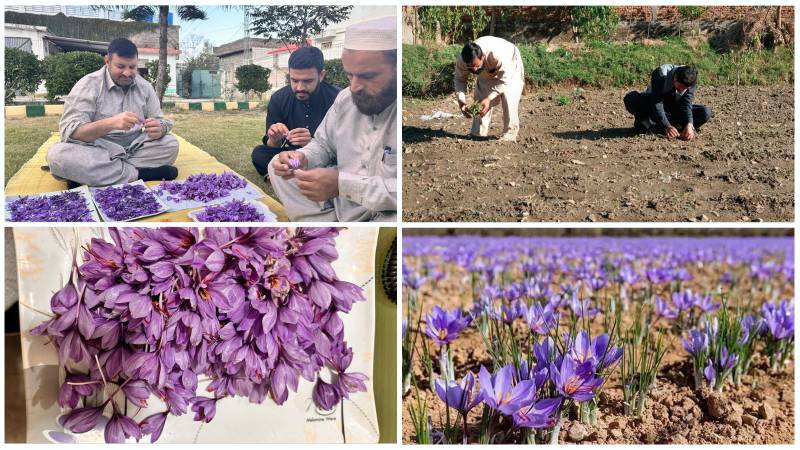
For the first time ever, the fragrance of saffron is drifting across the valley of Swat. The delicate purple flowers—long associated with Iran, Kashmir, and Spain—have begun to bloom in the terraced fields of Khyber Pakhtunkhwa’s most scenic district Swat Valley. What started as an experimental initiative is now shaping up to become a potentially transformative agricultural milestone for the region.
The Agriculture Department of Swat, in collaboration with local farmers, planted saffron bulbs across selected government-supported plots. Months later, those bulbs have come to life, offering the first promising signs that Swat’s climate and soil may be ideal for one of the world’s most precious and high-value crops.
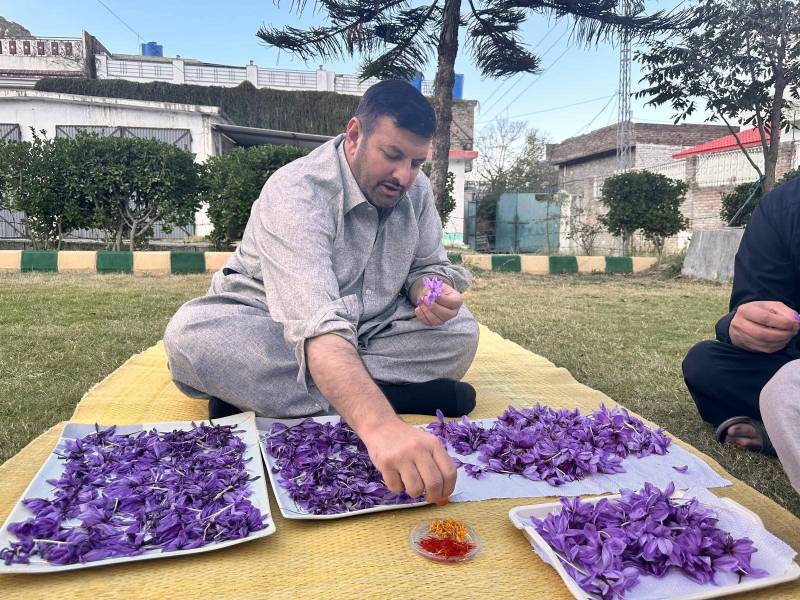
If this momentum continues, Swat—already known for its rivers, orchards, and lush mountains—may soon earn recognition for an entirely new reason: the aroma and economic promise of high-quality saffron.
When the Climate Becomes a Gift, Saffron Becomes a Miracle
Dr. Iftikhar Ahmed, District Director of Agriculture Extension Swat, told The Friday Times that this is the first time saffron has been introduced on a formal, government-backed scale in Khyber Pakhtunkhwa. Under the project, saffron bulbs were cultivated on 114 kanals of land across the district.
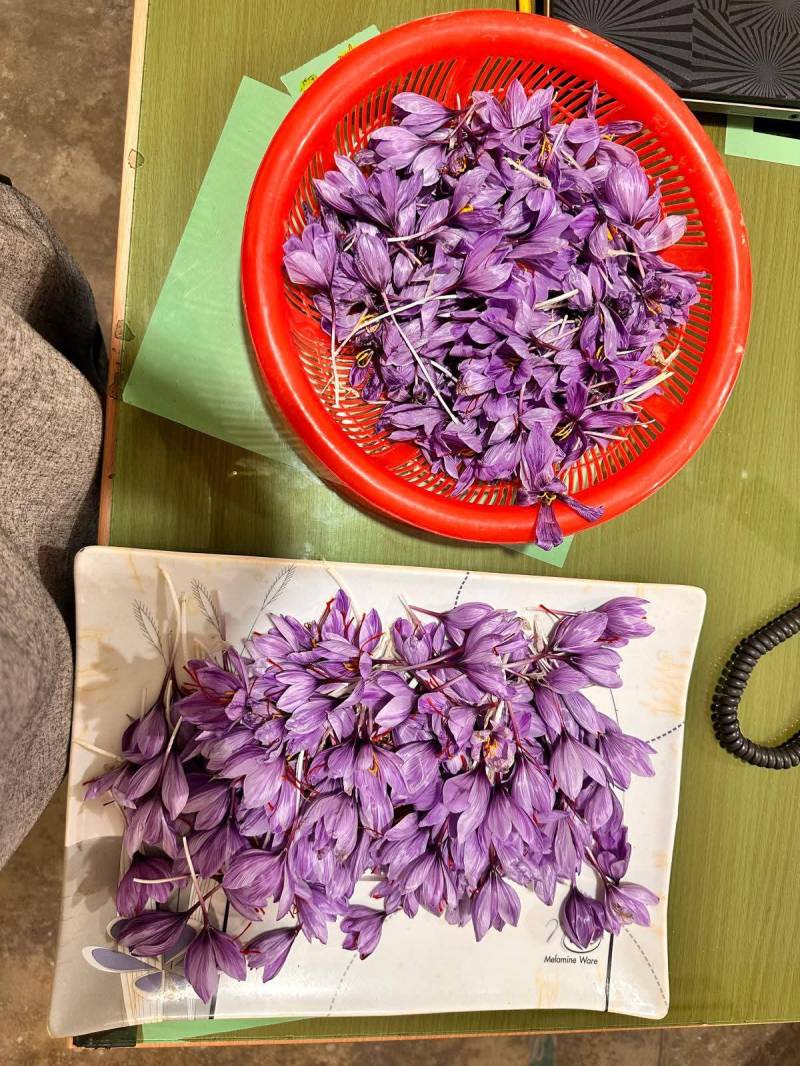
According to Dr. Ahmed, saffron requires a specific combination of soil texture, cold winters, warm dry summers, and moderate rainfall—conditions that Swat naturally fulfills.
“The environment of Swat aligns with every requirement of saffron cultivation,” he explained. “This is why the experiment has turned out to be remarkably successful.”
The pilot plantations were executed in three tehsils of Lower Swat: Kabal, Barikot, and Babuzai. Initially, convincing farmers to dedicate their land to saffron was not easy. September marks harvest time for their existing crops—crops that require long months of investment. Giving up that land was a risk many were reluctant to take.
The department therefore launched a door-to-door awareness campaign. Even on weekends, agricultural officers visited farms, shared data on saffron income, demonstrated the cultivation process, and trained farmers in handling the bulbs and flowers. Slowly, confidence built—and farmers began setting aside land for saffron.
“The ideal planting window is between September 15 and October 15,” Dr. Ahmed noted. “Many farmers replaced their traditional crops with saffron this season, and the results speak for themselves.”
Farmers Begin to See the Rewards
Among the early adopters is Shahab Khan, a farmer from Barikot. Speaking to The Friday Times, he said this was his first time cultivating saffron—and the first time he experienced such guidance and support from the Agriculture Department.
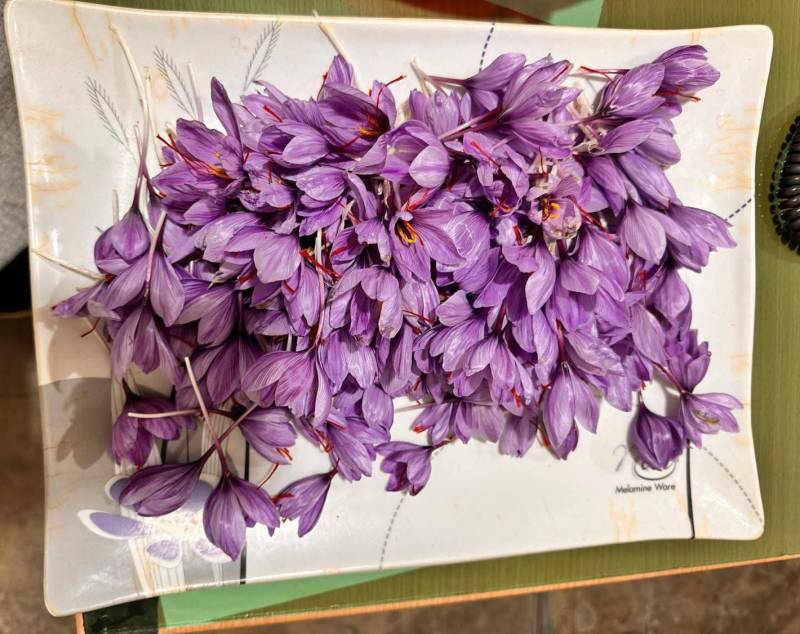
“The flowers started blooming on October 27,” he shared with excitement. “We are collecting two to three hundred flowers per kanal every day.” With each flower yielding only three delicate stigmas, every blossom counts.
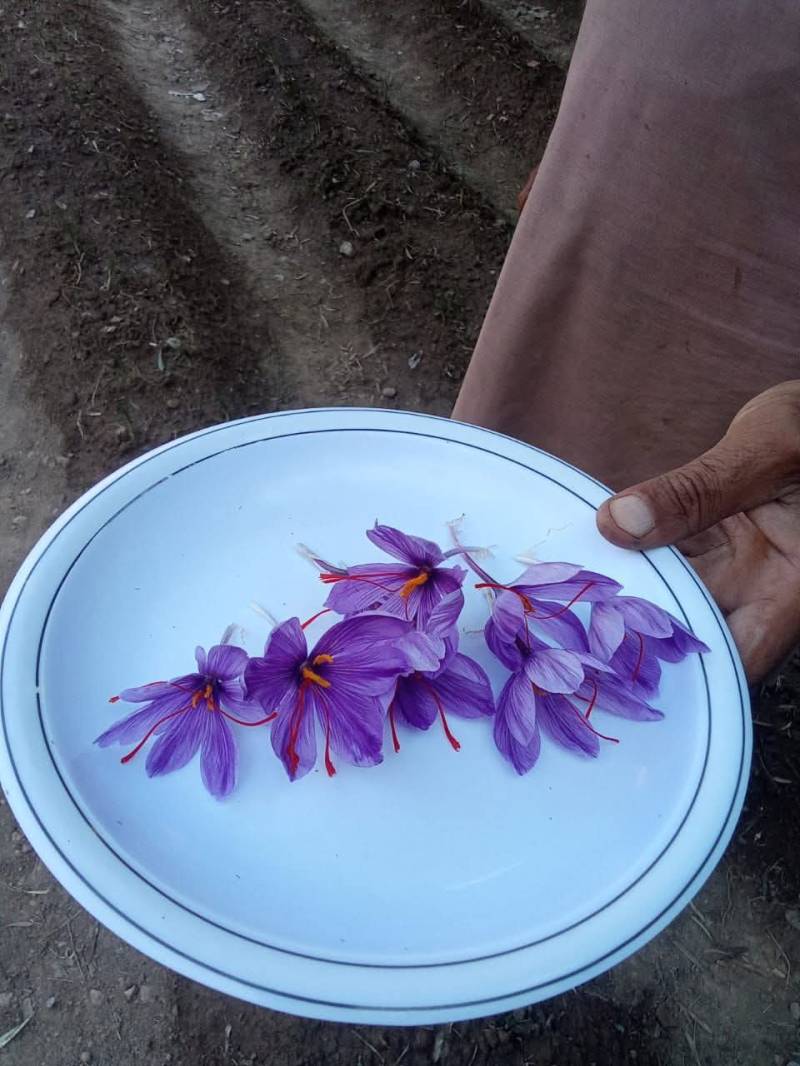
Shahab says he is “highly satisfied” with the results and hopeful that saffron will significantly increase his annual income. His optimism is based not just on yield, but on market value. According to information provided by agricultural extension workers and social media platforms, saffron in Pakistan sells for around Rs. 1.2 million per kilogram. Internationally, the price can reach as high as 17,000 USD per kilogram.
A Crop of Exceptional Quality
Beyond quantity, experts and early assessments indicate that the saffron produced in Swat is exceptional in quality. Its color intensity, aroma strength, and stigma structure are deemed comparable to—and in some aspects better than—international standards.
Laboratory testing is currently underway, which will provide scientific verification of these early observations. If confirmed, this would place Swat on the global saffron map and open doors to high-end export markets.
A Global Market Ripe With Opportunity
Globally, demand for saffron continues to rise. Iran currently produces 90 percent of the world’s saffron, with Afghanistan, Spain, and Kashmir also contributing significant shares.
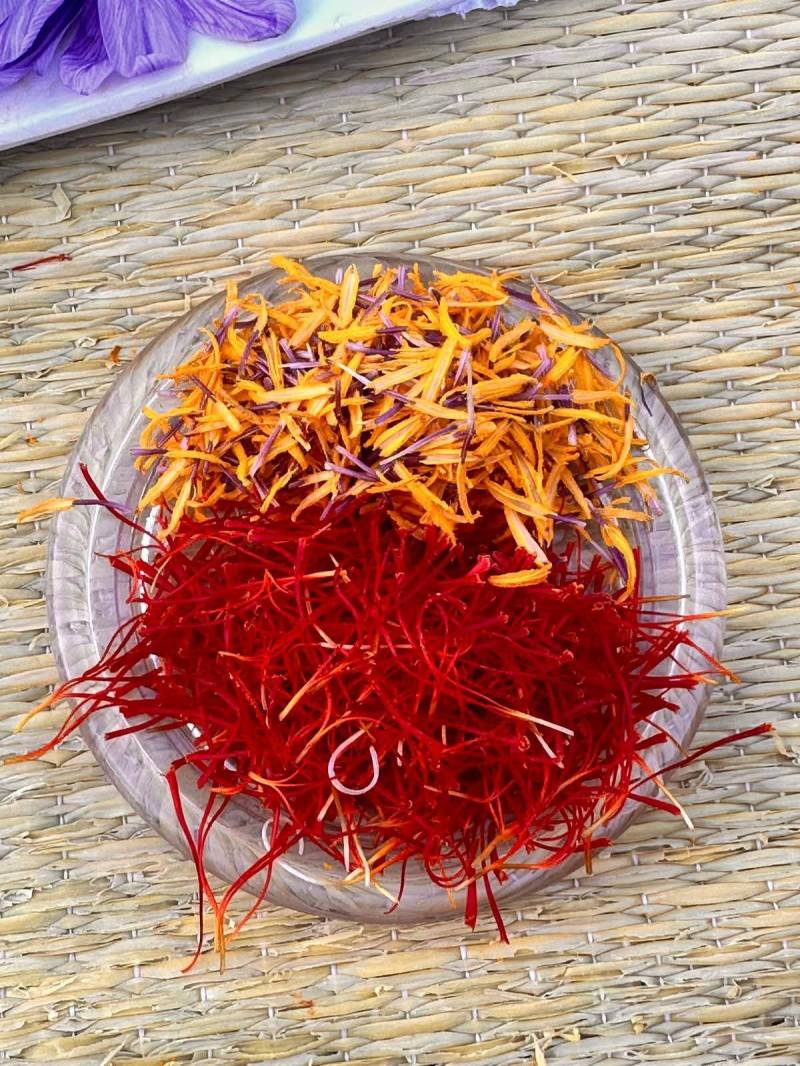
Pakistan, despite its varied climates and fertile land, has never been a notable player in the saffron market. That may soon change.
Agricultural economists believe that even small-scale production in Swat could generate substantial revenue, especially in export markets such as the United States, Japan, and Mexico—countries where saffron sells at premium rates.
Export, Certification, and Foreign Exchange
Buoyed by the success of this pilot project, the Agriculture Department and the Government of Khyber Pakhtunkhwa are now formulating a broader strategy. Plans include expanding saffron cultivation to more districts, establishing quality certification systems, obtaining export approvals and licenses, connecting farmers with international buyers, and generating valuable foreign exchange for Pakistan.
If implemented effectively, saffron could become one of KP’s most profitable niche crops—bringing prosperity to farmers while strengthening the province’s agricultural economy.
A New Chapter for Swat
From orchards of peaches and apples to blankets of snow-covered mountains, Swat has always been a land of natural abundance. Now, with purple saffron flowers emerging from its soil, a new chapter is unfolding—one filled with fragrance, opportunity, and hope.
What began as a small experimental initiative may soon redefine the agricultural identity of the region. For the farmers who took the risk, and for the valley that embraced this delicate new crop, the future looks bright—and beautifully scented.