

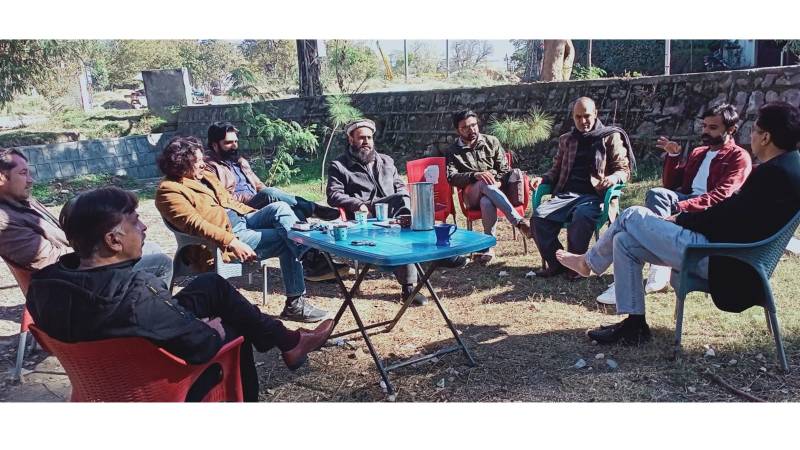
Arriving in Islamabad five years ago as a student from far away, I often felt a deep longing for connection and a place to belong. Amid the busy life of the capital, where people leave early and return late, it is rare to find a corner where souls gather to share ideas, art, and stories. For me and many others, that refuge has been the literary dhaba in I-10/3, lovingly hosted by the legendary poet Akhtar Usman for the past 17 years. His hospitality and poetry—like his words, “As evening falls, the heart longs for home, but there is no home for heart”—have turned this humble tea house into a home away from home for those seeking intellectual and emotional warmth.
Akhtar Usman is more than a host; he is a pillar of Islamabad’s cultural life. Known for his thoughtful poetry and tireless dedication to promoting literature, Akhtar’s space attracts a diverse crowd—students, poets, writers, professors, lawyers, musicians, and journalists. People from nearby institutions such as the International Islamic University, Federal Urdu University, Iqra University, NUML and many others gather here each evening.
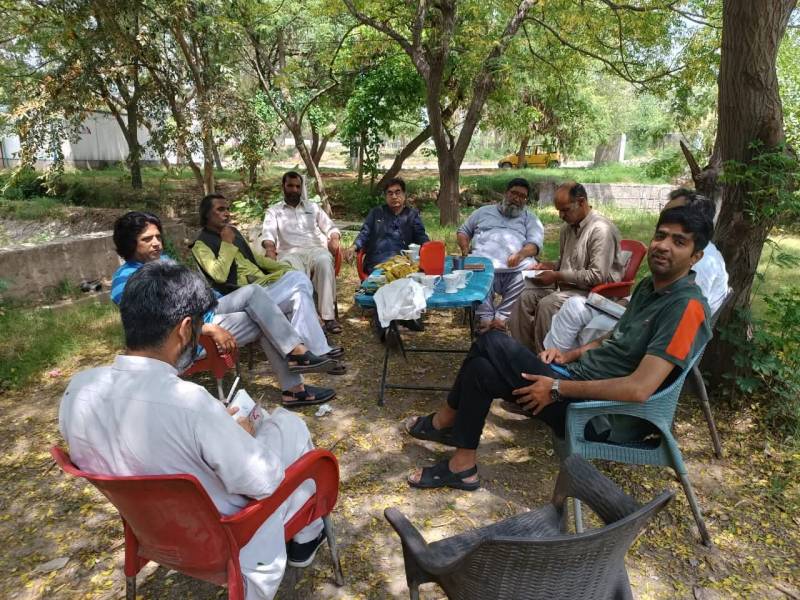
Some of them are:
Imdad Akash (poet),
Dr Saleh-ud-din Darwish (literary critic)
Zafar Syed (Chief Editor, Urdu Independent)
Dr Usama (psychiatrist),
Dr Tahir ul Aslam Askari (religious scholar)
Manzar Naqvi (poet)
Hassan Naqvi (narrator and actor in short films)
Jangair Imran (poet)
Abdullah Haroon (scholar)
Waqar Sherazi (government servant)
Dr Ravish Nadeem (professor)
Haider Sherazi (lawyer)
Aamar Shah ( musical expert )
Talib Hussain (Persian and Urdu Poet)
This informal literary circle is vibrant and inclusive, a rare democratic space where ideas flow freely and the challenges of our society are debated openly.
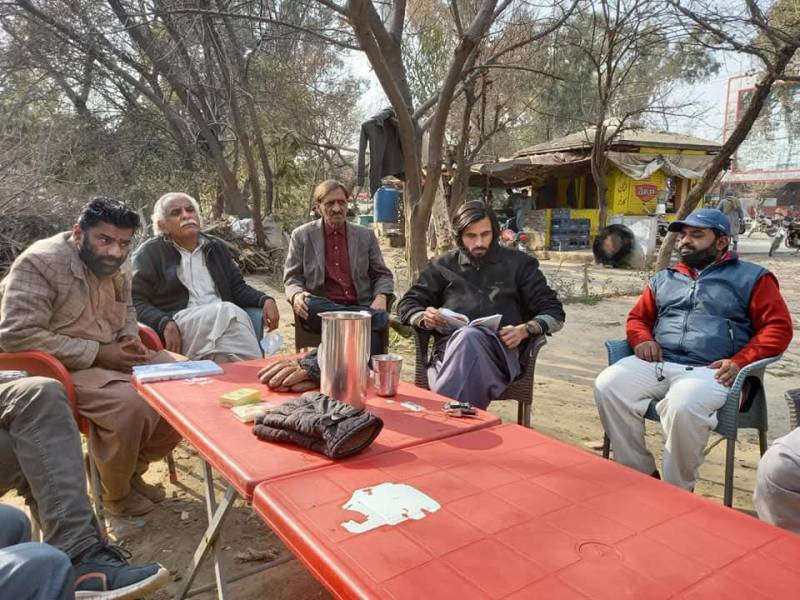
The significance of Akhtar Usman’s corner extends beyond merely being a meeting point. It is a living legacy of cultural resilience and intellectual freedom. Here, literature serves as a catalyst for social reflection and progress, reminding us that words have the power to transcend boundaries and challenge outdated norms. In an era where cultural spaces across Pakistan face neglect or demolition, preserving this dhaba is preserving a vital source of community and creativity. Its proximity to the industrial zone also provides a haven for poor laborers who can afford a cup of tea and participate in the cultural life surrounding them—something urban development plans often overlook.
Unfortunately, this cherished space faces persistent threats from the Capital Development Authority (CDA), which has repeatedly planned its demolition to make way for commercial projects. Despite community resistance so far, the risk remains real and urgent. Losing Akhtar Usman’s corner would mean erasing not only a physical place but also the spirit of free artistic assembly and cultural heritage that it embodies.
This informal literary circle is vibrant and inclusive, a rare democratic space where ideas flow freely and the challenges of our society are debated openly
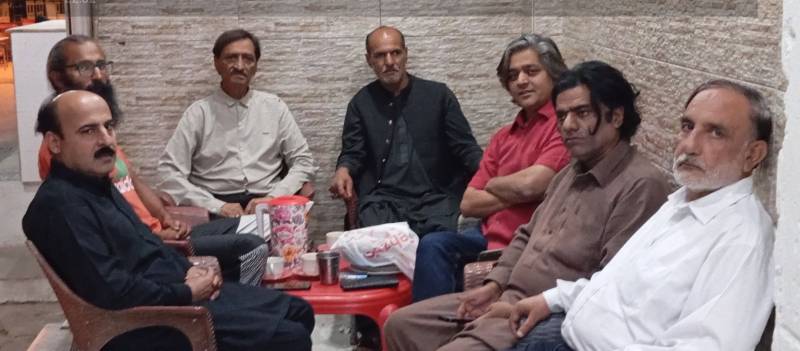
Pakistan’s cultural identity is not defined by skyscrapers or profit-driven development but by the preservation of spaces that nurture creativity and intellectual courage. Governments across the world recognize the importance of protecting such informal institutions as invaluable cultural heritage. Our state must similarly intervene—allocating funds, granting heritage status, and fostering an environment where literature and dialogue can thrive free from the threat of demolition.
Our human civilization is shaped by words and stories, which expand imagination and challenge us to see the world from multiple perspectives. Akhtar Usman’s corner is a beacon of this transformative power. It deserves not to be uprooted but to be protected, cherished, and supported as a vital part of Islamabad’s—and Pakistan’s—cultural future.
If the government fails to act, we risk losing more than a tea house. We risk losing the soul of our society. It is the duty of every citizen and cultural advocate to stand with Akhtar Usman and the countless others who find solace and inspiration in this unique space. The time to save our literary legacy is now.