

As discussed in prior columns, Pakistan needs to modernise the pricing of electricity to lower customer bills and to accelerate the transition to net zero carbon emissions.
A prerequisite to modernising tariffs is the installation of smart electric meters, which are sometimes called digital meters and sometimes advanced metering infrastructure (AMI). They are now deployed in much of the US, Canada and Europe.
In the US, 80% of households have them. They were triggered in part by California’s energy crisis in 2000-01. The Canadian province of Ontario was the first to do so. California came next. Soon, other states followed California’s lead. Progress in Europe came next. Deployment is underway in Australia, New Zealand and in several other countries.
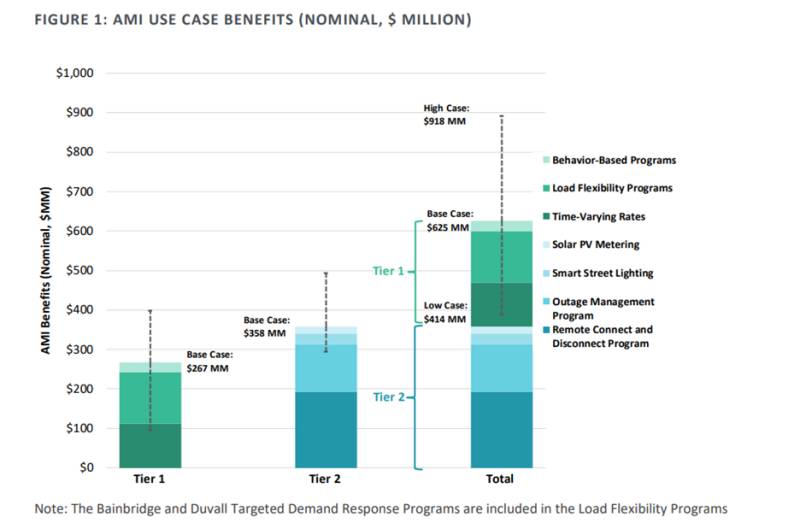
Why are smart meters being deployed? Because they provide several benefits to the utilities and to the customers. First, they help reduce meter reading costs. They are read remotely, reducing labour costs for utilities and eventually lowering customer bills. Second, the meter readings are more accurate. Third, smart meters prevent theft. That was one of the main reasons behind Italy’s deployment.
Fourth, smart meters facilitate faster outage detection. With traditional, analogue meters, the utility does not know that power has gone out in certain areas until customers notify them. That can delay power restoration and irritate customers.
Fifth, smart meters allow for remote connect and disconnect. When a new customer moves into a house, their power can be turned on remotely. There is no need to send a technician. Similarly, when a customer moves out of a house, power can be turned off remotely. Costs are lowered.
Sixth, smart meters facilitate modern tariff designs such as time-varying rates (TVRs). They can help reduce peak load, which is expensive to serve, and build off-peak load, which is less expensive to serve. This “load shifting” from peak to off-peak periods lowers utility costs and, with effective regulation, the savings can be passed through to customers.
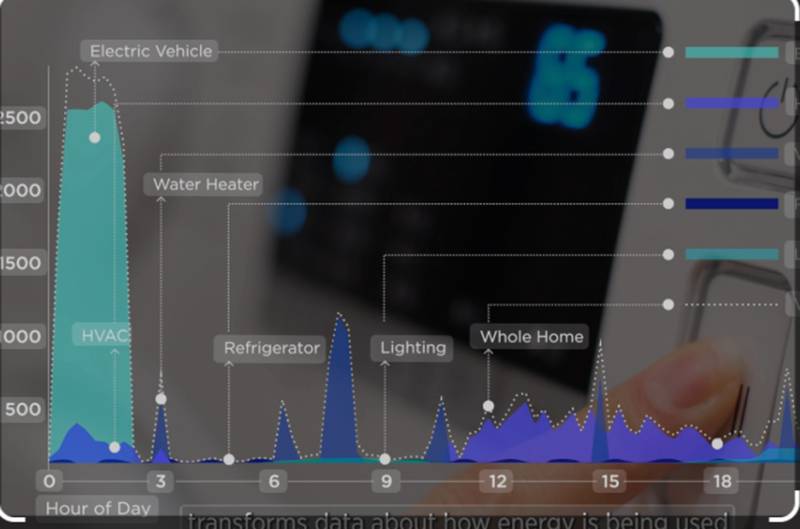
Seventh, smart meters can promote energy conservation. Customers want to know what is driving their high energy bills: lighting, plug loads, appliances, or air conditioners. Smart meters provide granular data that can be used via AI to disaggregate total loads into end uses, helping customers make informed decisions about their energy usage and conservation.
A smarter and more flexible grid would facilitate innovations in the electric industry by acting as a platform for customers and other market players to engage
In the mid-Atlantic region of the US, after smart meters were deployed, customers received a variety of messages on how to reduce their energy use and their energy bills. Smart meters also enabled the implementation of TVRs, which further lowered customer bills.
For a utility based in Maryland, customers reduced their average daily consumption by 1.73% and for a utility based in Delmarva, customers reduced their average daily consumption by 1.55%.
Eighth, smart meters allow utilities to optimise the voltage at which they deliver power to customers. By lowering voltage where it is being delivered at an excessive amount, utilities reduce energy consumption and peak demand without any loss of comfort to customers. A study found that a 1.5% reduction in voltage levels results in a 1.4% usage reduction for residential customers.
Voltage management has been around for a long time but the inability to verify the drop in voltage at the customer's premises prevented its wide-scale implementation. Smart meters have overcome this obstacle.
Ninth, if the utility offers customers a menu of rate schedules, algorithms based on hourly load data from smart meters would allow the utility to compute customer energy bills across the menu, letting customers pick the rate schedule that gives them the lowest energy bill.
Of course, every new technology comes with its apprehensions, notably customer concerns. Smart meters are no exception. Four major concerns exist for smart meters. Will they emit electromagnetic radiation that will harm my health? Are they just a ruse put forward by the utility to raise my bills? Will the utility use them to spy on me and violate my privacy? For example, will the utility know when I cook and when I go into the shower? Will they ignite fires in my house?
All of these concerns are based on strongly ingrained misperceptions, like the myth of the “Four Horsemen of the Apocalypse.” Even then, some customers will resist smart meters at any cost. In that case, they should pay a fee for retaining their existing meter. Usually, less than one percent of customers opt-out of smart meters.
Replacing existing meters with smart meters is a costly endeavour. It warrants a thorough cost-benefit analysis. Pakistan should carry out such an analysis before proceeding to deploy smart meters. A separate analysis should be carried out for each DISCO.
At times, the grid-side benefits alone cover the costs. At other times, customer-side benefits also must be counted before smart meters become cost-effective.
The first quarter of the 21st century is coming to a close. As the world moves toward the second quarter century, we find that customers are becoming increasingly engaged in their energy consumption decisions, desiring and demanding more information that can enable them to identify ways to lower their energy usage, reduce their carbon footprint, and effectively leverage new energy technologies.
Smart meters will allow utilities to provide granular hourly load data to customers, empowering customers to participate in a variety of TVRs that promote load flexibility and behaviour-based programs such as neighbourhood bill comparisons that encourage energy conservation.
Smart meters will help utilities to integrate more intermittent and variable renewable energy resources into the grid, allowing Pakistan to meet its clean energy goals. Smart meters will enable the creation of a “smart grid” that would ultimately allow for distributed generation through solar panels and microgrids, lower costs, create greater flexibility, and improve system-wide reliability and resilience.
A smarter and more flexible grid would facilitate innovations in the electric industry by acting as a platform for customers and other market players to engage. If the grid is not on par with these innovations, then the grid’s customers, along with society as a whole, will suffer.