

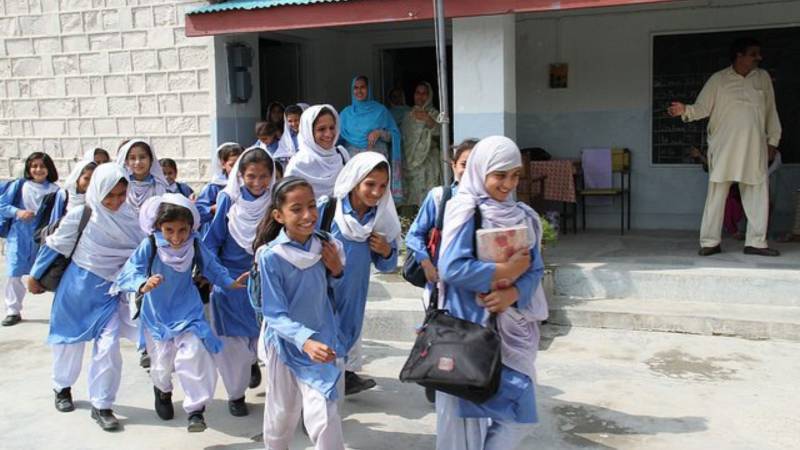
The education landscape in Pakistan paints a grim picture, even when compared to other countries within South Asia. While SAARC countries such as the Maldives and Sri Lanka boast literacy rates above 90%, even India and Bangladesh have literacy rates higher than 80%. Pakistan has a national literacy rate of 59%, which is behind Nepal’s 69% and only above Afghanistan’s 37%. When compared to the global average, Pakistan is in the bottom 20 countries of the world in terms of adult literacy.
The severity of the issue becomes even more apparent when the adult literacy rate is broken down by geography and gender. According to the World Bank, only 46% of adult females in Pakistan are literate compared to 69% of adult males. This shows the disparate impact of the country’s education policies and cultural norms that discourage female education. There are also considerable differences in the literacy rates amongst the four provinces, with Punjab having an adult literacy rate of 66%, Sindh 62%, Khyber Pakhtunkhwa 55%, and Balochistan 54.5% based on 2021 data. Outside of Punjab, there are only a handful of districts that boast a female literacy rate of over 50%. These include Hyderabad, Karachi City, Abbottabad, Haripur, and Mansehra. Unfortunately, there is not a single district in Pakistan’s largest province, Balochistan, where female literacy is above 50%.
Another issue facing the country is that of out-of-school children. According to UNICEF, 22.8 million children in Pakistan aged 5–16 are out of school, which represents 44% of the population in this age group. Pakistan ranks second in the world for the highest number of out-of-school children. This shows that the issue of high illiteracy in Pakistan is not merely generational, and that young children who would enter the workforce in the future continue to be excluded from education in large numbers.
Artificial intelligence, machine learning, and technological advances are reforming the world at an unprecedented pace, and it must be ensured that the people of Pakistan are able to benefit from these advances as well
The federal and provincial governments in Pakistan need to develop an immediate action plan to address the country’s poor literacy rate, as the issue is nothing short of an emergency. A largely untouched area seems to be that of digital learning and online education, which has huge potential to play a vital role in uplifting the country’s literacy rates. Internet penetration in Pakistan currently stands at 45.7%, representing 116 million individuals. Interestingly, there seems to be a strong youth presence on platforms such as TikTok, with some estimates putting around 70 million active TikTok users in Pakistan. This represents a phenomenal presence, and Pakistan currently ranks fifth globally for the total number of TikTok users.
There are over 500,000 active content creators as well, who use the platform to share their content with their fan bases. Similarly, there are almost 50 million active Facebook users in Pakistan, 55 million active users of YouTube, and around 20 million active users of Instagram across the country. This shows that the digital landscape might be the best way to target the masses in Pakistan to spread awareness and introduce initiatives that reach the country’s youth. At present, there is no dedicated effort by any of the provincial ministries or the federal Ministry of education to use these platforms for the sole purpose of imparting education, knowledge, and awareness in a way that is in sync with current trends across these platforms. Such initiatives could play an important role in supplementing traditional avenues of teaching, such as brick-and-mortar schools and madrassas.
In a country where tens of millions remain out of school, and literacy rates remain dangerously low, immediate steps need to be taken to protect and educate the next generation of Pakistanis. Since traditional methods of imparting knowledge seem to be much slower than the global and South Asian averages, those at the helm of affairs should not hesitate to think outside the box and introduce initiatives that have the potential to spread knowledge and awareness to the masses through the channels that have the greatest impact. Artificial intelligence, machine learning, and technological advances are reforming the world at an unprecedented pace, and it must be ensured that the people of Pakistan are able to benefit from these advances as well.